
More Than a View: Mexico's Sunset Economy and Cultural Heartbeat

From the soft pastel horizons over Cancún's Nichupté Lagoon to the fiery descents across the Pacific waters of Puerto Escondido and Los Cabos, the Mexican sunset represents far more than an evening spectacle. It operates as a dependable catalyst for the nation's tourism economy, driving room premiums, twilight catamaran charters, and oceanfront dining revenue. Woven deeply into Mesoamerican heritage and modern communal life, this daily natural phenomenon anchors a distinctive commercial and cultural ecosystem across Mexico's coasts.
Table of Contents
- What is the 'Sunset Experience' in Mexico?
- The Cultural Heartbeat: From Ancient Gods to Modern Gatherings
- The Golden Hour Economy: How a View Becomes a Brand
What is the 'Sunset Experience' in Mexico?
When travelers speak of watching the sunset in Mexico, they refer to an experience that bridges natural geography, hospitality design, and centuries of tradition. Across the country's extensive coastlines, twilight transforms public spaces and private resorts into central gathering points. Far from being a passive conclusion to the day, this daily transition fuels a multi-billion-dollar tourism ecosystem that influences accommodation choices, dining itineraries, and coastal excursions for millions of annual visitors seeking world-class travel destinations.
The geography of Mexico creates distinct vantage points depending on the coast. Along the Yucatán Peninsula and the Caribbean shoreline in Cancún, the ocean lies to the east, welcoming the sunrise. Sunsets in this region unfold westward over coastal lagoons, such as the Nichupté Lagoon, where calm waters reflect shades of gold and violet. Hospitality properties in Cancún's Hotel Zone, including established resorts like the Sunset Royal Beach Resort and Sunset Marina, strategically orient terraces, marina docks, and west-facing suites toward these tranquil inland waters.
On the opposite side of the country, along the Pacific coastline and the Baja California Peninsula, the sun sinks directly into the open ocean. Destinations such as Puerto Vallarta, Mazatlán, and Cabo San Lucas offer dramatic marine horizons where rocky headlands and breaking waves frame the final light of day. By catering to these distinct coastal orientations, Mexican hospitality operators have transformed a daily celestial occurrence into an enduring pillar of the nation's travel appeal.
The Cultural Heartbeat: From Ancient Gods to Modern Gatherings
Reverence for the sun forms a foundational thread throughout Mexican history. For Mesoamerican civilizations, solar cycles guided agriculture, religious ceremonies, and urban architecture. The Mexica (Aztecs) venerated solar deities such as Huitzilopochtli and Tonatiuh, viewing dusk not as an ending, but as the sun's necessary evening passage through the underworld before being reborn at dawn. Temples across central Mexico and the Maya lowlands were purposefully aligned with equinoxes, solstices, and solar trajectories.
In contemporary Mexico, this reverence lives on as a social and communal ritual. In coastal municipalities such as Puerto Vallarta, La Paz, and Campeche, local residents and visitors routinely gather along the malecón (seaside promenade) as the sun begins its descent. Families stroll along the waterfront, street vendors serve traditional refreshments, and musicians perform against the backdrop of dusk. For international travelers, participating in this relaxed evening gathering provides a genuine point of connection with Mexican civic life, turning a scenic view into a meaningful cultural memory.
The Golden Hour Economy: How a View Becomes a Brand
The economic footprint of Mexico's twilight hours extends across multiple commercial sectors. In the lodging sector, properties with unobstructed westward views command significant rate differentials. Resorts with lagoon-facing or oceanfront sunset exposures systematically position these rooms as premium inventory, recognizing that panoramic evening vistas represent a core selling proposition for leisure guests and destination weddings.
Beyond lodging, an extensive commercial network operates specifically around the golden hour. Beachfront restaurants and rooftop lounges coordinate operational schedules and promotional menus to coincide with dusk, when table turnover and average spend reach peak levels. Catamaran charters, dinner cruises, and coastal photography services generate substantial daily turnover by offering travelers dedicated vantage points on the water. Rather than manufacturing artificial attractions, coastal enterprises monetize a predictable, high-value natural event that recurs every evening without interruption.
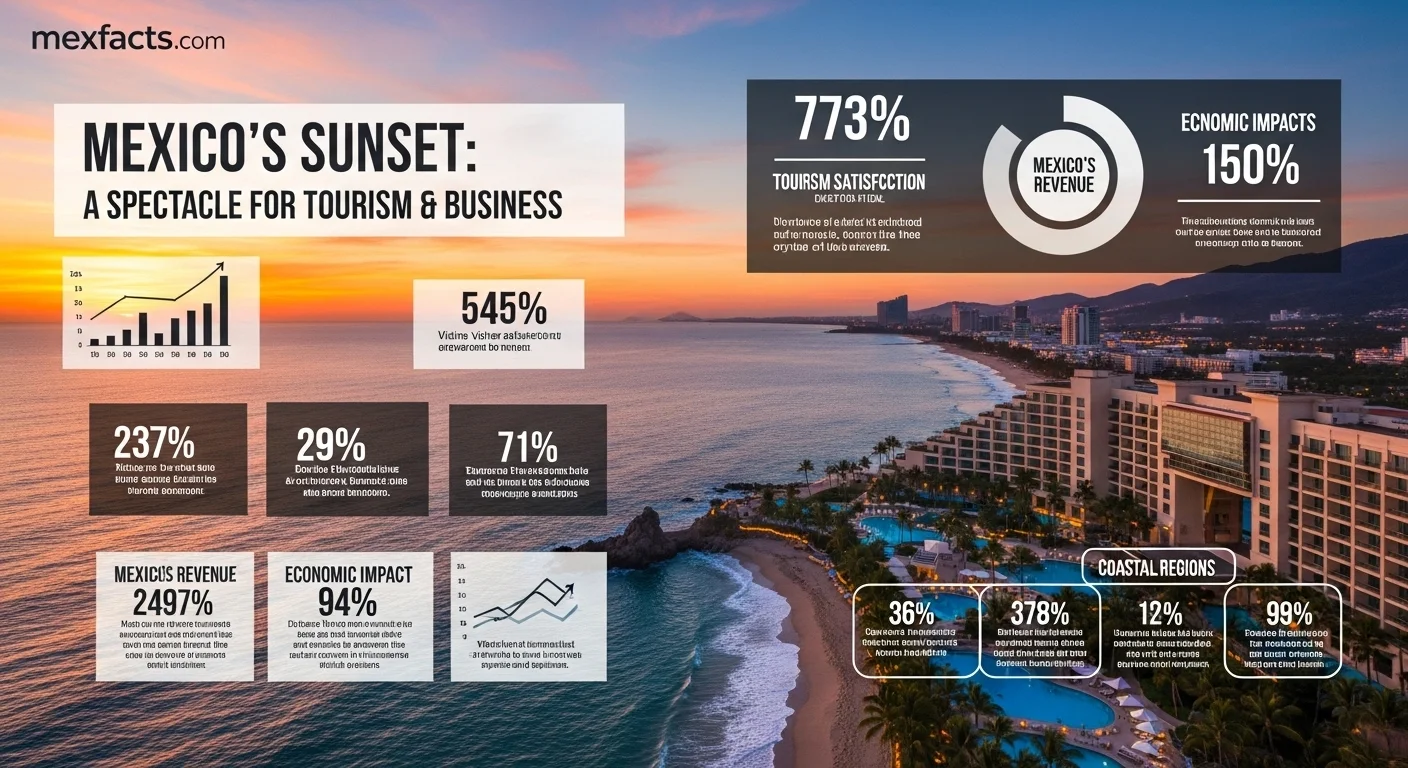
The Story in the Numbers: Mexico's Sunset by the Data
The economic value of Mexico's coastal scenery is reflected directly in national tourism statistics. According to data from Mexico's Ministry of Tourism (SECTUR), Mexico welcomes over 40 million international tourists annually, with the tourism sector generating approximately 8.5% of national Gross Domestic Product (GDP). Coastal destinations in Quintana Roo, Baja California Sur, Jalisco, and Nayarit attract the majority of these travelers, with Cancún International Airport ranking as the primary port of entry for overseas visitors.
Leisure visitors gravitate toward coastal corridors where beach access, maritime recreation, and scenic landscapes are primary motivators. While official macroeconomic accounts do not isolate sunset viewing as an independent line item, hospitality pricing models and excursion booking volumes demonstrate that the golden hour acts as a major commercial driver across Mexico's premier vacation markets.
The Price of a Perfect View
Hotel revenue management in coastal markets relies heavily on view differentiation. In competitive markets such as Cancún's Hotel Zone, where annual hotel occupancy historically averages between 70% and 80%, properties optimize revenue by stratifying room inventory. Rooms overlooking the Nichupté Lagoon or the Pacific coastline frequently command a 15% to 30% price premium over standard interior or garden-view rooms during peak seasonal periods.
This premium represents pure margin driven by location and architectural orientation. Across hundreds of thousands of beachfront and lagoon-front resort keys in destinations such as Cancún, the Riviera Maya, Los Cabos, and Puerto Vallarta, these room-tier upgrades generate tens of millions of dollars in annual lodging revenue. Travel booking platforms confirm that filters for sunset views and waterfront balconies correlate directly with higher conversion rates and elevated average daily rates (ADR).
The Ripple Effect: Marine Tours and Waterfront Dining
The commercial benefits of the sunset extend well beyond resort accommodations into local small businesses and maritime operators:
- Sunset Catamaran Charters:
- Evening sailing excursions and sunset dinner cruises represent some of the highest-margin activities in coastal marinas. Standard passenger fares typically range from $80 to $200 per guest, supporting local boat captains, dock crews, and tour outfitters.
- Golden Hour Dining:
- Coastal restaurants and elevated terrace bars experience their highest reservation demand between 5:00 PM and 7:30 PM. Prime tables offering unobstructed horizons require advance booking and generate elevated food and beverage receipts.
- Destination Weddings and Private Events:
- Event coordinators and professional photographers heavily favor dusk for seaside ceremonies, sustaining a specialized service sector that includes floral designers, event planners, and local musicians.
Pacific Coast vs. Caribbean Coastline: A Geographical Comparison
The operational dynamics of the sunset economy vary significantly between Mexico's two primary coastlines:
- The Pacific and Baja Peninsula: In destinations such as Los Cabos and Puerto Vallarta, the sun sinks directly into the open Pacific Ocean. In Los Cabos, natural granite landmarks like El Arco create dramatic silhouettes against vibrant orange and crimson skies. This direct ocean view underpins luxury resort positioning and commands among the highest average room rates in the country.
- The Mexican Caribbean: Along Cancún and the Riviera Maya, the Caribbean Sea faces east toward the sunrise, producing soft pastel palettes at dusk. In Cancún, the primary sunset view unfolds across the expansive waters of the Nichupté Lagoon, allowing resorts to offer dual-water appeal: open ocean surf by day and peaceful lagoon sunsets by evening.
The Future is Golden: Opportunities on Mexico's Horizon
As traveler preferences evolve, Mexico's sunset-oriented tourism sector is shifting from passive observation toward immersive, sustainable experiences. Both established hotel brands and independent tour operators are adapting to modern demands for wellness, cultural authenticity, and environmental responsibility.
From Viewing to Experiencing
Modern international travelers increasingly seek active engagement rather than conventional sightseeing. Forward-thinking destinations are expanding their twilight programming to meet this demand:
- Wellness and Mindfulness: Guided sunset yoga, meditation, and beachfront sound baths combine physical well-being with natural golden-hour tranquility.
- Culinary Experiences: Rooftop cooking demonstrations and regional mezcal tastings timed to dusk offer travelers an educational immersion into Mexican gastronomy as the day winds down.
- Creative and Educational Workshops: Guided twilight photography tours teach visitors how to capture the dynamic lighting conditions of coastal environments, providing memorable creative keepsakes.
Digital Discovery and Visual Reach
Visual storytelling on digital platforms continues to amplify the global reputation of Mexican coastal destinations. High-definition coastal webcams, professional aerial videography, and organic traveler-shared imagery provide authentic visibility for regional travel markets. Prospective travelers research seasonal daylight patterns, viewpoint accessibility, and marina departures online, turning golden-hour photography into a primary organic discovery channel for regional tourism boards.
Environmental Sustainability: Protecting Fragile Coastal Assets
The long-term viability of Mexico's sunset economy depends directly on environmental preservation. Coastal ecosystems—including mangrove wetlands along Cancún's Nichupté Lagoon, living coral reefs, and pristine beaches—are sensitive to overdevelopment and marine pollution. Responsible industry leadership requires clear commitments to ecological conservation:
- Clean Marine Recreation: Transitioning toward electric-powered and low-emission tour vessels to safeguard marine biodiversity and reduce noise in coastal waterways.
- Renewable Energy Integration: Implementing solar installations and efficient water management systems across coastal resort properties.
- Habitat Protection: Preserving coastal wetlands and enforcing sensible shoreline setback rules to prevent erosion and protect scenic sightlines for future generations.
Expanding Beyond Established Hubs
While Cancún, Los Cabos, and Puerto Vallarta remain dominant international gateways, substantial opportunity exists to develop low-impact sunset experiences in emerging destinations. The rugged coastline of Oaxaca (including Puerto Escondido and Mazunte), the serene waters of the Sea of Cortez in Baja California Sur, and elevated inland historic centers such as San Miguel de Allende and Guanajuato offer distinct evening vistas. By balancing economic development with cultural integrity and environmental stewardship, Mexico can continue to turn its daily sunset into an enduring source of community pride and sustainable economic prosperity.
Expert Reviews
Liam O'Connell, Traveler ⭐⭐⭐⭐⭐
My wife and I planned our whole trip to Cancún around the sunset. We'd find a little beach bar every evening, order some mezcal, and just watch the sky change. This article totally captures that magic, but also the smart business behind it. Reading this brought back such warm memories.
Sofia Valero, Entrepreneur ⭐⭐⭐⭐⭐
As someone looking to invest in a small boutique hotel in Oaxaca, this piece was a goldmine. The idea of the 'sunset economy' isn't just a buzzword; it's a real, tangible strategy. It’s given me a new lens through which to evaluate properties and experiences. Thank you for this perspective!
Elena Jimenez, Local Resident ⭐⭐⭐⭐⭐
I grew up in Puerto Vallarta, and watching the sunset on the Malecón is part of our DNA. It's when families come out, friends meet... it's the heart of our evening. I'm glad to see an article that explains this not just as a pretty view, but as something deeply important to our culture and our economy.