
Xochimilco's Floating Gardens: Ancient Heritage, Tourism Economy, and Ecological Realities
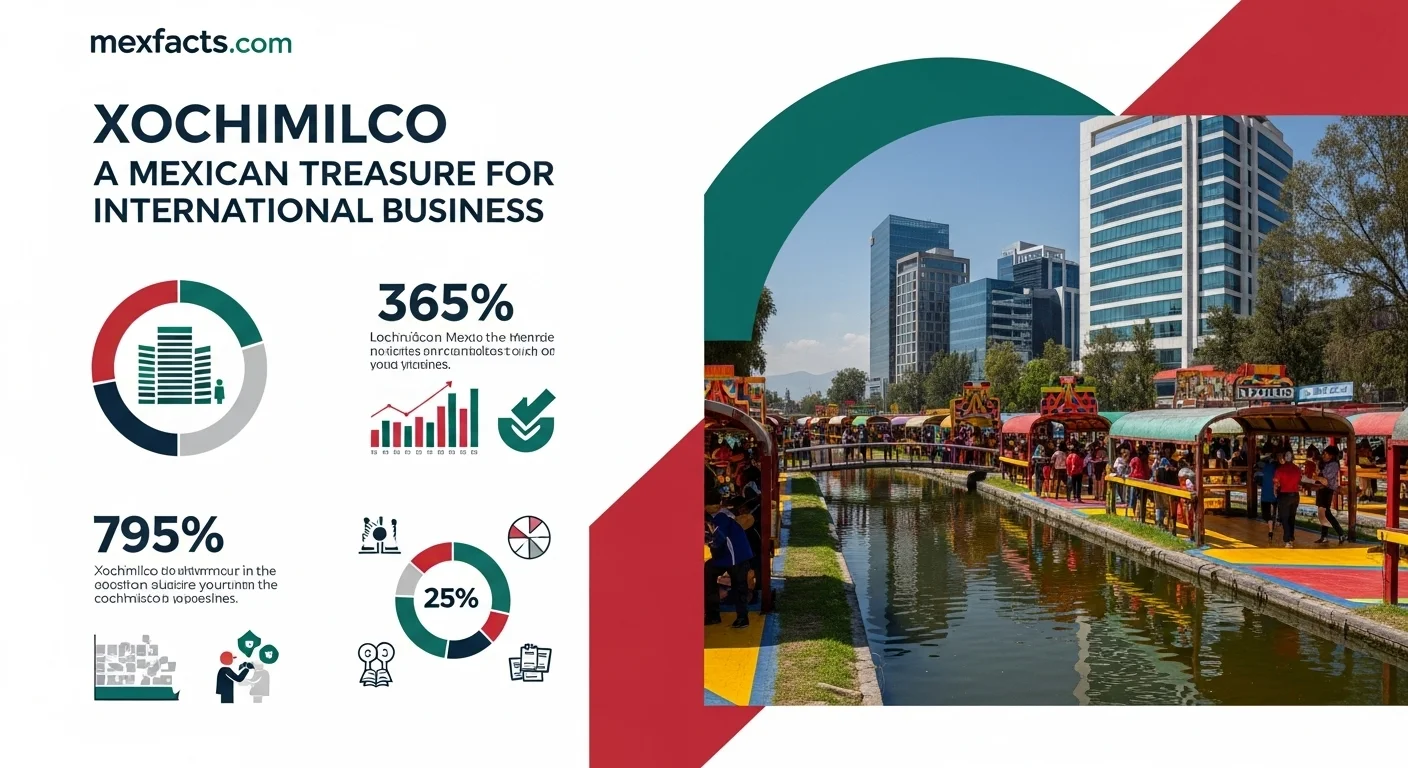
Located in southern Mexico City, Xochimilco is one of the world's most distinctive cultural and ecological landscapes. Inscribed as a UNESCO World Heritage Site in 1987, the borough preserves the ancient chinampa agricultural system—often called the "floating gardens"—which sustained the Aztec capital of Tenochtitlan centuries before European contact. Today, Xochimilco operates simultaneously as an active agricultural zone, a fragile wetland ecosystem, and an iconic tourist destination navigated by traditional trajineras. Beyond the festive weekend boat rides, the area represents a compelling study in urban agroecology, informal economies, and urgent environmental conservation, alongside modern commercial adaptations such as Xoximilco in Cancún. This guide examines the history, working economics, and future prospects of Mexico City's last lacustrine frontier.
Table of Contents
- The Historical Roots: An Aztec Marvel
- A Living Heritage: Why Xochimilco Matters Today
- A Look at Xochimilco by the Numbers Today
- The Future of Xochimilco: Challenges and Opportunities
What is Xochimilco, and Why is it a Global Treasure?
Xochimilco is a southern borough (demarcación territorial) of Mexico City spanning roughly 125 square kilometers, best known for its intricate network of canals and artificial farming islands. While modern popular culture associates Xochimilco primarily with brightly painted wooden boats, mariachi serenades, and celebratory weekend outings, its true significance lies much deeper. As the last surviving vestige of the vast pre-Hispanic lake system that once filled the Valley of Mexico, Xochimilco bridges ancient Mesoamerican engineering with modern urban sustainability. In 1987, UNESCO recognized Xochimilco and the Historic Center of Mexico City as a World Heritage Site to protect this unique living cultural landscape.
The Historical Roots: An Aztec Marvel
The name Xochimilco originates from the Nahuatl language, meaning "where the flowers grow" (from xōchitl, flower; mīlli, cultivated field; and -co, place). Settled by the Xochimilca people as early as the 10th to 12th centuries, the region developed one of the most productive agricultural technologies in human history: the chinampa system, frequently popularized as the floating gardens of Xochimilco.
Contrary to the literal image suggested by their name, chinampas do not actually float. They are stationary artificial islands built in shallow freshwater lakes. Farmers constructed them by weaving underwater retaining fences of wattle and reed stakes, then filling the enclosures with alternating layers of nutrient-dense lakebed mud, decaying vegetation, and compost. To permanently secure the plots against soil erosion, growers planted ahuejote trees (Bonpland willow, Salix bonplandiana) along the perimeters. The deep root networks of these native willows anchored the artificial land to the lake floor.
This ingenious setup functioned as an extraordinary sub-irrigated farming platform. By constantly drawing moisture from the surrounding canals through capillary action, chinampas supported up to four or five annual harvest cycles without requiring artificial irrigation. During the Postclassic period, this agricultural system served as the primary breadbasket for the Aztec capital, Tenochtitlan, sustaining a population of over 200,000 residents. The Xochimilco canals were vital aquatic trade arteries, allowing canoes laden with maize, beans, squash, and flowers to travel directly to urban marketplaces such as Tlatelolco.
The Spanish conquest in 1521 initiated profound transformations. Accustomed to European dry-land agriculture, Spanish administrators viewed the valley's interconnected lakes as flood hazards rather than assets, initiating centuries of drainage schemes (the Desagüe del Valle de México) that systematically desiccated the lacustrine basin. Despite this extensive environmental disruption, Xochimilco's fertile chinampas survived, continuing to supply fresh produce to the expanding colonial and post-independence capital.
A Living Heritage: Why Xochimilco Matters Today
In the 21st century, Xochimilco commands international attention across two major fronts: pioneering agroecological models and cultural tourism.
In 2018, the Food and Agriculture Organization (FAO) designated the chinampa agricultural system of Xochimilco, Tláhuac, and Milpa Alta as a Globally Important Agricultural Heritage System (GIAHS). As global urban centers grapple with food security, supply-chain vulnerabilities, and climate change, researchers study chinampa agroecology as a masterclass in regenerative, closed-loop urban farming. The micro-environment created by canal waters moderates temperature extremes, mitigates frost risk, and fosters rich biodiversity while producing exceptionally high yields per hectare.
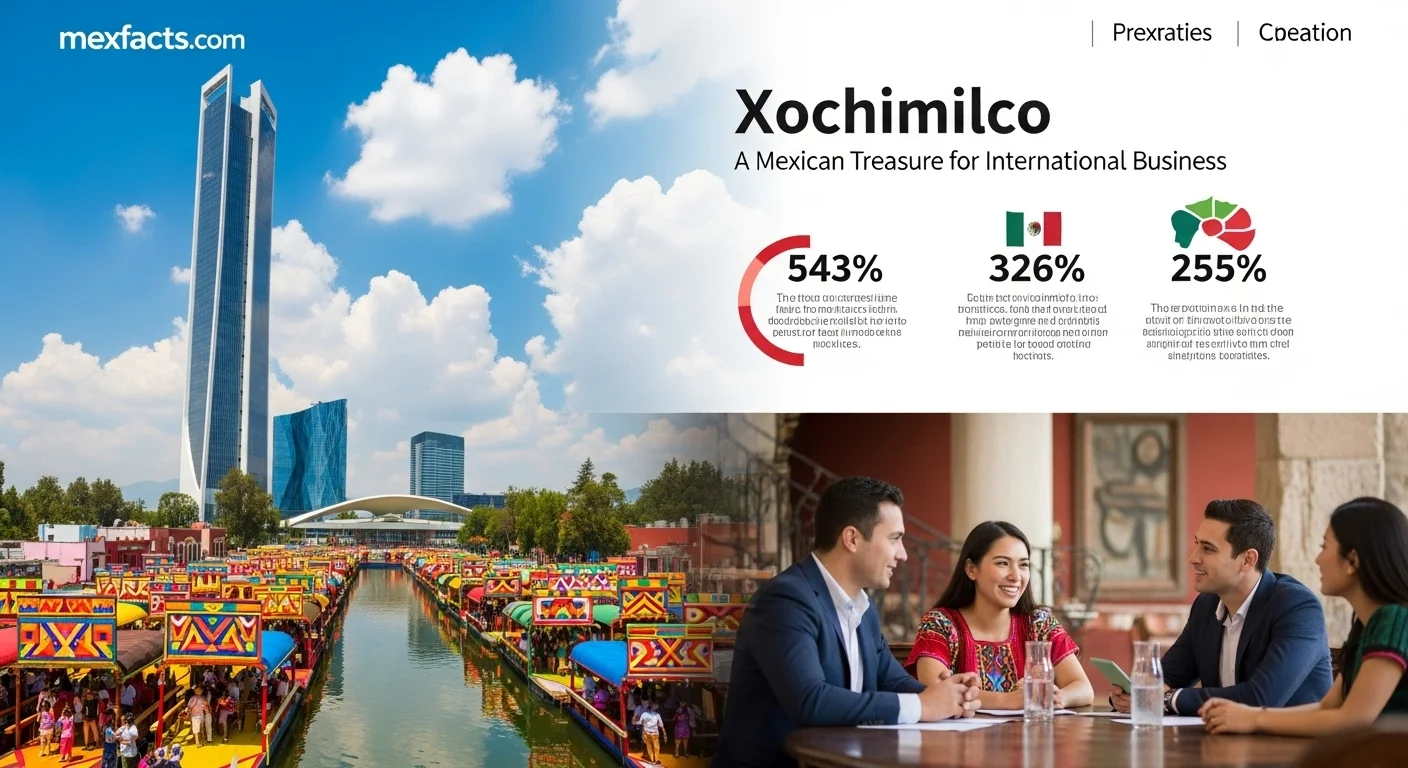
Concurrently, Xochimilco is an economic anchor for cultural tourism. Cruising the canals aboard a traditional trajinera—a flat-bottomed wooden boat steered by a boatman using a long oaken pole (remo)—attracts millions of domestic and international visitors each year. This tourism infrastructure fosters an extensive floating micro-economy. Independent canoe vendors pull alongside tour boats selling freshly prepared elotes (corn), quesadillas, tamales, and beverages, while floating mariachi, norteño, and marimba ensembles perform on demand. This living cultural tradition has proven so iconic that major commercial operators have adapted the model elsewhere; Grupo Xcaret established Xoximilco, a ticketed, private theme park attraction in Cancún, demonstrating the global resonance of the original tradition.
A Look at Xochimilco by the Numbers Today
Evaluating Xochimilco through empirical data reveals a complex reality: a high-volume tourism asset and invaluable biological sanctuary contending with intense urban pressures and structural economic shifts.
The Flow of Tourism and Money
Tourism represents the primary financial lifeline for Xochimilco's accessible canal sectors. More than one million visitors navigate the canals annually, accessing the waterways through ten officially designated embarkation docks (embarcaderos), including Nativitas, Cuemanco, Nuevo Nativitas, Fernando Celada, and Zacapa.
The operational backbone of this economy rests on an estimated fleet of 1,200 to 1,500 licensed trajineras. Crucially, the local municipal administration (Alcaldía Xochimilco) regulates boat rental fees on a per-hour, per-boat basis rather than per person. With standard boats accommodating up to 18 to 20 passengers, this pricing structure keeps canal visits accessible for large families and student groups while generating steady daily income for licensed boat owners and operators.
Surrounding the boats is an informal supply chain comprising hundreds of micro-enterprises: floating food preparers, musicians, florists, souvenir craftspeople, and onshore market vendors. In contrast to this decentralized, community-managed model, corporate iterations such as Xoximilco in Cancún operate under a centralized, corporate hospitality framework. Catering to resort visitors in Quintana Roo, the Cancún venue charges an all-inclusive, per-person ticket covering dinner, open bar, and staged entertainment. This contrast highlights two divergent economic pathways: one grounded in historic communal stewardship, and the other driven by commercial entertainment packaging.
The Health of the Land and Water
Despite ongoing urban challenges, Xochimilco remains an agricultural producer of note, yielding an estimated 40,000 tons of horticultural crops annually. The borough is especially renowned for seasonal ornamental flower cultivation, producing millions of cempasúchil (marigolds) for Día de los Muertos and nochebuenas (poinsettias) for the winter season. Nonetheless, researchers from the National Autonomous University of Mexico (UNAM) calculate that only about 15% to 17% of historic chinampa platforms remain under active agricultural cultivation today, with many parcels fallow, overgrown, or altered by urban use.
Environmental assessments underscore severe ecological vulnerabilities:
- Biodiversity Reservoir:
- While Mexico City's broader conservation zones encompass approximately 2% of the world's biodiversity and 11% of Mexico's national biodiversity, Xochimilco serves as the capital's most critical wetland sanctuary (designated a Ramsar Wetland of International Importance in 2004). It is the sole natural habitat of the critically endangered axolotl (Ambystoma mexicanum), a paedomorphic amphibian renowned in scientific research for its ability to regenerate tissue and limbs.
- Hydrological Stress:
- Natural freshwater springs that historically replenished Lake Xochimilco were diverted to Mexico City's municipal drinking water network in the early 20th century. Today, the canal system relies on tertiary-treated wastewater supplied primarily from the Cerro de la Estrella treatment plant and seasonal rainwater runoff, leaving water levels and quality vulnerable to maintenance disruptions and untreated runoff from nearby urban settlements.
- Urban Encroachment:
- Unregulated residential construction on conservation soil (suelo de conservación) has fragmented historic wetland areas, contributing untreated domestic wastewater and reducing permeable soil for groundwater recharge.
- Invasive Species Pressure:
- The introduction of exotic common carp (Cyprinus carpio) and tilapia (Oreochromis niloticus) during the 1970s and 1980s caused severe ecological imbalances. These species stir bottom sediments, destroy submerged aquatic vegetation, and prey heavily on endemic wildlife, including juvenile axolotls and native fish eggs.
The Future of Xochimilco: Challenges and Opportunities
Xochimilco stands at an environmental and socio-economic turning point. Securing its long-term viability requires balancing strict conservation requirements, the daily economic needs of local residents, and the demands of sustainable urban food production.
The Fight for Survival
Preserving the chinampa ecosystem requires overcoming three interconnected hurdles:
- Generational Transition and Farm Viability:
- Traditional chinampero farming requires rigorous manual labor, canal navigation, and specialized knowledge. With modest profit margins in conventional commodity markets, younger residents frequently seek service-sector employment in central Mexico City, leading to parcel abandonment and land conversion.
- Water Quality and Ecological Remediation:
- Restoring viable habitat for endemic species like the axolotl necessitates rigorous biofiltration, ongoing maintenance of municipal water supply lines, and strict interception of domestic graywater. Without consistent water quality, organic certification and high-yield farming remain difficult to sustain.
- Multi-Jurisdictional Governance:
- Because Xochimilco encompasses a UNESCO World Heritage site, a national natural protected area, ejidal communal landholdings, and rapidly growing residential zones, coordinated regulatory enforcement between federal, city, and local borough authorities remains administratively complex.
Strategic Opportunities for Sustainable Development
Despite these serious pressures, pioneering initiatives demonstrate viable pathways for regenerative economic growth:
- High-Value Agroecology and Farm-to-Table Networks:
- Initiatives led by local agricultural collectives and agroecological ventures are reconnecting restored chinampas directly with Mexico City's renowned culinary industry. By producing pesticide-free, heritage varieties of heirloom vegetables, lettuces, and edible flowers for top restaurants, farmers secure premium prices that justify traditional labor and incentivize chinampa restoration.
- Refuge Channels and Ecotourism:
- Biologists from UNAM and local chinamperos have developed semi-isolated "refuge channels" outfitted with biofilters and mesh barriers that exclude predatory carp and tilapia. These clean-water sanctuaries protect wild axolotl colonies while supporting quiet, low-impact educational tours, providing boatmen and farmers with sustainable ecotourism income.
- Valuation of Ecosystem Services:
- Xochimilco's 2,600+ hectares of wetlands act as a crucial carbon sink, temperature regulator, and flood control reservoir for the southern Valley of Mexico. Incorporating these wetlands into municipal green-bond financing and payments for ecosystem services offers an institutional funding mechanism for long-term canal rehabilitation.
- Technological and Environmental Monitoring:
- Deploying low-cost water quality sensors, drone-based land monitoring, and constructed wetland biofilters allows conservationists and farmer cooperatives to track canal health in real time and protect productive plots.
Looking Ahead
The continued relevance of Xochimilco demonstrates that ancestral agricultural technology holds practical answers to modern urban dilemmas. While commercial adaptations such as Cancún's themed waterways reflect the enduring cultural brand of the canals, preserving the authentic, living chinampa ecosystem in Mexico City is indispensable for regional ecological stability. Balancing respectful tourism with genuine agroecological revitalization offers the only reliable pathway to ensure this UNESCO treasure endures for generations to come. For broader context on Mexico's macro-economic and environmental investment environment, review the World Bank's overview of Mexico.
Expert Reviews
Elena V., Traveler from Spain ⭐⭐⭐⭐⭐
This article completely changed how I saw my trip to Xochimilco. I was expecting just a party, but after reading this, I sought out a tour of the ecological zones. Seeing the chinampas up close and learning about the history was the highlight of my visit to Mexico City. It's so much more than boats and music! Thank you for this perspective.
Marcus Chen, Sustainability Student ⭐⭐⭐⭐⭐
I'm writing my thesis on urban agriculture, and this piece was an incredible resource. The way it broke down the challenges and opportunities for the chinampas was so clear and human. It's one thing to read academic papers, but this article's perspective made the issues feel real and urgent. It provided the perfect blend of cultural context and practical data for my project.
Sofia Reyes, Local Business Owner ⭐⭐⭐⭐
As someone who grew up near Xochimilco, I appreciate seeing an article that respects both our traditions and our struggles. The comparison with the Cancún version was especially interesting. It's a great overview for foreigners who want to understand the business potential here without losing sight of why this place is so sacred to us.