
Vrbo Mexico: Guide to Vacation Rentals, Costs, and Booking Tips

Vrbo offers travelers heading to Mexico an alternative to conventional resorts by specializing exclusively in private, whole-home vacation rentals. From beachfront villas in Cancún and surf casitas in Sayulita to colonial homes in the interior, the platform caters primarily to families and groups seeking private amenities such as full kitchens and dedicated living spaces. Navigating Vrbo in Mexico requires understanding the full pricing breakdown—including state lodging taxes and platform service fees—as well as platform cancellation terms, property verification standards, and local regulations that govern short-term rentals across different Mexican states.
Table of Contents
- What Is Vrbo and Why Choose It for Mexico?
- Key Destinations: Cancún and Sayulita
- Understanding Total Costs, Fees, and Mexican Taxes
- Booking Protections, Safety, and Rental Regulations
- Emerging Rental Markets Beyond Beach Hotspots
- Frequently Asked Questions
What Is Vrbo and Why Choose It for Mexico?
Vrbo (Vacation Rentals by Owner), part of Expedia Group, operates on a distinct model within the vacation accommodation sector: every listing is an entire, private residential property. Unlike platforms that allow shared rooms or host-occupied spaces, Vrbo focuses exclusively on standalone villas, condominiums, townhouses, and private estates. For travelers visiting Mexico, this structure provides private living rooms, private swimming pools, and fully equipped kitchens where families or groups can prepare meals, socialize, and manage daily routines without the scheduling constraints or per-person surcharges common at all-inclusive resorts.
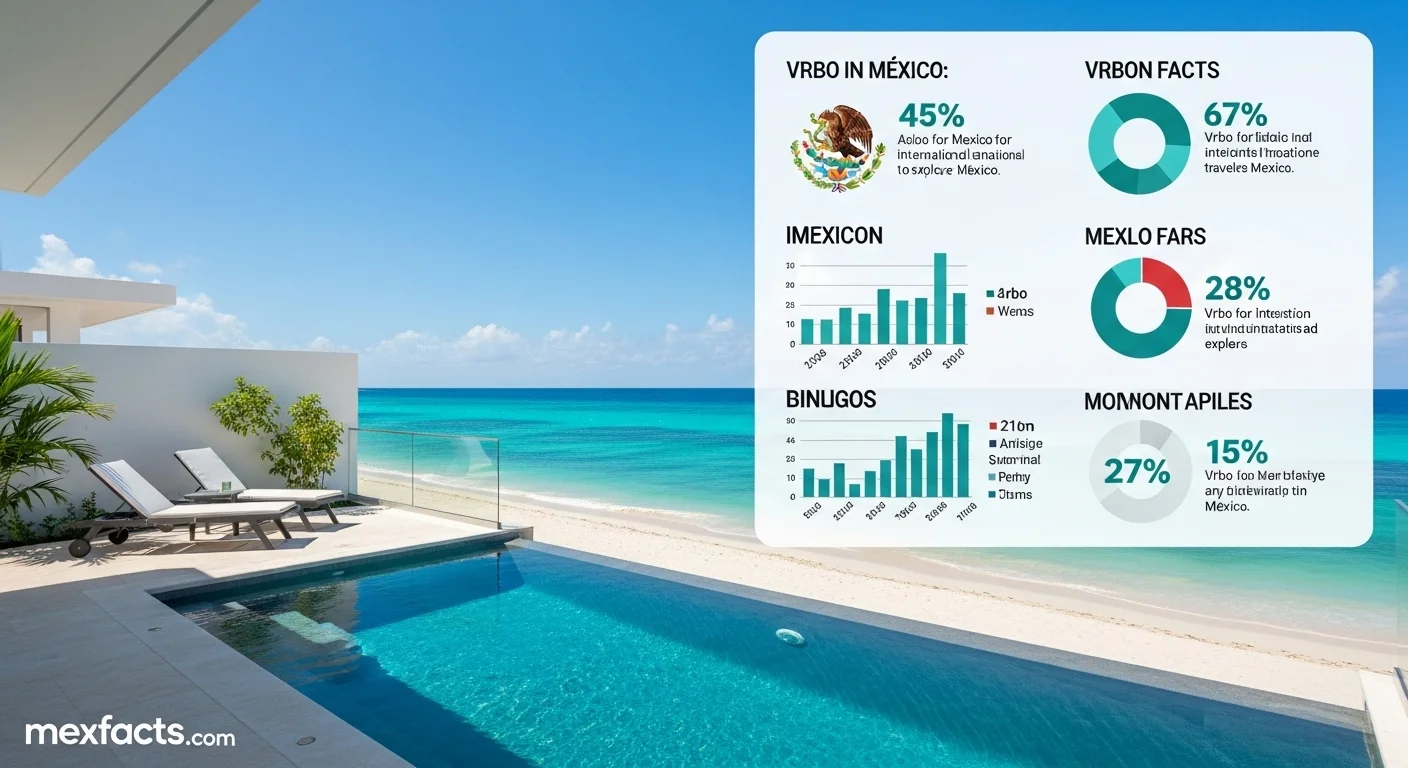
Vacation rentals play a major role in Mexico's tourism landscape. According to figures reported by Mexico's Ministry of Tourism (SECTUR), the country welcomed approximately 45 million international tourists in 2024, generating nearly $33 billion in visitor expenditure. While resort hotels capture a substantial portion of coastal package travel, short-term rentals have expanded into residential neighborhoods and coastal enclaves. This model channels economic activity directly to local property managers, maintenance technicians, domestic staff, and neighborhood businesses like markets, bakeries, and family-owned restaurants.
Key Destinations: Cancún and Sayulita
Cancún: Condos and Villas Beyond the Resort Strip
Cancún remains one of the most visited destinations in Latin America, celebrated for its turquoise Caribbean waters and proximity to archaeological landmarks like Chichén Itzá and Tulum. While Cancún is best known for the large resort complexes along Boulevard Kukulcán in the Hotel Zone, Vrbo offers a different way to experience the destination. Travelers can book oceanfront condominiums within master-planned residential communities, private luxury villas in Puerto Cancún, or quieter residential homes in Downtown Cancún (El Centro).
For multi-generational families or groups of four or more, renting a private two- or three-bedroom condominium is often significantly more cost-effective than booking multiple hotel rooms. Having a full kitchen reduces restaurant dining costs, while in-unit laundry and dedicated parking provide practical convenience for day trips across Quintana Roo and Yucatán. Typical nightly rates in Cancún vary widely depending on the season, with off-peak rates starting around $150 to $200 per night for condos and exceeding $600 per night for direct oceanfront villas during the winter peak.
Sayulita: Coastal Casitas and Village Living
Located along the Riviera Nayarit, roughly 45 minutes north of Puerto Vallarta International Airport, Sayulita is a designated Pueblo Mágico known for its bohemian surf culture, vibrant town square, and relaxed coastal pace. Unlike high-rise destinations, Sayulita's rental inventory consists largely of open-air palapa villas, colorful hillside casitas with panoramic ocean views, and beachfront compounds steps from the surf breaks.
Booking a Vrbo in Sayulita immerses visitors into the daily rhythm of the village. Guests typically walk or rent golf carts to navigate the cobblestone streets, stopping at local fruit stands, organic cafes, and artisan markets. Beachfront properties command premium rates, particularly during the winter surf and whale-watching season from November to April, while hillside casitas offer tranquil retreats surrounded by coastal jungle foliage.
Understanding Total Costs, Fees, and Mexican Taxes
When evaluating a Vrbo listing in Mexico, the advertised nightly rate represents only one component of the total reservation cost. Understanding how fees, deposits, and statutory taxes are calculated helps prevent unexpected surprises at checkout.
Itemizing the Final Booking Price
The total booking price on Vrbo comprises several distinct charges:
- Base Nightly Rate: The nightly fee set by the property owner, which fluctuates according to seasonal demand, length of stay, and local holidays such as Easter (Semana Santa) and New Year.
- Cleaning Fee: A one-time charge established by the host to cover professional housekeeping between guest turnovers. In Mexico, this fee typically ranges from $40 for a one-bedroom condo to $200 or more for large luxury villas.
- Vrbo Guest Service Fee: A percentage-based fee charged by the platform (typically between 6% and 15% of the rental amount, excluding taxes and refundable fees) to fund customer support and platform operations.
- Refundable Damage Deposit: Some hosts require a temporary hold or refundable deposit to cover potential property damage. This is either held on the payment card or managed through an optional property damage protection policy.
- Currency and Conversion Fees: Listings may be quoted in Mexican Pesos (MXN) or U.S. Dollars (USD). Guests paying with an international credit card should be aware of foreign transaction fees charged by their bank, as well as the platform's conversion rates if booking in a foreign currency.
Mexican Taxes and Regulatory Compliance
The Mexican government and individual state authorities regulate digital accommodation platforms to ensure fair tax collection and safety standards. Under federal tax legislation enforced by the Servicio de Administración Tributaria (SAT), platforms operating in Mexico collect federal Value Added Tax (Impuesto al Valor Agregado, or IVA, at 16%) on platform services and transactions.
In addition to federal taxes, guests must account for state lodging taxes (Impuesto sobre Hospedaje, or ISH). The lodging tax rate varies by state:
- Quintana Roo (Cancún, Riviera Maya, Tulum): Imposes a lodging tax generally set at 5%, alongside an environmental sanitation fee (derecho de saneamiento ambiental) collected per room per night by the municipality.
- Baja California Sur (Los Cabos, La Paz): Collects a state lodging tax of approximately 4%, in addition to a local tourist fund contribution.
- Nayarit (Sayulita, Punta Mita): Applies a lodging tax of approximately 3% to 5% on short-term rentals.
- Mexico City (CDMX): In addition to a 5% lodging tax, Mexico City enacted regulations requiring hosts to register in a public host registry (Padrón de Anfitriones) and capping short-term rental occupancy at 50% of the calendar year to protect local residential housing availability.
Legitimate hosts comply with these tax obligations by registering their Mexican taxpayer ID (RFC). For international investors seeking to own property in Mexico and operate vacation rentals, compliance with SAT tax withholding and local municipal licensing is essential for lawful operations.
Booking Protections, Safety, and Rental Regulations
Payment Security and Host Communication
Vrbo provides the Book with Confidence Guarantee for reservations completed and paid entirely through its secure platform. This coverage protects travelers against fraudulent listings, unauthorized host cancellations within 30 days of check-in, and significant listing discrepancies where a property is deemed uninhabitable or materially misrepresented upon arrival.
To maintain full protection under this guarantee, travelers should observe key safety practices:
- Never Transfer Money Outside the Platform: Legitimate hosts will never ask you to wire money via Western Union, make direct wire transfers, or pay via third-party apps outside Vrbo's checkout portal. Offline transactions forfeit all platform insurance and payment protections.
- Review Cancellation Policies: Hosts select from standardized Vrbo cancellation policies ranging from Relaxed (full refund up to 14 days before check-in) to Strict (no refund within 60 days). Carefully inspect the specific policy before confirming your reservation.
- Inspect Past Guest Reviews: Prioritize properties with multiple detailed reviews spanning at least 12 months. Reviews often reveal critical real-world details regarding internet speed, street noise, water pressure, and host responsiveness.
Emerging Rental Markets Beyond Beach Hotspots
While coastal hubs like Cancún and Riviera Nayarit account for substantial search volume, travelers are increasingly exploring vacation rentals across diverse regions of Mexico.
Colonial Cities and Pacific Retreats
Beyond resort corridors, distinct geographic markets offer compelling rental experiences:
- Baja California Sur: From the luxury villa developments in Cabo San Lucas to the tranquil coastal capital of La Paz along the Sea of Cortez, Baja California Sur features high-demand whole-home rentals equipped with private pools and desert-ocean vistas.
- The Riviera Maya and Yucatán: In a rapidly evolving eco-chic market like Tulum, rentals emphasize sustainable architectural design, while the colonial capital of Mérida offers historic restored homes with interior courtyards and private plunge pools within easy driving distance of cenotes and Mayan archaeological sites.
- Colonial Highlands: Destinations such as San Miguel de Allende, Guanajuato, and Oaxaca City showcase traditional Spanish colonial architecture, rooftop terraces overlooking historic cathedrals, and vibrant local gastronomy.
- Oaxaca Coast: Emerging surf and nature hubs like Puerto Escondido and Mazunte attract remote workers and eco-conscious travelers seeking quiet beachfront bungalows and open-air villas.
Practical Checklist for Guests
To ensure a seamless stay at a Mexican vacation rental, verify the following property amenities before booking:
- Air Conditioning: In tropical coastal regions, verify whether air conditioning units are installed in all bedrooms and living spaces, or whether cooling is limited to specific rooms or ceiling fans.
- Potable Water and Filtration: Tap water in Mexico is generally not potable for drinking. Confirm whether the host provides a multi-stage reverse-osmosis filtration system or complimentary bottled water (garrafones).
- Backup Power and Internet: In coastal towns and island destinations, occasional power fluctuations can occur during severe weather. If you work remotely, confirm high-speed Wi-Fi speeds (such as Starlink or fiber optic) and inquire if the property has a backup generator or surge protection.
- Transportation and Access: In hillside or rural enclaves, determine whether paved roads lead to the property or if a 4x4 vehicle or golf cart is required for daily transit.
Frequently Asked Questions
- Is Vrbo safe to use for booking vacation rentals in Mexico?
- Yes. Booking through Vrbo is safe provided all communications and payments remain within the platform. Booking through the official site activates the Book with Confidence Guarantee, protecting travelers against fraudulent listings and misrepresentations.
- What is the difference between Vrbo and Airbnb in Mexico?
- The primary distinction is property type. Vrbo offers solely entire, private homes, condos, and villas without shared host accommodations or private rooms in occupied dwellings. Airbnb offers both whole properties and shared rooms or individual spaces.
- How are taxes handled on Vrbo reservations in Mexico?
- Vrbo automatically calculates and collects required federal Value Added Tax (IVA at 16%) and applicable state lodging taxes (Impuesto sobre Hospedaje, typically 3% to 5%) at checkout, remitting them to the relevant Mexican tax authorities.
- Should I pay for my Mexico rental in US Dollars or Mexican Pesos?
- If your credit card does not charge foreign transaction fees, paying in the local currency (Mexican Pesos) often avoids dynamic currency conversion markups. Always check your card provider's terms before completing payment.
Expert Reviews
The Henderson Family ⭐⭐⭐⭐⭐
This guide was spot-on! We were on the fence about a hotel versus a rental for our family of five in Cancún. After reading this, we booked a 3-bedroom condo on Vrbo. Having our own kitchen and pool was a game-changer for traveling with kids. It felt like a true home away from home. Thank you!
Chloe and Ben ⭐⭐⭐⭐⭐
My partner and I wanted an authentic trip and were leaning towards Sayulita. This article captured the vibe of the town perfectly and gave us the confidence to book a beachfront casita through Vrbo. Waking up to the sound of the waves was a dream come true. The tips here helped us feel like locals, not just tourists.
Richard L., Investor ⭐⭐⭐⭐
As someone considering investing in a vacation property in Mexico, this was an incredibly useful resource. The breakdown of market trends, regional opportunities beyond just Cancún, and the honest take on regulations was exactly what I needed. It's clear, well-written, and provides a realistic outlook.