
Cancun Water Guide: Ocean Conditions, Drinking Safety, Cenotes, and Water Parks

When travelers research Cancun water, they are usually navigating several distinct questions: whether hotel tap water is safe to drink, how ocean conditions and seasonal seaweed affect swimming, where to experience freshwater cenotes, and which resorts feature top-tier aquatic parks. In Quintana Roo, water defines the entire destination experience, from the limestone aquifer that carved the Yucatan Peninsula's sacred caverns to the turquoise Caribbean Sea and multi-million-dollar resort water complexes. This comprehensive guide clarifies drinking water safety standards, outlines seasonal ocean and beach conditions, explores Mayan freshwater cenotes, and highlights premier family resort water parks across the Mexican Caribbean.
On this page
- Practical Water Safety: Tap Water vs. Purified Systems
- Caribbean Sea Conditions: Ocean Warmth, Currents, and Seasons
- Freshwater Cenotes and the Yucatan Aquifer System
- Resort Water Parks: The Evolution of Aquatic Entertainment
- Economic Metrics and Tourism Infrastructure
- Sustainability and Marine Conservation
- Frequently Asked Questions About Cancun Water
Practical Water Safety: Tap Water vs. Purified Systems
One of the most frequent practical questions international visitors ask is whether they can drink tap water in Cancun. The municipal water supply in Cancun and the Riviera Maya, operated by concessionaire Aguakan, is treated and purified at extraction plants to meet Mexican federal health standards (NOM-127-SSA1). However, as water travels through municipal distribution networks and into private storage cisterns (tinacos), microbial quality can degrade. Consequently, municipal tap water is not recommended for direct, unfiltered consumption.
To protect guests, reputable hotels, resorts, and restaurants across the Cancun Hotel Zone and Riviera Maya install sophisticated on-site purification infrastructure. These commercial systems utilize multi-stage filtration, reverse osmosis, and ultraviolet (UV) sterilization. As a result, ice served in licensed resort bars, water used in culinary preparation, and water served from resort dining dispensers are thoroughly purified and safe. In luxury resorts, room tap water is often routed through central filtration plants, though properties still provide complimentary bottled water or dedicated filtration dispensers for drinking and tooth brushing. Visitors should drink sealed bottled water or verified filtered water, but tap water remains completely safe for bathing, showering, and general hygiene.
Caribbean Sea Conditions: Ocean Warmth, Currents, and Seasons
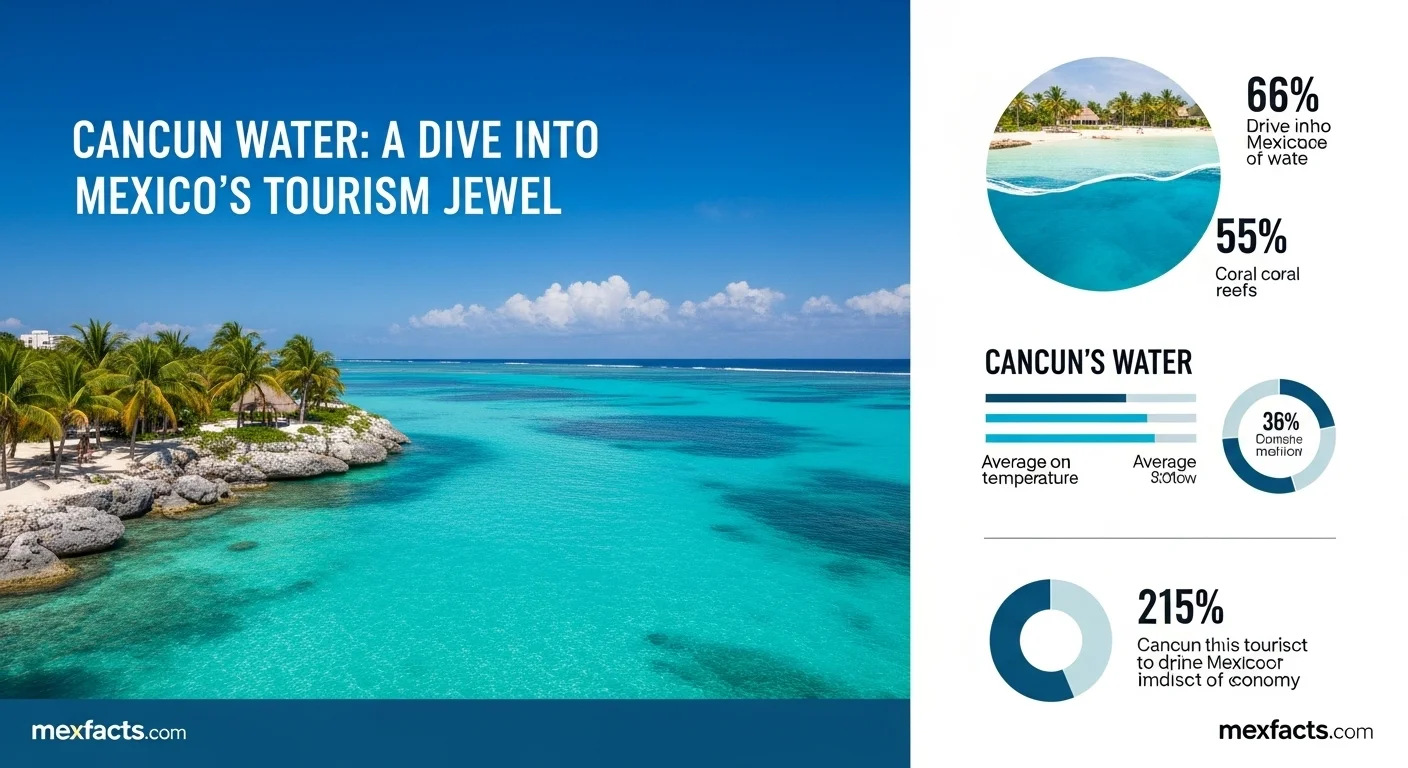
The signature turquoise coloration of the sea in Cancun is a product of natural geology and optics. The seafloor along the coast consists of bright white, crushed calcium carbonate coral sand that reflects sunlight through clear, shallow water. Because the Yucatan Peninsula lacks surface rivers that deposit murky sediment into the sea, ocean visibility remains exceptionally high throughout much of the year.
Water temperatures remain inviting across all four seasons, typically averaging 79°F (26°C) during the winter months of January and February and climbing to 84°F (29°C) in July and August. However, swimming conditions vary considerably depending on beach geography. The Cancun Hotel Zone forms an "L" shape with two distinctly different coastlines:
- The Northern Strip (Kilometers 1 to 9): Beaches such as Playa Langosta, Playa Tortugas, and Playa Caracol face north toward Isla Mujeres. The island shields this shoreline from strong open-ocean swells, creating shallow, calm waters ideal for families with young children and leisurely swimming.
- The Eastern Strip (Kilometers 9.5 to 22): Beaches including Playa Gaviota Azul, Playa Chac Mool, Playa Marlín, and Playa Delfines face east toward the open Caribbean Sea. This stretch offers dramatic vistas and azure waves, but it frequently experiences stronger surf and dangerous undertows. Swimmers should always check the beach safety flags posted by lifeguards.
For travelers planning their coastal itinerary, exploring different Cancun beaches allows visitors to balance tranquil shallows with expansive oceanfront settings. Along the entire coast, ocean safety is governed by standardized colored flags: green indicates safe swimming, yellow advises caution, red warns of dangerous conditions, and black signifies that swimming is strictly prohibited.
Seasonal pelagic sargassum (brown macroalgae) can also affect coastal waters, predominantly between April and August. Ocean currents periodically carry mats of sargassum into the Caribbean basin. Quintana Roo authorities, naval teams, and hotel associations deploy offshore containment barriers, specialized barrier boats, and daily mechanical beach-cleaning crews to keep primary resort beaches accessible.
Freshwater Cenotes and the Yucatan Aquifer System
Beyond the Caribbean coastline lies an equally vital aquatic dimension of the Yucatan Peninsula: its vast subterranean freshwater ecosystem. The entire peninsula rests on a porous limestone karst platform devoid of surface rivers. Rainwater filters through layers of rock directly into subterranean aquifers, forming the world's most extensive explored underwater cave networks, including the Sac Actun and Ox Bel Ha systems.
Where subterranean cavern roofs have collapsed over millennia, natural sinkholes known as cenotes (derived from the Yucatec Maya term dzonot) are revealed. These sinkholes expose crystalline freshwater that has undergone natural limestone filtration. To the ancient Maya civilization, cenotes served as both life-sustaining freshwater sources and sacred portals to Xibalba, the underworld. Modern visitors can experience three primary types of cenotes:
- Open Cenotes
- Mature geological formations where the cavern ceiling has completely collapsed, resembling lush jungle swimming pools surrounded by vertical rock walls and hanging tropical vegetation.
- Semi-Open Cenotes
- Partially sheltered caverns where sunlight pours through openings in the ceiling, illuminating crystal-clear water with dramatic natural light beams.
- Cavern or Cave Cenotes
- Subterranean pools enclosed inside limestone caves, featuring ancient stalactites, stalagmites, and pristine, calm subterranean water accessible for guided swimming and cave diving.
Because cenote ecosystems are biologically delicate, visitors are required to shower before entering to wash away sunscreen, insect repellents, and body oils. Only certified reef-safe biodegradable products or pure shade protection should be used to protect the fragile subterranean water table. Eco-archaeological nature parks such as Xcaret and Xel-Há incorporate these natural river channels and cenotes into structured snorkeling and swimming environments that blend ecological education with recreation.
Resort Water Parks: The Evolution of Aquatic Entertainment
Over the past two decades, Cancun and the wider Riviera Maya have expanded beyond pristine beaches to become a world leader in specialized resort water entertainment. When the Mexican government and FONATUR originally master-planned Cancun in the late 1960s, the initial vision centered on beachfront hotels along the Caribbean Sea. However, modern travelers—particularly families traveling with children and teenagers—increasingly seek comprehensive on-property adventure amenities.
This demand fueled the development of premier Cancun all-inclusive family resorts with a water park, where sprawling aquatic attractions are integrated directly into resort stays. Rather than traveling off-site to external theme parks, guests enjoy multi-story water slides, lazy rivers, flow riders, and dedicated toddler splash complexes within their hotel grounds.
A benchmark in this sector is The Grand at Moon Palace Cancun. Designed as a luxury family mega-resort, its dedicated water park features high-speed body slides, multi-lane racing slides, a large wave pool, and a meandering lazy river. Similarly, Royalton Splash Riviera Cancun expanded this concept by introducing one of the Caribbean's largest on-site resort water parks, boasting 14 full-scale water slides, splash pads, and tube courses. Other established properties, such as the redesigned Marriott Cancun All-Inclusive Resort, have introduced expansive water parks with lazy rivers and water play zones to cater to multi-generational travelers. This format provides families with controlled, highly secure entertainment where parents can relax while children enjoy lifeguard-supervised water attractions.
Economic Metrics and Tourism Infrastructure
Cancun's water-based tourism is the foundational engine of Quintana Roo's regional economy. Official tourism data highlights the immense scale of this coastal market:
- Annual Visitors and Economic Impact: Quintana Roo welcomes approximately 21 million international and domestic tourists annually, generating more than $20 billion in tourism-related revenue across hotels, dining, transport, and tours.
- Airport Passenger Traffic: Cancun International Airport (CUN) serves as the main gateway for international travelers coming to Mexico, managing over 33 million passenger movements annually and connecting the Mexican Caribbean directly to major cities across North America, Europe, and South America.
- Hospitality Capacity and Occupancy: The state features more than 130,000 hotel rooms, with average regional occupancy rates regularly reaching 75% in Cancun, Puerto Morelos, and the Riviera Maya during peak winter and summer travel seasons.
The economic footprint of water-oriented tourism has also expanded south into Costa Mujeres, Playa del Carmen, and Akumal. Large-scale federal infrastructure projects are strengthening this interconnected corridor. The Tren Maya railway system and the Felipe Carrillo Puerto International Airport in Tulum make it seamless for international visitors to explore both northern beach hubs and southern Mayan heritage centers, connecting Cancun & Tulum: The Heartbeat of the Mexican Caribbean into an integrated regional journey.
Sustainability and Marine Conservation
As Cancun's aquatic hospitality sector continues to grow, safeguarding water resources and marine environments has become a paramount priority. The coastal region faces key ecological responsibilities:
- Mesoamerican Barrier Reef Protection: The second-largest coral reef barrier in the world runs along the Quintana Roo coastline. Marine parks and conservation authorities regulate diving, motorized water sports, and snorkeling numbers to preserve delicate coral formations and protect marine biodiversity.
- Closed-Loop Water Management: Modern resort water parks and luxury hotel complexes increasingly employ high-efficiency closed-loop filtration, automated water recirculation, and on-site wastewater treatment plants. Treated gray water is recycled for landscape irrigation across resort gardens and golf courses, significantly reducing aquifer withdrawal.
- Sargassum Monitoring and Processing: Ongoing research and public-private partnerships focus on repurposing collected sargassum into sustainable biofuels, soil fertilizers, and construction materials, turning a seasonal coastal challenge into a circular economy opportunity.
Frequently Asked Questions About Cancun Water
- Can you drink tap water in Cancun hotels?
- It is recommended not to drink unfiltered municipal tap water. While city water is treated at purification facilities, older pipe infrastructure can introduce contaminants. Major resorts and established hotels operate commercial-grade reverse osmosis and UV filtration systems, making tap water safe for bathing and providing purified bottled or filtered water for drinking and brushing teeth.
- Are ice cubes safe at Cancun resorts and restaurants?
- Yes. Licensed resorts, hotels, and tourist restaurants in Cancun use purified commercial ice made from filtered water. Factory-bagged ice, characterized by cylindrical cubes with holes in the middle, meets strict health standards and is safe for consumption in drinks.
- Where is the ocean water calmest in Cancun?
- The calmest ocean waters are located along the northern section of the Hotel Zone (from Kilometer 1 to Kilometer 9), including Playa Langosta, Playa Tortugas, and Playa Caracol. These beaches are sheltered by Isla Mujeres, making them ideal for families with young children and swimming.
- What precautions should you take when swimming in cenotes?
- Swimmers must take a freshwater rinse before entering a cenote to remove lotions, oils, and chemical repellents. Regular sunscreens are strictly prohibited in most cenotes to preserve delicate cave ecosystems and aquatic flora. Life jackets are generally mandatory in deep sinkholes.
- Do resort water parks in Cancun require extra admission fees?
- For guests staying at dedicated all-inclusive properties such as The Grand at Moon Palace or Royalton Splash Riviera Cancun, full access to on-site water slides, splash pads, and lazy rivers is typically included in the room rate. Day passes may be available for non-guests depending on hotel occupancy policies.
Expert Reviews
Sarah K., Chicago, IL ⭐⭐⭐⭐⭐
My family and I just got back from the Royalton Splash, and this article perfectly captures why we chose it. The water park was the highlight for our kids (8 and 11), which meant my husband and I actually got to relax by the pool! The article’s description of the 'all-in-one' experience is spot on. It was a vacation we'll never forget.
David Chen, Real Estate Developer ⭐⭐⭐⭐⭐
As an investor looking into hospitality projects in Quintana Roo, this piece was incredibly valuable. It goes beyond the typical sterile data reports. The author's cultural insights and perspective on sustainability challenges provided a much-needed layer of context that is crucial for making informed decisions. Well done.
Elena Garcia, Travel Blogger ⭐⭐⭐⭐⭐
I’ve been visiting the Yucatan for over 20 years, and I loved the respectful way this article handled the evolution of the region. It acknowledges the history and the sacredness of the cenotes while also explaining the economic reality of the massive resorts. The call for a sustainable future is something that resonates deeply with me. We need more voices like this.