
Sayulita Mexico: 2026 Guide to Surf Culture, Costs & Living

Tucked along Mexico's Pacific coastline in the state of Nayarit, Sayulita has evolved from a quiet coconut-farming and fishing settlement into one of Mexico's most internationally recognized coastal towns. Designated as an official 'Pueblo Mágico' by Mexico's Secretariat of Tourism in 2015, the town combines accessible Pacific surf breaks and vibrant Huichol (Wixárika) artisanal heritage with a flourishing community of remote workers, long-term expatriates, and independent travelers. Positioned within the greater Riviera Nayarit region, Sayulita presents a distinctive case study in coastal development: balancing strong vacation rental demand and foreign real estate interest against crucial municipal priorities such as wastewater management and cultural conservation. This guide details Sayulita's historical roots, everyday living expenses, beach conditions, and emerging economic trends.
What is Sayulita and Why Does It Charm the World?
Table of Contents
Nestled along the southern coast of the state of Nayarit within the Bahía de Banderas municipality, Sayulita, Mexico, has built a global reputation that far exceeds its compact geographic footprint. Once a tranquil rural outpost centered on coconut palm harvesting and artisanal fishing, it is now celebrated as one of the premier bohemian beach destinations on Mexico's Pacific coast. Its identity rests on a combination of dependable surf breaks, traditional indigenous crafts, lively open-air dining, and its designation as a 'Pueblo Mágico' (Magic Town) in 2015. This federal program, administered by the Mexican Secretariat of Tourism (SECTUR), recognizes towns that have preserved their cultural heritage, architectural character, and historical traditions while welcoming tourism. For international travelers and prospective residents, Sayulita illustrates how a small Mexican coastal town can interface with global remote work and international travel while maintaining a distinct local identity.
A Glimpse into Sayulita's Past: From Coconut Hacienda to Surf Haven
The cultural history of the area surrounding Sayulita is closely intertwined with the Wixárika (Huichol) and Cora (Naayeri) peoples, whose ancestral presence in Nayarit and neighboring Jalisco remains evident in the town's vibrant folk art, beadwork, and yarn paintings. The modern name 'Sayulita' is an affectionate diminutive of Sayula, Jalisco. According to regional historical records, Don Lauro González Guerra, a native of Sayula who managed the local Jaltemba hacienda in the early twentieth century, named the coastal village after his hometown. During that era, the local economy centered on harvesting oil from the wild Attalea cohune (oil palm) trees that carpet the coastal hillsides, supplemented by small-scale fishing.
The town's modern trajectory began shifting in the late 1960s with the construction of Federal Highway 200, which connected isolated coastal stretches of Nayarit to Puerto Vallarta and the wider national highway network. Surfers from California, Hawaii, and Canada soon discovered the gentle, consistent right and left breaks at the mouth of the Sayulita River. Throughout the 1970s and 1980s, word of mouth established Sayulita Nayarit as a favored stop along the Mexican Pacific surf trail. Those early traveling surfers, joined by artists and wellness enthusiasts, helped lay the groundwork for the town's eclectic international community.
The 'Pueblo Mágico' Effect and Regional Connectivity
Located approximately 40 kilometers (25 miles) north of Licenciado Gustavo Díaz Ordaz International Airport (PVR) in Puerto Vallarta, Sayulita offers straightforward access for travelers arriving on direct flights from across the United States, Canada, and Mexico. Travelers frequently connect through major transport hubs such as Los Angeles International Airport to reach the region. The drive takes approximately 45 to 60 minutes along Highway 200, with ongoing regional road improvements reducing travel friction between coastal Nayarit and western Mexico.
The awarding of Pueblo Mágico status in September 2015 served as a significant catalyst for municipal investment and brand visibility. The program spurred coordinated beautification projects, including pedestrian-friendly cobblestone paving, street lighting, and promotional campaigns. In contrast to high-density resort enclaves, Sayulita's urban core remains characterized by colorful low-rise buildings, open-air plazas decorated with festive papel picado, and independent boutiques, maintaining a relaxed, village-scale atmosphere that sits in contrast to large hotel strips.
Life on Sayulita's Beaches: Surfing, Swimming, and Coastal Geography
Coastal life revolves around several distinct beaches, each serving different recreational preferences:
- Playa Sayulita (Main Beach): The central focal point of the town, Playa Sayulita offers a gently sloping sandy bottom and consistent, manageable waves near the river mouth. It serves as an accessible learning ground for beginner and intermediate surfers, supporting numerous local surf academies, paddleboard rentals, and beachfront seafood restaurants.
- Playa de los Muertos: Located a brief 10-minute walk south of the central plaza through a small headland and past the town's colorful hillside cemetery, this protected cove features calmer waters protected by rocky points, making it a preferred spot for swimming and families.
- Playa Carricitos: Situated further south and facing the open Pacific, Carricitos is backed by lush coastal jungle. While its powerful shorebreak and strong undertows make swimming hazardous, it is widely appreciated for its secluded sunset views and dramatic natural setting.
- Playa Malpaso and Playa Patzcuarito: Reached via hiking trails winding through tropical foliage, these expansive, uncrowded beaches provide peaceful alternatives for walkers and nature watchers seeking quiet coastal scenery.
Just a few miles up the coast lies San Pancho (San Francisco, Nayarit), a neighboring coastal town offering its own distinct community spirit, cultural center, and tranquil beach environment.
A Global Village: Expats, Nomads, and Remote Workers
Sayulita has evolved into a prominent hub for expatriates, digital nomads, and seasonal residents from North America and Europe. Unlike resort destinations that rely heavily on short-stay package tourism, Sayulita maintains an active year-round resident community. The town features dedicated coworking facilities, independent cafes equipped with fiber-optic and low-latency satellite internet (such as Starlink), and an array of wellness studios, yoga retreats, and Spanish language schools. This digital and lifestyle infrastructure allows professionals to work remotely while enjoying the pace of a Pacific coastal town.
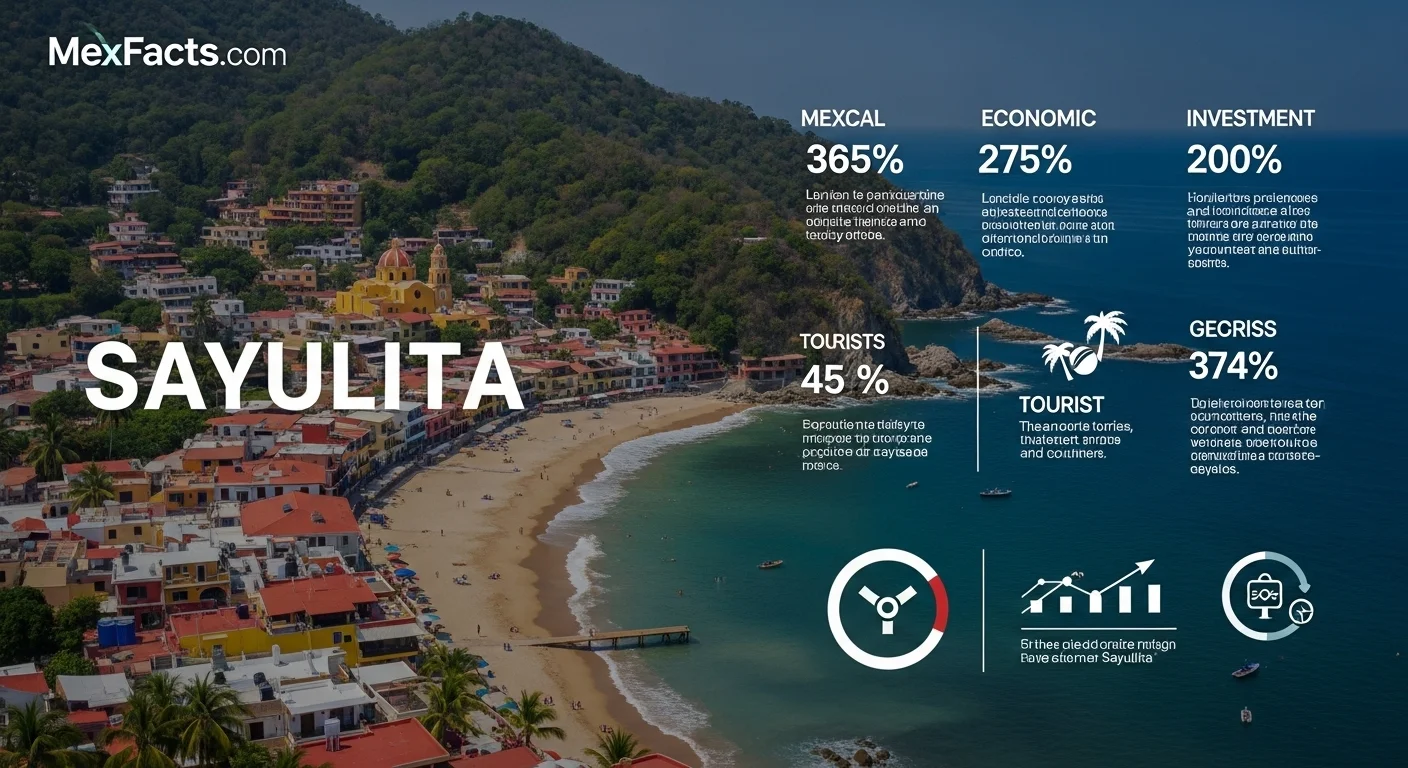
The Numbers Behind the Economy: Tourism, Living Costs, and Real Estate
Understanding Sayulita requires examining its demographic reality and economic foundation. While the town maintains a relaxed coastal identity, its rapid expansion has created concrete economic opportunities alongside visible infrastructural challenges, particularly regarding housing availability, utility capacity, and municipal management.
Demographics and Population Dynamics
According to official census data from Mexico's National Institute of Statistics and Geography (INEGI), the locality of Sayulita recorded a permanent resident population of 3,390 inhabitants in the 2020 census, within the broader municipality of Bahía de Banderas. However, day-to-day population figures are highly dynamic. Between seasonal winter residents (often called 'snowbirds'), remote workers staying on temporary visas, and domestic and international vacationers, the effective population present in the town regularly swells to an estimated 6,000 to 10,000 people during peak holiday weekends.
Tourism Trends: Seasonality and Regional Draw
Tourism represents the cornerstone of Sayulita's local economy. While municipal data is typically aggregated within regional statistics for the Riviera Nayarit, the town experiences marked seasonal patterns:
- High Season (November to April): Characterized by dry weather, mild daytime temperatures averaging 26°C to 28°C (79°F to 82°F), and regular Pacific swells, this period sees hotel and vacation rental occupancy rates frequently exceed 80% to 90%. Key peaks occur around Christmas, New Year's, and Semana Santa (Holy Week). Prospective travelers often utilize comprehensive Mexico booking guides to reserve accommodations well ahead of peak winter dates.
- Low/Green Season (June to October): Tropical rainfall, elevated humidity, and warmer ocean temperatures define the summer months. While tourist foot traffic moderates, the season attracts dedicated surfers seeking larger south swells and travelers looking for discounted accommodation rates.
The Real Estate Landscape: Purchasing, Rentals, and Foreign Ownership
Demand for residential property in Sayulita has grown significantly over the past decade, driven largely by buyers from the United States and Canada seeking second homes or vacation rental investments.
- Foreign Ownership Framework: Because Sayulita is situated within 50 kilometers of the Mexican coastline, foreign individuals acquire residential property through a fideicomiso (a bank trust authorized under the Mexican Foreign Investment Law and overseen by a licensed Mexican financial institution) or through a Mexican corporation for commercial ventures.
- Property Segments: Available real estate ranges from multi-unit condominium developments and village homes ('casitas') to custom ocean-view villas on the North End and surrounding hillsides. Land parcels and residential units command price levels comparable to established coastal markets in Baja California and Jalisco.
- Vacation Rental Yields: Short-term rental platforms have transformed the local lodging sector. High seasonal occupancy offers attractive gross rental yields for property managers, although operating expenses—including high electricity tariffs (CFE), municipal water fees, property maintenance, and local hospitality taxes—must be carefully budgeted.
Cost of Living: Everyday Budget Realities
While Mexico offers an overall cost advantage compared to many North American metro areas, Sayulita ranks among the more expensive coastal towns in the country. The broad question of whether living in Mexico is expensive depends heavily on the chosen destination; resort-oriented coastal towns command higher premiums than colonial interior cities.
- Long-Term Rentals: One- or two-bedroom furnished apartments typically range from $1,200 to $2,500+ USD per month, depending on location, air conditioning efficiency, and proximity to the beach. Securing a traditional long-term lease requires persistence, as many landlords favor short-term vacation pricing during the winter.
- Dining and Groceries: Everyday living offers flexibility. Dining at casual street stands and traditional fondas remains very economical (tacos starting at 25 to 40 MXN each), while beachfront dining, craft cocktail venues, and imported grocery items are priced closer to international standards.
- Local Transportation: The town's compact layout makes walking the primary way to get around. However, electric or gas golf carts are widely rented and owned by residents to navigate cobblestone streets and hilly neighborhoods like Gringo Hill and Nanzal.
Infrastructure, Waste Management, and Water Quality
Sayulita's rapid growth has tested its municipal infrastructure, bringing environmental stewardship to the forefront of community discussions. The most critical focus has been municipal wastewater treatment and coastal water quality at Playa Sayulita.
Historically, heavy seasonal rainfall put pressure on the town's collection system. In response, local municipal authorities (OROMAPAS Bahía de Banderas), federal agencies, and community non-profit groups, notably Grupo Pro Sayulita, spearheaded major structural overhauls. A critical component was the construction and commissioning of an offshore subsea emissor (emisor submarino), a high-density pipeline carrying fully treated effluent approximately 2.3 kilometers offshore to deep ocean currents at a depth of over 30 meters, where natural ocean dilution occurs.
Recreational water quality is evaluated through enterococci bacteria monitoring under Mexican official health guidelines overseen by the Federal Commission for the Protection against Sanitary Risks (COFEPRIS), which establishes a safe recreational swimming threshold of fewer than 200 enterococci per 100 milliliters. While local testing generally confirms clean water suitable for swimming, high-occupancy periods and heavy rainy season stormwater runoff continue to require diligent maintenance, capacity upgrades, and ongoing community oversight.
The Future of Sayulita: Opportunities, Sustainability, and Infrastructure
As Sayulita navigates the coming years, its primary objective will be harmonizing international economic appeal with ecological and community sustainability. The town's path forward reflects the broader challenges facing Mexico's Pacific tourism corridor: managing regional infrastructure growth while preserving local community identity.
Regional Highway Connectivity and Airport Expansion
Major public works projects across western Mexico are reshaping regional transit corridors to Sayulita:
- Guadalajara–Puerto Vallarta Toll Highway (Vía Corta): The completion of key sections of the new toll highway network (including the Compostela–Las Varas and Las Varas–Puerto Vallarta segments) has significantly shortened driving times between Guadalajara—Mexico's second-largest metropolitan area—and coastal Nayarit, boosting domestic weekend tourism and intercity trade.
- Tepic-Riviera Nayarit Airport (TPQ): Modernization and runway expansion projects at the state capital airport in Tepic, Nayarit, are designed to handle expanded commercial flights, providing an alternative international entry point to alleviate seasonal congestion at Puerto Vallarta's airport.
While improved transit expands economic reach, local planners and civic organizations emphasize the need for balanced growth that protects surrounding tropical dry forests, limits building density, and avoids straining existing water grids.
Key Commercial and Investment Horizons
Opportunities for entrepreneurs, local cooperatives, and international investors in Sayulita are shifting toward higher-value, sustainable sectors:
- Eco-Conscious Boutique Hospitality: Traveler demand increasingly favors certified sustainable accommodations, low-impact boutique hotels, and wellness retreats designed with solar energy systems, greywater recycling, and local architectural materials.
- Remote Work and Specialized Services: As digital nomadism matures into long-term residency, professional services—such as bilingual legal consulting, cross-border tax advisory, specialized dental and medical clinics, and bilingual education options—continue to expand.
- Cultural Commerce and Ethical Artisan Partnerships: Sayulita's close ties to Wixárika folk art provide a viable foundation for ethical commerce ventures that connect indigenous artisan cooperatives directly with international buyers, guaranteeing fair compensation and authentic cultural provenance.
- Adventure and Marine Tourism: Guided eco-tours, including humpback whale watching (active December through March), marine excursions to the Marietas Islands National Park, and guided mountain biking trails on Cerro del Mono, offer strong economic returns with educational environmental conservation components.
Responsible Stewardship and Sustainable Growth
The long-term vitality of Sayulita relies on coordinated participation among municipal authorities, permanent residents, and visiting travelers. For travelers and potential residents, responsible stewardship involves practical habits: utilizing reef-safe mineral sunscreens to protect nearshore marine life, sorting solid waste, supporting family-owned Nayarit businesses, and observing ocean safety flags and surf etiquette at the river mouth.
By proactively addressing wastewater management, supporting controlled architectural planning, and honoring its indigenous and agricultural heritage, Sayulita demonstrates how a Mexican Pueblo Mágico can maintain its cultural character alongside vibrant international tourism. For broader federal economic data, investment regulations, and macroeconomic indicators, the official portal of the Mexican Secretariat of Economy provides comprehensive public resources.
Expert Reviews
Emily Carter, Traveler ⭐⭐⭐⭐⭐
I visited Sayulita last winter after reading this article, and it was everything described and more. The vibe is just incredible. We took a surf lesson on the main beach, ate the best fish tacos of our lives, and just fell in love with the colorful streets. This guide was spot-on and really helped us know what to expect. We're already planning our return trip!
Mark Chen, Digital Nomad ⭐⭐⭐⭐⭐
As someone who has been living and working remotely in Sayulita for six months, I can say this article truly gets it. It honestly covers both the magic and the challenges, like the cost of living and infrastructure. The information on the digital nomad scene is accurate—the internet is solid, and the community is amazing. It's a great resource for anyone thinking of making the leap.
Sophia Bianchi, Real Estate Investor ⭐⭐⭐⭐
This was an excellent overview of the Sayulita market. The statistical insights and discussion of future opportunities gave my team a solid foundation for our research. It balances the optimistic outlook with a realistic look at the sustainability challenges, which is crucial for any long-term investment. Very well-written and insightful.