
Authentic Mexican Dips & Salsas: The 2026 Guide

When you hear 'Mexican Dip,' you might picture a colorful 7-layer creation at a party. While we love those, that's only half the story. As someone who grew up with the authentic flavors of Mexico, I want to take you on a journey. We'll go back to the ancestral 'botanas' like guacamole, ground in a traditional molcajete, and explore the universe of real Mexican salsas. Then, we'll see how these flavors inspired international favorites. This is more than a recipe guide; it's a look into how simple ingredients like avocados and chiles became pillars of our economy and beloved ambassadors of our culture, recognized by UNESCO. It's a story of flavor, tradition, and surprising economic power.
Table of Contents
What is a Mexican Dip in Mexico and why is it important internationally?
The term Mexican dip brings a smile to my face because it means so many different things to people. Internationally, it's the heart of a party, a festive appetizer that signals a good time. But the idea of a 'Mexican dip' is a tale of two worlds. On one hand, you have the authentic, centuries-old salsas and botanas (snacks) of Mexico. On the other, you have the wildly popular creations, often born from Tex-Mex culture, that have taken the world by storm. To truly appreciate these beloved dishes, you have to understand both sides of the story and the incredible cultural and economic power they represent.
The Authentic Roots: Mexico's Ancestral Salsas and Botanas
Long before anyone thought of a party dip, our ancestors in Mesoamerica were masters at creating incredible accompaniments from the land's bounty. [5] These weren't just side dishes; they were essential to the meal and our culture. At the heart of this tradition is the molcajete, a mortar and pestle carved from volcanic rock. I can still hear my grandmother grinding chiles and tomatoes in hers; that rhythmic sound is the true heartbeat of an authentic Mexican kitchen. [11]
Guacamole: The 'Avocado Sauce' of the Gods
The most famous authentic Mexican dip is, without a doubt, guacamole. Its story goes back to the Aztec Empire in the 1500s. The name comes from the Nahuatl words 'āhuacatl' (avocado) and 'mōlli' (sauce). [11] Legend even says the recipe was a divine gift from the god Quetzalcoatl. [11] True, traditional guacamole was beautifully simple: mashed ripe avocados, tomato, chile, and onion. [11] The lime we consider essential today was added after the Spanish introduced citrus to the Americas. Across Mexico, you'll find amazing variations—some with a sprinkle of crunchy *chapulines* (grasshoppers) for protein, others with sweet pomegranate seeds for contrast.
Beyond Guacamole: A Universe of Flavors
The world of Mexican dips is so much richer than just guacamole:
- Sikil P'ak: A taste of the Yucatán Peninsula, this Mayan dip has a smoky, nutty flavor from roasted pumpkin seeds, blended with fire-roasted tomatoes and a kick of habanero. It's truly unique.
- Salsa Macha: From Veracruz, this isn't a fresh salsa but a rich, complex condiment made with dried chiles, garlic, nuts, and seeds in oil. It's crunchy, spicy, and incredibly addictive for dipping or spooning over anything.
- Queso Fundido: This is the real Mexican cheese dip. Forget the liquid stuff; this is a skillet of glorious, melted Mexican cheese like Oaxaca or Asadero, often swirled with spicy chorizo or roasted poblano peppers. You scoop it up with warm tortillas, and it's pure comfort. [25]
- Frijoles Refritos con Queso: A humble but mighty dish. Our refried beans, slow-cooked to perfection, are often served as a hearty dip topped with crumbly cotija cheese. This is a foundational flavor that later inspired the famous layered Mexican dip.
The International Phenomenon: The Tex-Mex Revolution and Modern Twists
While our cuisine is a UNESCO Intangible Cultural Heritage, many dishes known globally as 'Mexican' are beautiful products of cultural fusion, especially Tex-Mex. [6, 8] This style was born on the border, adapting our recipes with ingredients that were more common in the U.S. [8]
The Story of the 7 Layer Mexican Dip
The iconic 7 layer Mexican dip is a brilliant American creation, born from Texas tailgate parties and potlucks. [2, 3] While you won't find it on a traditional menu in Mexico, its soul is entirely made of Mexican flavors and ideas. First published in 1981, its genius is in the layers—a visual and flavorful masterpiece of refried beans, guacamole, sour cream, salsa, cheese, olives, and green onions. [2] It's a testament to Tex-Mex creativity and a powerful, if indirect, ambassador for our ingredients. It's so beloved that in 2020, a world record was set with a 70-layer version weighing over 1,000 pounds! [47]
The Rise of Mexican Queso Dip
Another Tex-Mex star is the creamy, often yellow, Mexican queso dip. While it gives a nod to our *queso fundido*, it's a different beast. [15] Its origin is debated, but it likely came from Arkansas or Texas restaurateurs in the early 20th century. [1, 21] The key was using processed cheese (like Velveeta) mixed with canned chiles and tomatoes to create that perfectly smooth, stable texture that's so easy to make at home. [9, 12] This innovation made it a party staple across the U.S. from the 1960s onward. [15]
A Modern Classic: Mexican Street Corn Dip
More recently, a new favorite has captured hearts: Mexican street corn dip. This is a clever, shareable version of our beloved *elotes*—grilled corn on the cob slathered in a mix of mayo, crema, lime, chili, and cotija cheese. [26, 32] When served in a cup, we call it *esquites*. [32] The dip version combines charred corn with these same amazing flavors, often with cream cheese to make it scoopable. [26, 29, 33] Its explosion on social media shows a growing desire not just for adapted flavors, but for more authentic profiles presented in a familiar way. [20] The love for all these dips creates a powerful cycle. As people around the world enjoy guacamole, a 7 layer Mexican dip, or a Mexican street corn dip, they fuel immense demand for the avocados, tomatoes, chiles, and corn that are the foundation of Mexico's agricultural economy. [8, 43]
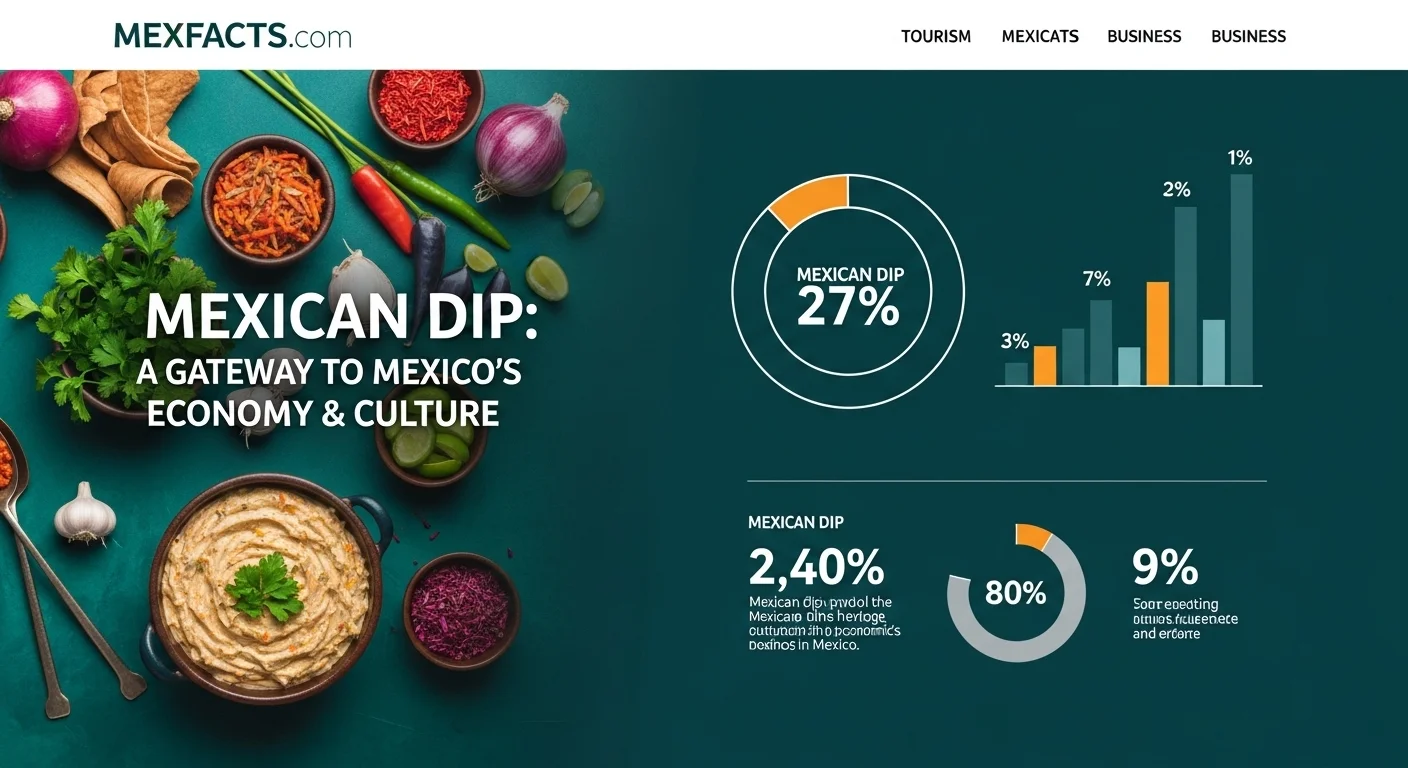
The Economic Power Behind Every Scoop: A Look at the Numbers
The global love for any Mexican dip isn't just a matter of taste; it's a massive economic engine powered by Mexico's farms and industries. To understand the big picture, you have to look at the numbers behind the ingredients that make up everything from authentic guacamole to a Tex-Mex 7 layer Mexican dip. These products are cornerstones of our national economy, foreign trade, and employment.
The Avocado: Mexico's 'Green Gold'
No ingredient says Mexican dip quite like the avocado, the star of guacamole. We call it 'oro verde,' or green gold, and for good reason. Mexico is, by a huge margin, the world's largest producer and exporter of avocados. [19]
- Production & Export Value: In 2023, Mexico's avocado exports were worth around $3.3 billion. [19] The United States is our biggest customer, importing an estimated $2.7 billion worth in 2024. [18] Think about that: every time you see a bowl of guacamole at a Super Bowl party, you're looking at a piece of a multi-billion dollar industry. Canada and Japan are also major fans. [4, 19]
- The Heart of Production: The state of Michoacán is the avocado powerhouse, producing 68% of our national total. [23] Its unique volcanic soil and climate allow for a year-round harvest, which is key to its dominance. [23, 27] Jalisco is the second-largest producer and the only other state currently able to export to the U.S. [23]
- Economic Impact: Beyond the export dollars, the avocado industry is a lifeline for hundreds of thousands of families in Mexico, providing jobs in farming, packing, and transport. [28] It also boosts the U.S. economy by generating billions in economic activity and tax revenue. [27]
Tomatoes, Chiles, and Onions: The Foundation of Salsa
The soul of countless salsas, and a critical layer in any layered Mexican dip, is the trio of tomatoes, chiles, and onions. Mexico is a global leader in growing and exporting these kitchen staples.
- Tomatoes: We are one of the world's top tomato exporters, with the state of Sinaloa leading the charge. These exports are vital for North America's supply of fresh tomatoes, the key to a good pico de gallo.
- Chiles: The diversity of chiles in Mexico is breathtaking, from the mild poblano to the fiery habanero. We export them fresh, dried, and processed, and they are the defining flavor in everything from hot sauce to a smoky Mexican queso dip. They are the heart of our cuisine. [6]
- Economic Importance: Growing these vegetables is a pillar of our agricultural sector, bringing in billions in export revenue and employing a huge part of the workforce. The demand is constant, driven by both home cooks and the food industry.
The Corn and Cheese Connection: Street Corn and Queso Dips
The rise of Mexican street corn dip and the lasting love for Mexican queso dip highlight two other vital sectors: corn and dairy.
- Corn: As the birthplace of corn, Mexico cherishes its dozens of native varieties. The recent international popularity of dishes like *elotes* and *esquites* (the inspiration for the dip) has created new appreciation and market opportunities for our corn. [24, 26, 43]
- Cheese: We have a proud tradition of cheesemaking, with beautiful artisanal varieties like Cotija (perfect for Mexican street corn dip), Oaxaca, and Chihuahua. [24] While many international queso dips use processed cheese, the popularity of the idea opens a door. There's a growing market for authentic Mexican cheeses to be used in gourmet versions of Mexican queso dip or the classic queso fundido. [12, 25]
The Packaged Goods Market: Bringing Dips to the World
It's not just about fresh ingredients. Mexico has a booming industry for packaged foods, including salsas, condiments, and dips.
- Market Size: The market for sauces and condiments in Mexico was valued at over $3.44 billion in 2022 and continues to grow. [36] The packaging for these items alone is a massive industry, expected to exceed $654 million by 2030. [7]
- Familiar Brands: Companies like Herdez, La Costeña, and Valentina are staples in every Mexican home and have successfully brought our flavors to shelves around the world. [36] They make it easy for anyone to enjoy authentic Mexican tastes.
- Convenience is Key: Like everywhere, people in Mexico are looking for convenience. [36] This has boosted the market for ready-to-eat dips and sauces, both for us at home and for export. This industrial strength is key to making a standardized Mexican dip available in supermarkets globally.
So, the next time you enjoy a Mexican dip, remember the incredible journey it took. From the fields of Michoacán to factories in Central Mexico, and finally to your table, these dips are a testament to Mexico's agricultural strength, industrial skill, and profound impact on the world's plate. [6, 28]
The Future of Flavor: Opportunities for Mexican Dips
The world's love affair with Mexican food, where a delicious Mexican dip is often the first introduction, is here to stay. This creates a future filled with exciting opportunities for Mexico's economy, as well as some challenges to navigate. The future of dips, from classic guacamole to a party-ready 7 layer Mexican dip, will be shaped by new consumer tastes, technology, and a deeper appreciation for authenticity and sustainability.
What's Next: Emerging Trends and Consumer Tastes
Today's food lovers want more than just great flavor. These trends are set to redefine the market for every kind of Mexican dip.
- A Hunger for Authenticity: I've seen a wonderful shift over the years. People are moving beyond generic 'Tex-Mex' and seeking out regional specialties. [31] This is a huge opportunity for Mexico to share authentic, regional salsas like the smoky salsa macha from Veracruz or the nutty sikil p’ak from the Yucatán. Soon, people might not just ask for a layered Mexican dip, but one that tells the story of a specific Mexican state.
- Health and Wellness: The demand for natural, organic, and clean-label foods is growing. [13, 44] Our cuisine, built on fresh vegetables like tomatoes, avocados, and chiles, is perfectly positioned for this. [5] We can market our dips as healthy choices, highlighting their natural goodness, and innovate with lower-sodium or plant-based versions of favorites like Mexican queso dip. [10]
- Sustainable and Ethical Sourcing: People care about where their food comes from. [13, 22] This puts a spotlight on our farms. Mexican producers who embrace sustainable farming, ensure fair labor, and use eco-friendly packaging will stand out. [22] This isn't just a trend; for us, it's about returning to the ancestral respect for the land.
- The Rise of Premium Products: As people learn more, they're willing to pay for higher quality. This means a market for artisanal cheeses in a gourmet Mexican queso dip, single-origin chiles for salsas, and premium guacamole that tastes like it was just made.
Investment and Business Opportunities
For investors both in Mexico and abroad, the world of Mexican dips offers many paths for growth and innovation. [14, 34, 39]
- Smarter Farming (Agri-Tech): Investing in technology to make our agriculture more sustainable is a major opportunity. [40] This means things like precision irrigation to save water and drone technology to monitor crops. These investments not only boost our harvests but also meet the sustainability demands of global customers. [40]
- Value-Added Processing: Instead of just exporting raw ingredients, there's huge potential in expanding our food processing. [35] This means more modern facilities producing high-quality packaged guacamole, fire-roasted salsas, and even kits to make Mexican street corn dip at home. This keeps more value within Mexico and builds strong Mexican brands worldwide. [16]
- From Mexico to Your Doorstep: The internet allows our producers to connect directly with customers. Building e-commerce platforms to ship artisanal dips and ingredient kits to homes around the globe is an exciting new frontier.
- Gastronomic Tourism: Food is a huge reason people visit Mexico. [6] We can create amazing culinary experiences—workshops on making salsa in a molcajete, tours of cheese producers who make the cheese for queso fundido, or visits to avocado orchards. This attracts tourists and strengthens our reputation as a top food destination.
Challenges on the Horizon
The road ahead has some challenges we must face with smart planning.
- Environmental Pressures: Climate change and water scarcity are real threats to the farms that grow the ingredients for every Mexican dip. We must focus on sustainable water use and develop crops that can withstand a changing climate. [22]
- Trade Relationships: Since the United States is our biggest market, our economy is sensitive to trade policies. Maintaining a stable relationship through agreements like the USMCA is vital for growth. [4]
- Protecting Our Heritage: As our food becomes more popular, there's a risk of it being watered down. The challenge is to adapt to global tastes without losing the soul of our cuisine. Protecting designations of origin for key products like certain chiles or cheeses is one way to do this.
Ultimately, the future of the Mexican dip is incredibly bright. It’s a dynamic dance between honoring our deepest traditions and embracing innovation. By focusing on quality, sustainability, and telling our authentic story, Mexico can use these beloved dishes to fuel economic growth and continue sharing our rich cultural heritage with the world. For more on Mexico's agriculture, the Secretariat of Agriculture and Rural Development (SADER) is an excellent resource.
Expert Reviews
Elena García, Culinary Traveler ⭐⭐⭐⭐⭐
I've always loved making 7-layer dip for game day, but I never knew the real story behind the ingredients. This article was a revelation! Learning about Sikil P'ak and Salsa Macha has inspired me to dive deeper into authentic Mexican cooking on my next trip. It felt like I was getting a history lesson from a passionate local.
Mark Chen, International Trade Consultant ⭐⭐⭐⭐⭐
As someone looking at import/export opportunities, this piece was incredibly valuable. It connected the dots between a simple party dip and the massive agricultural economy of Mexico in a way that pure data sheets never could. The insights on avocados and the packaged goods market are gold. Thank you!
Sarah Jenkins, History Student ⭐⭐⭐⭐⭐
Wow, I had no idea there was so much to a bowl of guacamole! The part about the molcajete and the Aztec origins was fascinating. It makes me appreciate the food so much more, knowing the deep history behind it. Written in such an easy-to-read, engaging way.