
Hacienda Restaurants in Mexico: Historic Estate Dining & Heritage Guide

Dining in a Mexican hacienda restaurant offers a direct connection to Mexico's architectural and cultural past, combining monumental heritage with regional gastronomy recognized by UNESCO. Originally established as self-contained agricultural and industrial estates during colonial times and the era of historic ranchos, these properties served as the economic backbone of rural Mexico from the 16th through early 20th centuries. Following the Mexican Revolution and subsequent agrarian land distributions, many grand estates fell into disuse until dedicated preservationists, architects, and restaurateurs revitalized them into world-class culinary destinations. Unlike commercial restaurant chains that simply borrow the word "Hacienda" as a brand name, authentic Mexican hacienda restaurants operate within preserved historic complexes featuring hand-hewn stone masonry, tranquil courtyards, and lush indigenous botanical gardens. This comprehensive guide provides an authoritative overview of Mexico's hacienda dining landscape, detailing regional specialties across the Yucatán Peninsula, Jalisco, and Central Mexico, economic developments in heritage tourism, and practical planning advice for travelers seeking authentic cultural immersion.
Table of Contents
- What is a Hacienda Restaurant? Architecture and Heritage
- Historic Estate Dining vs. Commercial Brand Names
- Core Pillars of the Hacienda Dining Experience
- 1. Gastronomic Heritage and UNESCO Recognition
- 2. Architectural and Cultural Immersion
- 3. Experiential Luxury and Atmospheric Settings
- 4. Rural Serenity and Environmental Connection
- Regional Hacienda Traditions Across Mexico
- Yucatán Peninsula: Henequen ('Green Gold') Estates
- Jalisco: Agave Distilleries and Colonial Valleys
- Central Mexico: Sugar, Pulque, and Colonial Crossroads
- Economic and Tourism Impact of Hacienda Dining
- The Growth of Mexican Culinary Tourism
- Heritage Conservation and Investment Dynamics
- Future Trends Shaping Hacienda Restaurants
- Sustainable Agritourism and Farm-to-Table Practices
- Investment Opportunities and Regulatory Considerations
- Practical Visitor Guide: Reservations, Timing, and Etiquette
What is a Hacienda Restaurant? Architecture and Heritage
A hacienda restaurant in Mexico is a dining destination set within the conserved grounds of a historic Mexican estate (hacienda). Originating in the 16th century following the Spanish conquest and expanding through the late 19th-century Porfirian era, haciendas were the cornerstone of Mexico's rural economy. These self-contained complexes functioned as plantations, cattle ranches, or manufacturing centers dedicated to commodities such as sugar cane, henequen fiber, pulque, grains, and mining supplies. Architecturally, authentic haciendas reflect classical Spanish colonial, baroque, and neoclassical influences, centered around a casa principal (manor house), open-air courtyards (patios) bordered by covered stone arches (portales), private chapels, and functional quarters like granaries (trojes) and water cisterns (aljibes).
The socioeconomic upheaval of the Mexican Revolution (1910–1920) and subsequent agrarian land reforms fundamentally altered rural ownership. Deprived of vast land holdings, many prominent estates were abandoned to decay over the mid-20th century. In recent decades, however, an active heritage conservation movement led by Mexican historians, architects, and hospitality leaders began salvaging these historic landmarks. Meticulously restored ex-haciendas were reimagined as boutique heritage hotels and upscale dining rooms. Dining at a restored hacienda offers visitors an authentic encounter with Mexico's architectural past, where ancient stone masonry and centuries-old gardens provide the backdrop for regional gastronomy.
Historic Estate Dining vs. Commercial Brand Names
International travelers frequently encounter casual dining establishments in North America and Europe operating under the name "Hacienda" or "La Hacienda." It is critical to distinguish commercial restaurant branding from authentic historic estate dining in Mexico. In Mexico, a true hacienda restaurant is defined by its physical setting within a verified colonial or 19th-century agricultural complex, rather than a themed commercial concept. For diners seeking a broader understanding of how authentic culinary traditions differ from commercialized formats abroad, exploring What a 'Mexican Restaurant' Truly Means in Mexico provides valuable context on traditional regional foodways. Visiting an ex-hacienda is an immersive cultural journey where the venue itself is an integral piece of national heritage.
Core Pillars of the Hacienda Dining Experience
The enduring appeal of hacienda dining stems from four distinct cultural and experiential pillars that differentiate these destinations from conventional urban restaurants:
1. Gastronomic Heritage and UNESCO Recognition
Traditional Mexican cuisine was inscribed in 2010 on UNESCO's Representative List of the Intangible Cultural Heritage of Humanity, recognized as a comprehensive cultural model rooted in ancient agricultural rituals, communal cooking methods, and ancestral ingredients. Hacienda restaurants serve as vital stewards of this gastronomic legacy. Rather than relying on homogenized international menus, leading hacienda chefs focus on regional recipes passed down through generations. From complex moles requiring dozens of roasted chilies and spices to hand-ground heirloom maize tortillas and slow-braised meats, hacienda dining celebrates the culinary identity of its specific geographic region.
2. Architectural and Cultural Immersion
Unlike standard urban dining rooms, a hacienda restaurant functions as a living architectural museum. Guests dine beneath soaring wood-beamed ceilings, beside centuries-old lime-washed stone walls, or within interior courtyards flanked by hand-carved stone columns and gentle fountains. Historic elements—including colonial-era wrought ironwork, antique religious niches, Talavera tiles, and period oil portraits—immerse guests in Mexico's layered historical narrative.
3. Experiential Luxury and Atmospheric Settings
In modern hospitality, luxury is increasingly defined by distinctive, atmospheric experiences rather than standardized opulence. Hacienda dining delivers this through evocative outdoor dining terraces, candle-lit courtyards beneath mature trees, and attentive Mexican hospitality. Because of their romantic aesthetics and spacious layouts, restored haciendas have also become premier destinations for celebratory banquets, private gatherings, and high-end cultural retreats.
4. Rural Serenity and Environmental Connection
Situated primarily in countryside settings outside major metropolitan areas, haciendas provide a tranquil respite from urban bustle. Surrounding grounds often encompass expansive botanical gardens, mature ceiba trees, citrus groves, and in southeastern Mexico, natural cenotes. This connection to the surrounding landscape fosters a relaxed, contemplative environment that complements the dining experience.
Regional Hacienda Traditions Across Mexico
Because historic haciendas developed around specific agricultural commodities, their architecture, ambiance, and culinary offerings vary significantly by state:
Yucatán Peninsula: Henequen ('Green Gold') Estates
The Yucatán Peninsula boasts Mexico's most celebrated concentration of restored haciendas. During the 19th and early 20th centuries, regional estates prospered through the cultivation and industrial processing of henequen (sisal agave), a resilient fiber dubbed oro verde ("green gold") that supplied the world with rope and maritime cordage. Following the introduction of synthetic fibers, the henequen industry declined, leaving behind hundreds of grandiose estates. Today, conserved properties such as Hacienda Teya (established in 1683), Hacienda Xcanatún, and Hacienda Santa Rosa have gained renown for their exceptional Yucatecan cuisine. Iconic dishes include cochinita pibil (pork marinated in achiote and sour orange, slow-cooked in banana leaves), sopa de lima (comforting turkey broth infused with local Yucatecan lime), and appetizers incorporating wild chaya leaves and heirloom pumpkin seed pastes.
Jalisco: Agave Distilleries and Colonial Valleys
In the western state of Jalisco, hacienda history is inextricably intertwined with blue agave farming, artisanal tequila distillation, and colonial livestock ranching. Historic haciendas in Tequila, Amatitán, and Los Altos feature dramatic brick vaulted cellars, massive masonry walls, and expansive vistas of blue agave fields. Menus in Jalisco haciendas highlight western culinary staples such as slow-cooked birria, agave-wood smoked meats, artisanal cheeses, and expertly paired tequila tastings. Discerning food travelers interested in exploring agave-forward menus and heritage spirit pairings can also investigate specialized Agave restaurant Mexico concepts that showcase traditional distillation and cooking styles.
Central Mexico: Sugar, Pulque, and Colonial Crossroads
Central Mexican states—including Morelos, Puebla, Tlaxcala, and Hidalgo—host some of Mexico's oldest colonial estates. In Morelos, haciendas were developed around sugar cane cultivation, with notable estates tracing their foundations back to early 16th-century grants. In the high plateaus of Tlaxcala and Hidalgo, vast estates specialized in maguey harvesting and the fermentation of traditional pulque. Dining rooms in these central estates highlight legendary regional dishes, such as authentic mole poblano, rich pipián sauces, cecina de Yecapixtla, and seasonal specialties like chiles en nogada.
Economic and Tourism Impact of Hacienda Dining
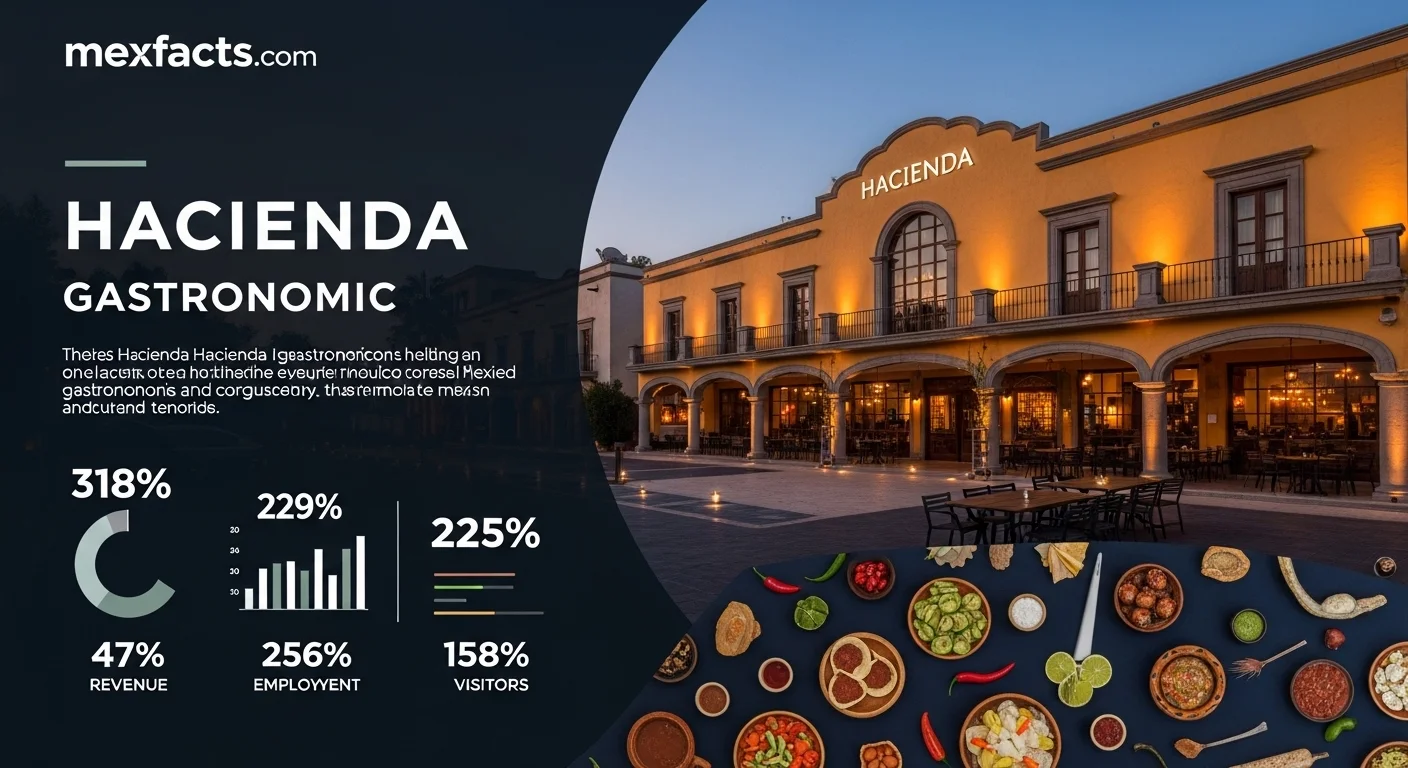
Beyond their cultural and aesthetic appeal, restored hacienda restaurants represent significant economic drivers within Mexico's hospitality and rural development sectors. While national statistical agencies do not aggregate "hacienda restaurants" into a single standalone category, their influence is evident across broad tourism, gastronomy, and luxury investment metrics. Mexico consistently ranks among the most visited nations globally. Official data from Mexico's Ministry of Tourism (SECTUR) and the National Institute of Statistics and Geography (INEGI) show that international arrivals regularly exceed 42 to 45 million travelers per year, generating more than $30 billion in annual foreign exchange receipts and supporting roughly 8.6% to 8.7% of national gross domestic product (GDP).
For international travelers visiting Mexico, dining and cultural heritage rank among the foremost influences when selecting destinations and allocating travel expenditures. Restored haciendas uniquely cater to high-value cultural tourists seeking authentic regional immersion rather than homogenized resort experiences.
The Growth of Mexican Culinary Tourism
Gastronomic expenditure accounts for approximately 30% of average tourist budgets in Mexico. The broader restaurant and culinary service industry provides more than two million direct jobs across the country, serving as a pillar of local livelihoods. Over the past decade, culinary tourism has expanded rapidly from a casual leisure pursuit into a deliberate, itinerary-defining sector. Travelers actively seek out heritage dining rooms, regional food trails, and estate-based culinary workshops. Hacienda restaurants occupy a premium tier within this market, commanding higher average checks while reinvesting revenues into historic fabric conservation and high-standard culinary staffing.
Heritage Conservation and Investment Dynamics
Adaptive reuse of historic ex-haciendas plays an indispensable role in safeguarding Mexico's architectural heritage. In Puebla alone, state heritage inventories record more than 400 ex-haciendas, yet historically only about 25% have been fully rehabilitated. Across Mexico, hundreds of unrestored estates remain structurally sound but economically inactive. Converting these properties into functional dining establishments, boutique inns, and event spaces creates viable long-term commercial models that fund expensive ongoing conservation.
While travelers staying in coastal corridors such as the Riviera Maya and Cancun primarily experience beach hospitality, day trips and inland excursions to historic haciendas in nearby Yucatán offer high-yield cultural diversions. Operationally, running a historic hacienda restaurant requires substantial ongoing capital. Preserving century-old lime mortars, protecting carved stonework from tropical moisture, and maintaining antique tiled roofs demands specialized artisans. To balance high maintenance overheads, successful hacienda operators frequently integrate event hosting—particularly destination weddings and corporate retreats accommodating 150 to 300 attendees—as a key revenue stream that stabilizes the business model year-round.
Future Trends Shaping Hacienda Restaurants
As global travelers increasingly demand sustainable, experiential, and culturally grounded travel, the Mexican hacienda restaurant sector is evolving through several major trends:
Sustainable Agritourism and Farm-to-Table Practices
Because historic haciendas were originally designed as self-sustaining agricultural complexes with ample surrounding acreage, they are uniquely positioned to lead regenerative culinary practices. Modern hacienda dining concepts are increasingly reinstating estate orchards, organic vegetable gardens, and heritage poultry farms. In southeastern Mexico, several estates have revived the ancestral Mesoamerican milpa farming system—an ecologically balanced intercropping of maize, beans, squash, and wild greens that enriches soil health without synthetic fertilizers. Additionally, haciendas in the Yucatán are incorporating conservation sanctuaries for the native stingless Mayan bee (Melipona beecheii), harvesting sacred honey used in artisanal desserts and house dressings. Interactive guest experiences, such as guided estate harvesting, nixtamalization masterclasses, and hands-on tortilla-making sessions, transform traditional dining into meaningful educational agritourism.
Investment Opportunities and Regulatory Considerations
The commercial restoration of ex-haciendas continues to attract domestic and international hospitality investment, encouraged by federal cultural tourism initiatives such as the Pueblos Mágicos (Magical Towns) program. However, prospective restaurateurs and investors must navigate several critical operational realities:
- Regulatory Oversight by INAH: Historic monuments in Mexico are legally safeguarded by the National Institute of Anthropology and History (INAH). All architectural alterations, structural reinforcements, kitchen installations, and facade restorations require rigorous review and official permits to preserve historic integrity.
- Land Tenure and Title Verification: Navigating rural property transactions in Mexico demands thorough legal due diligence to confirm clear private title and ensure the land is free of conflicting communal claims, particularly in regions adjacent to ejido (communally held agrarian) property.
- Rural Logistics and Infrastructure: Because many historic estates are located outside major urban cores, operators must invest in reliable off-grid infrastructure, water treatment facilities, high-speed fiber internet, and specialized supply chains for perishable culinary ingredients.
Practical Visitor Guide: Reservations, Timing, and Etiquette
For diners planning a visit to an authentic Mexican hacienda restaurant, keeping these practical considerations in mind will ensure a seamless experience:
- Advance Reservations: Given that hacienda dining rooms often host private destination weddings or private functions on weekends, advance bookings are strongly recommended, particularly during the peak winter travel season from November through April.
- Transportation Planning: Most historic haciendas sit between 20 and 60 minutes outside regional capitals like Mérida, Guadalajara, or Cuernavaca. While hailing a ride-share to an estate is often feasible, securing return transport can be difficult in rural areas. Travelers should pre-arrange round-trip private transport, rent a vehicle, or coordinate with the venue's concierge.
- Attire and Climate: Smart-casual attire is customary. Because dining areas often span open courtyards, cobblestone corridors, and garden paths, comfortable walking shoes are highly recommended. Evening visitors in tropical zones should also consider bringing light layers and eco-friendly insect repellent.
- Heritage Etiquette: While haciendas welcome diners to explore their gardens and public courtyards, guests should respect private guest wings, preserved chapels, and designated historic preservation zones.
Expert Reviews
Michael Chen, Traveler ⭐⭐⭐⭐⭐
My wife and I celebrated our 20th anniversary at a hacienda near Valladolid, and it was pure magic. Dining under the stars, surrounded by centuries of history... the food was incredible, straight from their garden. It wasn't just a meal; it was the highlight of our trip to Mexico.
Sofia Gomez, Food Blogger ⭐⭐⭐⭐⭐
As a food blogger, I'm always looking for authenticity. This article perfectly captures why hacienda restaurants are so special. They are guardians of regional cuisine. I had a cochinita pibil in the Yucatán that was cooked in an underground pit, just as it has been for generations. This article explains the 'why' behind that amazing experience.
David Miller, Investor ⭐⭐⭐⭐⭐
This guide is a fantastic starting point for anyone considering investing in heritage tourism in Mexico. It touches on the key challenges like INAH and land tenure, which is crucial. It confirms my belief that these properties are not just buildings, but powerful economic and cultural assets.