
Holbox Island Mexico: Complete Guide to Transit, Safety, and Local Realities

Isla Holbox is a tranquil, car-free barrier island situated off the northern coast of Quintana Roo, separated from the Mexican mainland by the shallow Yalahau Lagoon. Encompassed by the protected Yum Balam Flora and Fauna Protection Area, the island is internationally celebrated for its unpaved sand streets, seasonal whale shark migrations, and luminous bioluminescent waters. However, its transition from a secluded fishing community to a premier travel destination brings notable logistical realities. This comprehensive guide outlines the overland transit corridor from Cancun to Chiquilá, ferry crossings, realistic safety and environmental conditions, and the critical infrastructure factors travelers must prepare for before arriving.
Table of Contents
- What Is Holbox and Why Does It Matter?
- Island Identity: Culture and Daily Life
- The Journey: Getting from Cancun to Holbox
- Natural Wonders and Seasonality
- The Yum Balam Ecological Reserve
- Key Statistics: Tourism, Lodging, and Economy
- Safety, Health, and Daily Realities
- Future Outlook and Sustainable Development
- Frequently Asked Questions
What Is Holbox and Why Does It Matter?
Isla Holbox (pronounced hol-bosh, derived from the Yucatec Maya for "black hole") is a slender barrier island located in the municipality of Lázaro Cárdenas, along the northern coast of Quintana Roo in Mexico. The island stretches approximately 42 kilometers (26 miles) in length and ranges between 1.5 and 2 kilometers in width, though its permanently inhabited village occupies only a small portion near the western tip. Positioned where the Gulf of Mexico meets the Caribbean Sea, Holbox stands out among the broader catalog of destinations near Cancun by maintaining an unhurried, low-density atmosphere defined by sand streets, absence of standard motor vehicles, and strict conservation limits.
Internationally, Holbox matters because it represents both an ecological sanctuary of global importance and a critical proving ground for sustainable tourism in Mexico. As the marine heart of the federally protected Yum Balam Flora and Fauna Protection Area, its surrounding waters host one of the planet's largest seasonal aggregations of whale sharks, critical nursery grounds for sea turtles, and extensive mangrove networks that store blue carbon. Balancing these irreplaceable ecological assets against surging international traveler demand has made Holbox a focal case study in coastal resource management.
Island Identity: Culture and Daily Life
Before international travelers arrived in search of barefoot luxury, Holbox was fundamentally an isolated fishing village. Life on the island was organized around marine weather, seasonal catches of lobster and octopus, and maritime trade across the Yalahau Lagoon (also known as Laguna Conil). Today, while tourism drives the local economy, the community retains strong maritime and Maya cultural ties.
Daily life moves at a distinctly slower pace than on the Riviera Maya mainland. Standard private passenger cars are prohibited; locals and visitors travel on foot, by bicycle, or in modified four-seater golf carts functioning as local taxis. Colorful murals by Mexican and international street artists decorate village walls, blending regional folklore with marine conservation themes. The local population of approximately 2,000 permanent residents swells substantially during peak holiday periods, joined by mainland workers and international hospitality staff.
The Journey: Getting from Cancun to Holbox
Reaching Holbox requires a multi-leg journey that connects Cancun International Airport (CUN) or downtown Cancun to the small port town of Chiquilá, followed by a passenger ferry across the Yalahau Lagoon.
- Step 1: Overland Travel from Cancun to Chiquilá (Approx. 140 km / 87 miles)
- The mainland drive between Cancun and Chiquilá takes approximately 2 to 2.5 hours via the modern toll highway (Highway 180D to the Kantunilkín turnoff) or state routes. Travelers have three main options:
- Shared Shuttles: Scheduled minivans operate directly between Cancun Airport terminals and the Chiquilá ferry port. One-way fares typically range between $40 and $55 USD per passenger, offering a balanced mix of cost and convenience.
- Private Transfers: Private vans pick up groups directly at arrival terminals and drive nonstop to the port. Rates generally run between $200 and $250 USD per vehicle each way, making this option ideal for families, groups, or travelers arriving on late flights.
- ADO Public Coaches: First-class ADO buses depart several times daily from the central ADO bus station in downtown Cancun to Chiquilá. Fares are approximately 300 to 380 MXN (roughly $16 to $21 USD). Passengers arriving at Cancun Airport must first take an airport bus or taxi to the downtown terminal.
- Rental Cars: Driving a rental car to Chiquilá is straightforward. Because rental vehicles cannot cross onto Holbox, drivers park in secure, gated parking lots adjacent to the Chiquilá docks. Overnight parking rates typically range from 100 to 150 MXN (approximately $5 to $8 USD) per 24 hours.
- Step 2: Ferry Crossing Across Yalahau Lagoon to Isla Holbox
- From the port of Chiquilá, two passenger ferry operators—9 Hermanos and Holbox Express—provide continuous service to the island:
- Schedule and Frequency: Ferries depart every 30 minutes throughout the day, operating from roughly 6:00 AM until 9:30 PM. One company departs on the hour, and the other departs on the half-hour.
- Transit Time: The crossing across the calm, shallow lagoon takes approximately 20 to 25 minutes.
- Fares and Payment: A standard one-way adult ticket costs approximately 220 to 300 MXN (around $12 to $15 USD). Tickets are purchased in person at dockside ticket booths before boarding. Card terminals frequently experience signal outages, so travelers should carry sufficient Mexican pesos in cash.
- Air Charters (Cancun to Holbox Airstrip)
- For travelers seeking rapid transit, private charter flights operate from Cancun International Airport or Playa del Carmen to the unpaved Holbox Aerodrome. Flight time is roughly 30 to 35 minutes aboard small twin-engine aircraft (such as Cessna 206 or Caravan aircraft). One-way private charters generally start around $800 to $1,200 USD for the aircraft, subject to luggage weight constraints and daylight operating hours.
- Return Logistics to Cancun Airport
- When planning the return trip from Holbox to Cancun International Airport, travelers should allow at least 4.5 to 5 hours before their scheduled flight departure. This buffer accounts for the golf cart taxi to the Holbox pier, the 25-minute ferry crossing, luggage transfer at Chiquilá, the 2.5-hour highway drive, and international check-in procedures.
Natural Wonders and Seasonality
Tourism on Holbox centers on marine biodiversity and natural phenomena governed strictly by annual seasons:
- Whale Shark Encounters (Late May through Mid-September): Nutrient-rich upwellings where the Gulf of Mexico meets the Caribbean attract hundreds of whale sharks (Rhincodon typus) to feed on plankton. Tours are strictly regulated by Mexico's National Commission of Protected Natural Areas (CONANP). Authorized boats operate with licensed local guides, limiting swimmers per encounter to minimize stress on the animals. Peak sightings occur in July and August.
- Bioluminescence (June through October): In the summer and autumn months, warm lagoon waters support dense concentrations of bioluminescent microscopic dinoflagellates. On moonless nights, particularly during the new moon phase, water agitated by wading or kayaking glows with a vivid blue-green luminescence. Punta Cocos is the island's primary viewing location.
- Birdwatching and Coastal Sandbars: The sandbars at Punta Mosquito host flocks of American flamingos, brown pelicans, osprey, and migratory shorebirds. Visitors can walk along the shallow sandbars at low tide, but must heed conservation signs marking protected nesting and feeding zones where foot traffic is forbidden.
The Yum Balam Ecological Reserve
The entire island and its surrounding waters lie within the Yum Balam Flora and Fauna Protection Area, established by federal decree in 1994 spanning over 154,000 hectares. Meaning "Lord Jaguar" in Maya, the reserve preserves pristine coastal dunes, seagrass beds, and expansive red, white, and black mangrove forests. These ecosystems serve as vital nurseries for reef fish, stabilize the coastline against hurricane storm surges, and provide habitat for endangered fauna including jaguars, Baird's tapirs, and hawksbill sea turtles.
The protected designation imposes legal obligations on all development. Concrete high-rises, paved asphalt roadways, and heavy industries are legally prohibited. However, maintaining compliance remains an ongoing challenge as municipal solid waste and wastewater systems face persistent strain from visitor growth.
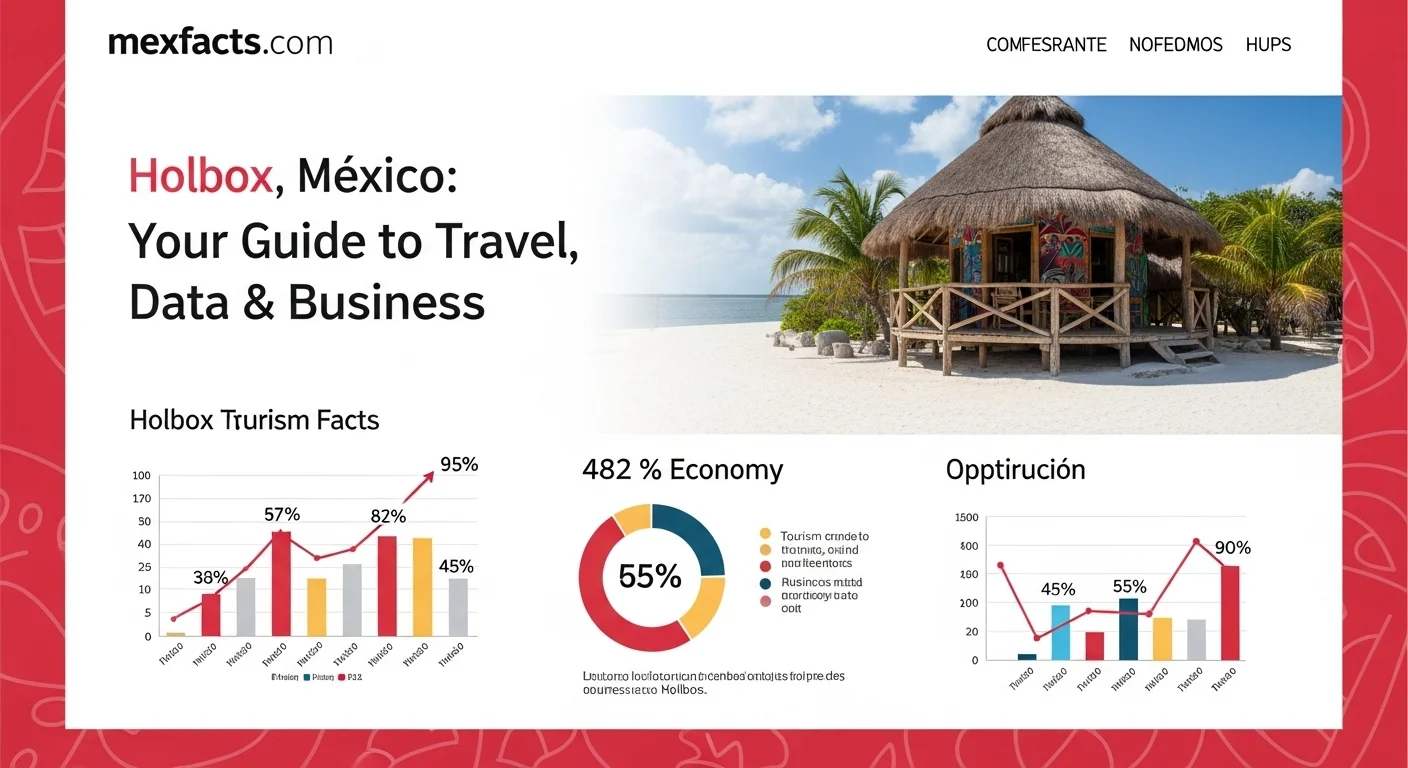
Key Statistics: Tourism, Lodging, and Economy
Examining local demographic, economic, and logistical data provides a factual picture of Holbox's scale and its regional role within Quintana Roo's broader tourism apparatus.
Tourism Volume and Traveler Demographics
Official municipal and state tourism records estimate annual visitor traffic to Holbox between 300,000 and 365,000 travelers. While these figures represent a modest fraction of Quintana Roo's statewide air arrival volume—which regularly exceeds 30 million passengers annually—Holbox commands a disproportionately high average length of stay and daily spend per traveler compared to day-trip destinations.
Visitor demographics reflect a predominantly international profile alongside steady weekend traffic from regional Mexican travelers:
- International Origin: North American travelers (United States and Canada) represent approximately 60% to 70% of foreign arrivals, supported by extensive direct flight routes into Cancun International Airport. European visitors, particularly from France, Germany, Italy, and the United Kingdom, account for roughly 20% to 25%, historically attracted by the island's eco-conscious positioning.
- Seasonality Shifts: The primary international high season runs from December through April, characterized by dry, sunny weather and moderate temperatures. A distinct secondary summer peak occurs from June to August, driven by the regulated whale shark viewing season.
Accommodations and Lodging Supply
Holbox has evolved from a small cluster of rustic beach palapas into an established boutique hospitality market:
- Registered Hotels: The island features approximately 100 to 120 registered hotel properties, offering roughly 1,400 to 1,800 total hotel rooms. Most properties operate as independent boutique hotels or eco-lodges with fewer than 30 rooms.
- Vacation Rentals: Independent short-term rental platforms list between 600 and 800 active vacation rental units. This secondary lodging market provides supplementary capacity during peak holidays but has contributed to severe shortages in affordable housing for local residents and hospitality staff.
- Workforce Migration: The local economy employs an estimated 5,000 to 6,000 hospitality, maritime, and construction workers, many of whom commute weekly from mainland communities in Lázaro Cárdenas, Tizimín, and Kantunilkín.
Real Estate Dynamics and Communal Land Rights (Ejido)
Tourism expansion has sparked substantial real estate interest, but the island's land tenure structure is exceptionally complex. A significant portion of Holbox was historically classified under Mexico's communal land framework (ejido). Under Mexican agrarian law, ejido land cannot be freely bought or sold without formal assembly approvals, parceling decrees, and conversion to private property regime (dominio pleno).
Investors and prospective property buyers face distinct legal complexities:
- Title Security: Multiple high-profile legal conflicts have arisen between agrarian ejidatarios, private development consortiums, and federal environmental regulators regarding disputed coastal parcels.
- Yum Balam Environmental Zoning: Even when private title is legally verified, all construction must comply with the strict environmental zoning of the Yum Balam Management Plan, which limits building footprints, enforces height caps (generally two to three levels), and mandates low-density eco-construction techniques.
Safety, Health, and Daily Realities
For travelers planning an itinerary, understanding Holbox's actual safety profile and municipal realities is essential for avoiding common travel disruptions.
- Personal Security and Crime
- Holbox is widely recognized as one of the safest travel destinations in Mexico regarding violent crime. Serious incidents targeting tourists are exceedingly rare. The primary safety concerns involve opportunistic petty theft—such as unattended belongings left on beaches or unlocked bicycles in town. Travelers should practice standard vigilance by utilizing hotel room safes and securing rental bikes.
- Road Conditions and Wet-Weather Flooding
- Because the island maintains strictly unpaved sand roadways, heavy tropical rainfall (especially during the June–November wet season and winter cold fronts known as nortes) causes extensive street flooding. In severe downpours, water collects into deep sand pools that make walking difficult and can immobilize rental golf carts. Waterproof footwear, sandals, or walking barefoot become necessary adaptations during flood events.
- Medical Services and Emergency Healthcare
- Medical infrastructure on Holbox is limited to basic government health clinics (centros de salud) and small private clinics capable of addressing minor injuries, dehydration, insect stings, and routine ailments. The island has no surgical facilities, intensive care units, or advanced trauma care. In the event of serious injury or critical medical emergencies, patients must be stabilized locally and evacuated by maritime vessel to Chiquilá, followed by a 2-hour ambulance transfer to tertiary hospitals in Cancun. Comprehensive travel health insurance that includes emergency medical evacuation is strongly recommended.
- Cash Dependency and Electrical Stability
- Holbox operates predominantly as a cash-preferred economy. While upscale hotels and established restaurants accept major credit cards, smaller eateries, golf cart taxis, tour guides, and ferry ticket counters require Mexican pesos. The island has only a handful of ATMs, which regularly run out of cash during busy weekends or shut down when internet satellite links drop. Furthermore, the island's underwater electrical cable from the mainland experiences occasional power outages during peak summer consumption, periodically interrupting municipal water pressure and Wi-Fi connectivity. Visitors should withdraw ample cash in Cancun before boarding the ferry.
Future Outlook and Sustainable Development
The ongoing development of Holbox serves as a bellwether for eco-tourism across the wider Yucatán Peninsula. As conventional mainland destinations contend with high-density resort expansion, Holbox faces a fundamental choice between sustainable preservation and uncontrolled infrastructure overreach.
Regulatory Frameworks and Growth Projections
In previous decades, speculative proposals suggested high-density development models accommodating up to 9,000 hotel rooms. However, sustained resistance from local fishermen, environmental scientists, and civic organizations led federal authorities to formalize protective limits. Under the Yum Balam Management Plan published by CONANP, federal regulations enforce strict density restrictions, limiting coastal building footprints and preserving more than 90% of the natural reserve in undisturbed ecological conservation.
Future growth will inevitably be constrained by municipal infrastructure capacity rather than commercial market demand. Current federal and state investment priorities focus on modernizing the undersea electrical connection, enhancing wastewater treatment facilities, and establishing organized waste transfer stations to transport solid refuse off the island via mainland barges.
High-Value Opportunities in Sustainable Tourism
Forward-thinking investments in Holbox increasingly align with conservation needs and regenerative tourism models:
- Decentralized Green Infrastructure: Solar microgrids, battery energy storage systems, and advanced greywater recycling systems offer boutique hotels greater resilience against municipal power and water fluctuations while reducing strain on fragile local aquifers.
- Low-Impact Marine and Wildlife Education: High-end, certified educational tours—focusing on mangrove conservation, ornithology, and marine biology—provide sustainable livelihood alternatives for local boat captains while distributing traveler foot traffic away from sensitive habitats.
- Responsible Waste Solutions: Composting networks, biodegradable packaging supply chains, and community-led recycling logistics present urgent and viable commercial opportunities that support the municipal goal of minimizing landfill accumulation inside Yum Balam.
Frequently Asked Questions
- How do I get from Cancun to Holbox?
- Travel overland from Cancun Airport or downtown Cancun to the port of Chiquilá (approximately 140 km, taking 2 to 2.5 hours by shared shuttle, private van, rental car, or ADO coach). At the Chiquilá dock, board a 20- to 25-minute passenger ferry operated by 9 Hermanos or Holbox Express directly to Isla Holbox.
- Are private cars or rental cars permitted on Holbox?
- No. Standard motor vehicles and rental cars are strictly prohibited from entering the island. If driving a rental car to Chiquilá, you must park it in a secure, paid parking lot at the ferry dock (typically 100 to 150 MXN per day). On the island, transit is conducted on foot, by bicycle, or via golf cart taxis.
- When is the best time to visit Holbox?
- For dry, sunny weather and comfortable temperatures, visit between December and April. For swimming with whale sharks, the regulated season runs from late May through mid-September (with peak sightings in July and August). The bioluminescence phenomenon is most visible during dark, moonless nights between June and October.
- Is Holbox safe for tourists?
- Yes. Holbox has a very low crime rate and is considered exceptionally safe regarding violent crime. The most common safety risks are logistical and environmental: unpaved sand roads flooding during rains, limited emergency medical facilities requiring mainland evacuation, and frequent ATM cash shortages. Maintain basic situational awareness and carry emergency cash.
- Do I need cash on Holbox, or are credit cards accepted?
- You must bring sufficient Mexican pesos in cash. While major hotels and upscale restaurants take credit cards, small businesses, beach clubs, taxis, and ferry counters frequently require cash. Island ATMs often run out of money or lose satellite connectivity during power outages.
Official Tourism and Conservation Resources
Travelers seeking updated federal tourism advisories, national park regulations, and environmental guidelines should consult official Mexican governmental sources:
- Mexican Ministry of Tourism (SECTUR) — National tourism safety standards and official visitor guidelines.
- Comisión Nacional de Áreas Naturales Protegidas (CONANP) — Environmental regulations, whale shark observation protocols, and protected species management inside the Yum Balam Flora and Fauna Protection Area.
Expert Reviews
Chloé Dubois, Traveler ⭐⭐⭐⭐⭐
My husband and I just returned from our first trip to Holbox, and this article perfectly captures the island's magic and its struggles. The advice on getting from Cancun was spot-on and saved us a lot of stress. It's more than just a beach; it has a soul, and I hope it stays that way.
Mark Chen, Sustainable Ventures LLC ⭐⭐⭐⭐⭐
As someone looking into sustainable hospitality investments in Mexico, this breakdown was invaluable. It goes beyond the tourist fluff and provides the hard data and on-the-ground challenges. The section on infrastructure needs confirmed my business case. A must-read.
Sofia Gutierrez, Returning Visitor ⭐⭐⭐⭐
I first visited Holbox over ten years ago when it was just a few palapas and one main street. This article made me feel nostalgic but also hopeful. It honestly addresses the 'Tulum-ification' risk I've been worried about. Thank you for telling the real story of this paradise.