
Mérida, Yucatán Guide: Culture, Safety, Living Costs & Travel
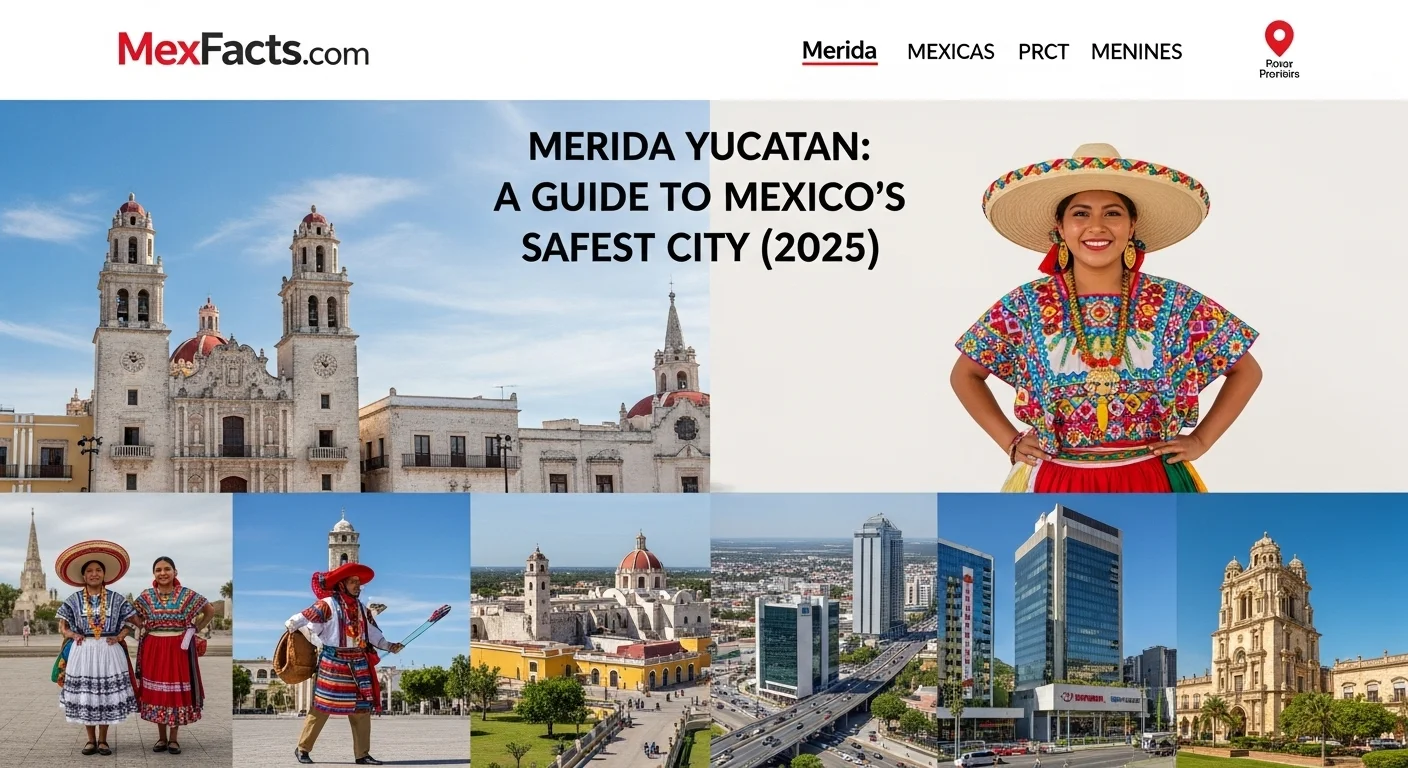
Mérida, the capital of Yucatán, is celebrated as one of Mexico's most culturally vibrant and secure urban centers. Situated in the northwest of the Yucatán Peninsula, the city blends ancient Maya heritage, Spanish colonial architecture, and a steadily developing contemporary economy. Whether evaluating the city for independent travel, retirement, or relocation, visitors and prospective residents encounter an urban rhythm shaped by tree-lined boulevards, a distinguished culinary tradition, and consistent high marks in national safety surveys. This comprehensive guide outlines Mérida's historical background, civic security record, realistic living costs, neighborhood profiles, and transport logistics for anyone planning a visit or extended stay while traveling throughout Mexico.
Table of Contents
Historical Heritage and Living Maya Culture
Mérida was founded in 1542 by Francisco de Montejo y León atop the ancient Maya settlement of T'hó (Ichcaanzihó). The Spanish dismantled T'hó's monumental limestone structures to construct foundational civic and religious buildings, including the Cathedral of San Ildefonso on the Plaza Grande—the oldest continental cathedral in the Americas. Mérida earned the epithet La Ciudad Blanca (The White City), historically attributed to its whitewashed limestone masonry and early sanitary planning initiatives during the late nineteenth century.
Unlike colonial cities whose pre-Hispanic identity exists solely within archaeological reserves, Mérida maintains a living Maya presence. Indigenous Maya language, customs, and artisan craftsmanship remain woven into daily life across neighborhood markets and central plazas. Cultural traditions are celebrated publicly through events like weekly Jarana Yucateca dances held in front of the municipal palace, accompanied by traditional vaquería brass orchestras.
Yucatecan gastronomy forms a distinct culinary tradition separate from central Mexican cuisine, driven by endemic ingredients, sour citrus marinades, and Maya pit-cooking methods. Renowned dishes include cochinita pibil (pork marinated in bitter Seville orange and achiote paste, slow-cooked in banana leaves), sopa de lima (poultry broth accented with local sour lime), panuchos, and papadzules (tortillas dipped in pumpkin-seed sauce and filled with hard-boiled eggs). Mérida's culinary legacy was internationally recognized when UNESCO designated it a Creative City of Gastronomy in 2019.
Safety Profile and Urban Security in Mérida
Safety is a central consideration for travelers and prospective expatriates researching Mexican destinations. In national security assessments, Mérida and the state of Yucatán consistently record the lowest violent crime indicators in Mexico.
Data compiled by Mexico's National Institute of Statistics and Geography (INEGI) through its National Survey of Urban Public Safety (ENSU) consistently ranks Mérida among the cities with the lowest levels of perceived social insecurity in the country. While national urban averages regularly show between 60% and 70% of residents perceiving their cities as insecure, Mérida's index routinely registers well below 30%. In addition, official statistics published by the Executive Secretariat of the National Public Security System (SESNSP) confirm that Yucatán maintains the lowest homicide and extortion rates among all 32 federal entities in Mexico.
Several concrete factors sustain this stable security environment:
- Extensive Surveillance and Police Infrastructure: Yucatán operates an integrated statewide security network (C5i) featuring thousands of monitored street cameras, license plate recognition arches across state border checkpoints, and continuous municipal and state police patrols.
- Civic Cohesion and Social Stability: Close-knit community networks, stable municipal governance, and active neighborhood communication deter organized crime networks from gaining footholds.
- Well-Equipped Modern Healthcare: The city serves as southeastern Mexico's primary medical hub, home to advanced tertiary hospitals (such as Hospital Faro del Mayab, Star Médica, and Clínica Mérida) alongside reliable municipal emergency services.
Severe violent crime is rare, though property crimes such as bicycle theft, opportunistic residential burglaries, and minor traffic disputes do occur. Standard urban precautions—securing rental vehicles, avoiding poorly illuminated peripheral streets late at night, and guarding personal electronics—remain advisable.
Cost of Living and Household Expenses
The cost of living in Mérida remains favorable compared to major North American cities or heavily commercialized Mexican resort corridors like Cancún and Los Cabos. Nonetheless, rapid population growth and inbound migration have steadily driven up local housing and service prices over recent years.
A realistic monthly budget depends on lifestyle choices, neighborhood selection, and energy consumption:
- Housing Rentals: Monthly rent for an unfurnished one- or two-bedroom apartment in residential sectors ranges from $8,000 to $16,000 MXN (approximately $400 to $800 USD). Restored colonial homes in the Centro Histórico or luxury condominiums in northern commercial districts generally command between $20,000 and $45,000 MXN ($1,000 to $2,250 USD) per month.
- Food and Dining: Fresh produce, meats, and pantry staples purchased at municipal markets such as Mercado Lucas de Gálvez or local grocery chains are inexpensive. A meal at an authentic neighborhood lonchería costs roughly $80 to $150 MXN ($4 to $8 USD), while dinner for two at a mid-tier restaurant typically ranges from $600 to $1,200 MXN ($30 to $60 USD).
- Utilities and Connectivity: Municipal tap water, bottled drinking water delivery, and domestic propane gas collectively average $40 to $70 USD per month. High-speed fiber-optic internet packages generally cost $25 to $45 USD monthly.
- Electricity and Air Conditioning (CFE): Electricity supplied by the Federal Electricity Commission (CFE) is the most variable household expense. Because Mérida experiences severe tropical heat from April to September, sustained air conditioning use can push bi-monthly electrical bills from modest tiers into high-consumption brackets (DAC tariff), exceeding $4,000 to $8,000 MXN ($200 to $400+ USD) unless homes are equipped with solar panels.
- Medical Consultations: Routine visits to private general physicians or bilingual medical specialists usually cost between $600 and $1,200 MXN ($30 to $60 USD), with prescription medications and laboratory tests priced significantly below US and Canadian levels.
Neighborhood Overview and Real Estate Landscape
Mérida's urban layout comprises several distinct historical, modern, and suburban zones, each catering to different lifestyles and property profiles:
- Centro Histórico
- Characterized by eighteenth- and nineteenth-century masonry architecture, high beamed ceilings, interior courtyards, and colorful hand-pressed pasta tiles. The Centro provides immediate walkability to museums, cafes, and weekly cultural events. However, colonial properties demand continuous maintenance against tropical humidity, and bus routes can create daytime noise on narrow thoroughfares.
- Paseo de Montejo and García Ginerés
- Paseo de Montejo features grand neoclassical mansions constructed during the late-nineteenth-century henequen (sisal) agricultural boom. Surrounding residential neighborhoods like García Ginerés and Itzimná offer tree-lined avenues, established parks, and eclectic architecture ranging from French revival to Art Deco and mid-century residences.
- Northern Residential Corridor (Altabrisa, Montebello, Temozón Norte)
- The northern sector represents the city's modern suburban expansion. It features gated residential developments (privadas), modern high-rise condominiums, major private hospitals, international private schools, and regional shopping malls like La Isla Cabo Norte. Daily life here requires private vehicles or ride-hailing services.
- Northern Periphery (Dzityá, Komchén, Cholul)
- Located north of the Anillo Periférico ring highway, these former agrarian villages have transformed into semi-rural suburbs popular for spacious custom homes and detached villas, offering generous land plots within a short drive of urban amenities and the coast.
Foreign purchasers should note that northern Mérida and the Yucatán coastline fall within Mexico's constitutional restricted zone (within 50 kilometers of the sea and 100 kilometers of international borders). Within this designated zone, foreign nationals hold residential real estate title via a 50-year renewable bank trust called a fideicomiso, or through a registered Mexican corporate entity for commercial operations.
Transport, Regional Connectivity, and Excursions
Mérida serves as the primary transportation crossroad for the northwestern Yucatán Peninsula, offering direct road, rail, and air access to key destinations:
- Aviation: Manuel Crescencio Rejón International Airport (MID) offers frequent domestic flights to Mexico City, Guadalajara, and Monterrey, as well as direct international non-stop routes to US hubs including Miami, Houston, Atlanta, and Dallas.
- Tren Maya (Mayan Train): Passenger rail service connects through the Teya station on Mérida's southeastern edge, linking the city directly with Valladolid, Cancún, Playa del Carmen, and the wider Quintana Roo corridor to the east, and Campeche to the southwest.
- Intra-City Transit: Mérida's modernized public bus network, known as the Va y Ven system, provides air-conditioned, card-operated urban routes, complemented by the electric Ie-Tram system linking downtown Mérida with regional transit hubs. Ride-hailing platforms (Uber, DiDi) operate widely throughout the metropolitan area.
- Regional Excursions: The Gulf port city of Progreso is located just 30 minutes north along an eight-lane highway. The UNESCO-listed archaeological zone of Uxmal and the Puuc architectural route lie one hour south, while organized Chichen Itza tours and excursions to surrounding freshwater cenotes are easily completed within 90 minutes. Travelers planning longer regional itineraries can coordinate these visits alongside broader peninsula travel and resort logistics.
Climate Realities and Practical Considerations
While Mérida provides exceptional culture and safety, long-term visitors and prospective residents must prepare for specific regional realities:
- Extreme Tropical Heat: Mérida features a tropical savanna climate (Köppen Aw). The hottest months extend from April to June, when daytime temperatures regularly exceed 38°C to 42°C (100°F to 108°F) combined with elevated humidity. Local routines adapt by shifting outdoor exercise and errands to early morning or late evening hours.
- Tropical Rain and Storm Season: The rainy season lasts from June through October, occasionally bringing tropical storms and hurricanes from the Caribbean and Gulf of Mexico. Due to the peninsula's flat limestone topography, heavy cloudbursts can cause brief street ponding in older city sectors.
- Hard Water: The local municipal water supply carries high concentrations of dissolved minerals extracted from subterranean limestone aquifers. Residential properties commonly employ water softeners, and potable bottled water is standard for drinking and cooking.
- Urban Growth and Infrastructure: State initiatives to attract international logistics, technology firms, and nearshoring manufacturing—regularly tracked by entities such as the U.S. International Trade Administration—have strengthened the local economy. At the same time, increased vehicular volume has heightened morning and evening congestion along the Periférico ring road.
Frequently Asked Questions About Mérida, Yucatán
- Is Mérida safe for solo travelers and families?
- Yes. Mérida consistently registers the lowest violent crime numbers among Mexican state capitals and leads national surveys in public safety perception. While standard urban precautions for personal belongings apply, walking through central neighborhoods and main boulevards at night is routine practice for locals and visitors alike.
- What is the best time of year to visit Mérida?
- The most pleasant weather occurs between November and February, when daytime highs average 28°C to 30°C (82°F to 86°F) with lower humidity and comfortable evenings. Visiting from late March through June brings peak temperatures, often reaching 40°C (104°F) or higher.
- Do you need a car to get around Mérida?
- If staying within the Centro Histórico, Paseo de Montejo, or Santa Ana, walking, ride-hailing apps, and the Va y Ven bus network are entirely sufficient. A vehicle is recommended for living in outer northern suburbs or for frequent self-guided excursions to cenotes, haciendas, and Maya archaeological sites.
- Can foreigners legally purchase real estate in Mérida?
- Yes. Foreigners can legally acquire residential real estate across Mexico. For properties located within 50 kilometers of the coast (including coastal Yucatán and parts of the northern metropolitan perimeter), foreign buyers hold fee-simple title through a renewable 50-year bank trust known as a fideicomiso.
Expert Reviews
Robert and Susan Miller, Expats ⭐⭐⭐⭐⭐
My wife and I retired to Mérida last year, and this article perfectly captures why we fell in love with it. The section on safety isn't an exaggeration—we walk our dog every night in the local park and have never felt more at peace. It truly is a special place.
Carlos Gutierrez, Real Estate Investor ⭐⭐⭐⭐⭐
As a real estate investor, I look for data, but also for a city's 'soul.' This guide provided both. The breakdown of property appreciation and neighborhood growth was invaluable, but it was the description of the culture that sealed the deal for me. You're not just buying bricks and mortar here; you're investing in a quality of life.
Jessica Chen, Traveler ⭐⭐⭐⭐
I was just researching a potential vacation, and now I'm seriously considering a longer stay! The way the article described the food, the history, and the overall vibe of Mérida was so captivating. It answered all my practical questions (like cost and safety) while making me dream about actually living there.