
The All-Inclusive Mexico Vacation: Packages, True Costs, and Planning Guide

All-inclusive resorts are the backbone of coastal Mexican tourism, welcoming millions of international travelers every year to world-class resort corridors like Cancun and the Riviera Maya, Los Cabos, and Puerto Vallarta. The core appeal is simplicity: paying one upfront price that bundles accommodations, unlimited dining, beverages, and daily on-site entertainment into a predictable vacation budget. However, navigating the modern all-inclusive landscape requires understanding the reality behind bundled airfare deals, recognizing what amenities carry extra surcharges, and selecting the right destination for your travel style. This guide provides an objective, data-backed overview of how all-inclusive packages operate in Mexico, what travelers should realistically expect to spend, and practical tips for maximizing vacation value.
- What Exactly Is an All-Inclusive Vacation in Mexico?
- Packaged Deals and Realistic Pricing Benchmarks
- Inclusions vs. Exclusions: Understanding the Fine Print
- Comparing Mexico's Top All-Inclusive Hubs
- Key Industry Data and Tourism Scale
- Trends, Connectivity, and the Maya Train
- Practical Booking Checklist and Best Practices
What Exactly Is an All-Inclusive Vacation in Mexico?
At its foundation, an all-inclusive vacation in Mexico is a prepaid hospitality package designed to minimize on-site transactions. Upon check-in, guests receive a wristband that serves as their credential for resort amenities throughout their stay. The standard package covers room accommodations, three daily meals plus snacks, unlimited non-alcoholic and domestic alcoholic beverages, pool and beach access, daytime fitness classes, non-motorized water sports (such as kayaks and paddleboards), and evening theater or live music entertainment.
Mexico played a foundational role in standardizing this tourism model beginning in the 1970s. When the Mexican government initiated the planned development of Cancun, all-inclusive packages provided international travelers—primarily from the United States and Canada—with reassurance regarding budget predictability, language accessibility, and personal safety. Pioneer charter operators, such as Apple Vacations, partnered with local hotel developers to charter direct flights and package them with beachfront stays, opening the Cancun hotel strip and the wider Mexican Caribbean to mainstream international tourism. Today, major global hotel brands including Hyatt, Marriott, and Hilton have developed extensive all-inclusive portfolios across the country, diversifying the model from budget family buffets into specialized luxury and boutique categories.
Packaged Deals and Realistic Pricing Benchmarks
Travelers frequently search for bundled vacation packages combining roundtrip airfare and all-inclusive lodging. However, expectations around advertised promotional rates require realistic context:
- Packages under $500 with airfare: Bundled flight-and-hotel packages advertised below $500 per person are exceedingly rare and generally limited to extreme low-season dates (such as September and October during the peak Atlantic hurricane season), departures from specific high-traffic airline hubs on ultra-low-cost carriers without baggage, and entry-level three-star properties with restricted dining options.
- Packages between $800 and $1,400 with airfare: This range represents the realistic benchmark for a quality four-star, beachfront all-inclusive experience including direct or single-stop commercial flights. Properties at this tier offer multiple specialty à la carte dining venues, premium pool complexes, and reliable service standards.
- Luxury and upscale packages ($1,800+ with airfare): Five-star, AAA Five Diamond, and luxury adults-only properties typically range from $1,800 to upwards of $3,500 per person for a 5-to-7-night package, delivering gourmet culinary programs, top-shelf spirits, expansive suites, and personalized concierge services.
Inclusions vs. Exclusions: Understanding the Fine Print
While all-inclusive packages cover daily essentials, several mandatory and discretionary costs are typically excluded from the base booking price:
- Environmental Sanitation Tax:
- Municipal governments in Quintana Roo and Baja California Sur assess an environmental sanitation fee (Derecho de Saneamiento Ambiental) per room, per night (generally equivalent to $2 to $5 USD). This tax is not included in prepaid packages and must be paid directly to the hotel upon check-in or check-out.
- Airport Transfers:
- Unless explicitly detailed in your booking confirmation, airport-to-resort ground transportation is separate. Booking licensed, pre-arranged private or shared transfers in advance avoids inflated on-demand taxi rates at the airport terminal.
- Premium Upgrades:
- Top-shelf international liquors, reserve wine lists, imported steaks or lobster dinners, motorized water sports, and full-service spa treatments invariably incur supplementary charges.
- Staff Gratuities:
- Although service fees are built into all-inclusive contracts, cash tipping for bartenders, servers, baggage handlers, and housekeeping remains customary and standard practice throughout Mexican resort destinations.
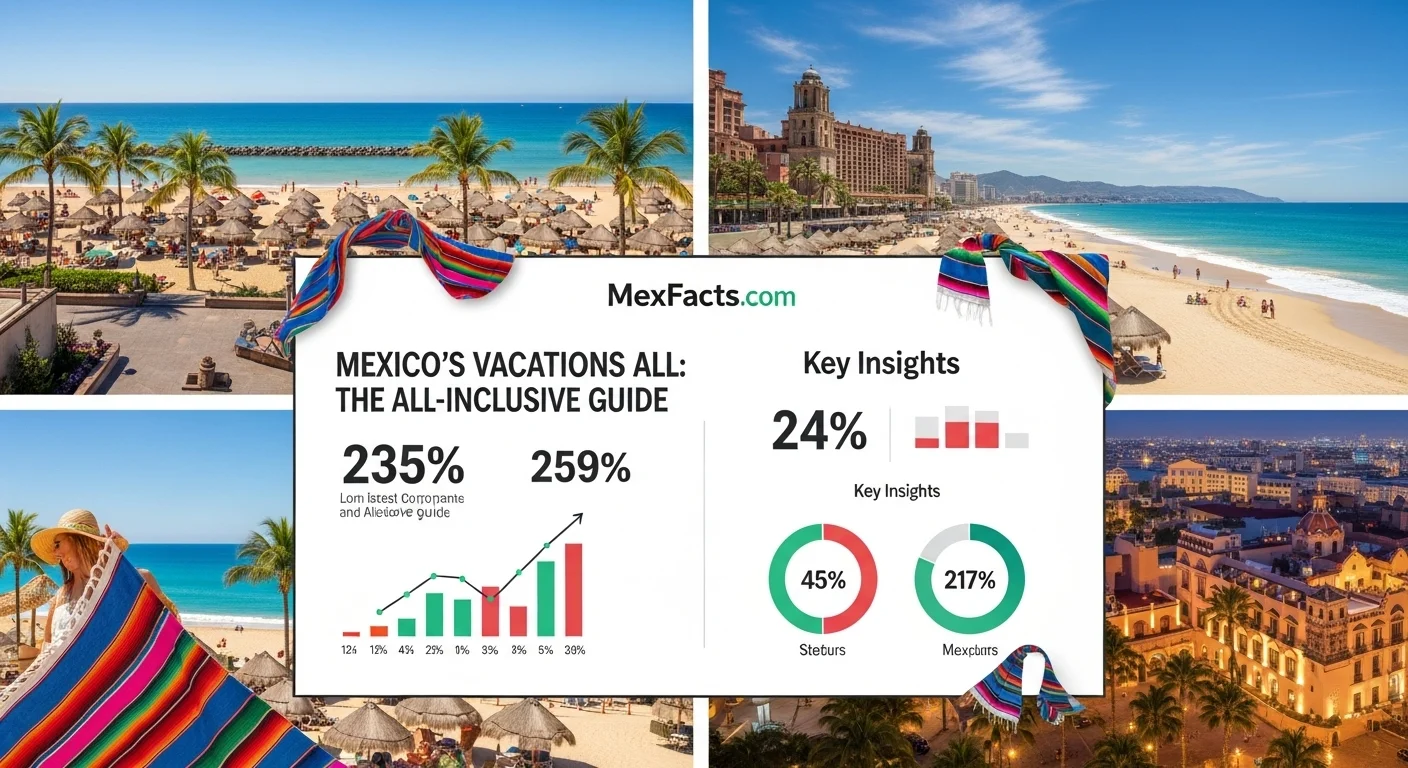
Comparing Mexico's Top All-Inclusive Hubs
Mexico's all-inclusive resort landscape spans several distinctive geographic corridors, each suited to different travel preferences:
- Cancun & the Riviera Maya (Quintana Roo): The undisputed epicenter of all-inclusive vacations in Mexico. Cancun offers calm Caribbean beaches and high-density luxury resorts close to nightlife, while the Riviera Maya stretches south through Puerto Morelos, Playa del Carmen, and Akumal, featuring expansive, low-rise eco-resorts nestled between tropical jungle and the Mesoamerican Barrier Reef. It is the premier destination for offshore water adventures, including catamaran excursions and cenote diving.
- Los Cabos (Baja California Sur): Positioned at the southern tip of the Baja Peninsula, Los Cabos delivers a dramatic contrast of arid desert landscapes and deep ocean waters. Resort options range from upscale family complexes in San José del Cabo to high-end luxury resorts along the Tourist Corridor and vibrant Cabo San Lucas. Note that many Pacific-facing beaches have powerful undertows and are designated non-swimmable; travelers planning water activities should verify beach conditions and look into booking non-stop flights to Cabo.
- Puerto Vallarta & Riviera Nayarit (Pacific Coast): Set along the expansive Banderas Bay, Puerto Vallarta combines authentic colonial Mexican architecture and mountain views with beachfront hospitality. Moving north into Nayarit, destinations like Nuevo Nayarit and Punta de Mita feature premier luxury resorts and calmer ocean waters suited for paddleboarding.
Key Industry Data and Tourism Scale
The economic footprint of Mexico's all-inclusive sector is significant. Official tourism data highlights the sustained demand for Mexico's resort infrastructure:
- Visitor Volume: In 2023, the state of Quintana Roo recorded approximately 21 million tourist arrivals, generating over $20 billion in total economic revenue according to the Quintana Roo Tourism Secretariat (SEDETUR).
- Airport Traffic: Cancun International Airport (CUN), managed by ASUR, processed over 32.7 million passengers in 2023, underscoring its role as Latin America's leading international leisure airport hub.
- Hotel Capacity & Occupancy: The Mexican Caribbean maintains an inventory exceeding 130,000 hotel rooms. While annual average occupancy rates hover around 75% to 80%, peak holiday periods—including Easter and year-end holidays—routinely reach 85% to 90% across top corridors like Cancun, Playa Mujeres, and Isla Mujeres.
- Demographic Expansion: Demand has increasingly shifted toward premium all-inclusive properties. Global hotel chains have expanded their luxury all-inclusive portfolios to capture younger demographics and experiential travelers seeking elevated gastronomy, wellness spas, and curated cultural programming.
Trends, Connectivity, and the Maya Train
The all-inclusive experience in Mexico is moving away from the isolated 'walled enclave' model toward integrated regional exploration. Key developments shaping the future of Mexican resort travel include:
- The Maya Train (Tren Maya): The construction and phased operation of the Maya Train rail network provides a direct transit link connecting Cancun Airport and coastal resort towns to inland archaeological treasures like Chichén Itzá, Valladolid, and Palenque. This enables resort guests to easily incorporate day trips and cultural excursions into their beach itinerary without long highway transfers.
- Digital Guest Experience: Modern resort properties utilize proprietary smartphone applications allowing guests to handle digital check-in, review daily activity schedules, reserve à la carte dining slots, and order room service, greatly reducing waiting times.
- Culinary Sophistication: Mass buffets are increasingly supplemented by specialty restaurants helmed by acclaimed chefs, highlighting regional Mexican cuisines—from Oaxacan moles to Yucatecan cochinita pibil—alongside international gastronomy.
Environmental Stewardship and Community Integration
Sustaining Mexico's tourism boom requires addressing environmental and community challenges. Coastal destinations continue to manage seasonal sargassum seaweed arrivals through maritime barrier nets, specialized beach cleaning equipment, and cooperative research initiatives. Furthermore, leading hotel groups are prioritizing sustainable operating standards, eliminating single-use plastics, sourcing produce from local agricultural cooperatives, and investing in on-site water reclamation plants. For official updates, regulatory standards, and national tourism statistics, consult Mexico's Secretariat of Tourism at SECTUR (gob.mx/sectur).
Practical Booking Checklist and Best Practices
To secure the best value and avoid common pitfalls when booking an all-inclusive Mexico vacation, follow these practical steps:
- Target Shoulder Seasons: For the best balance of favorable weather, moderate rates, and manageable crowd levels, plan travel during late April through May, or throughout November.
- Inspect Inclusions Carefully: Confirm whether à la carte restaurants require reservations or additional cover charges, check if premium liquor brands are included, and verify resort Wi-Fi coverage across the property.
- Factor in Currency and Tipping: Keep a supply of Mexican pesos (MXN) or small-denomination U.S. dollars readily available for tipping service staff, paying local transport, and covering municipal environmental fees.
- Verify Beach Conditions: If ocean swimming is a priority, research specific beach topography before booking, particularly in Pacific destinations like Los Cabos where rough ocean swells may prohibit swimming.
Expert Reviews
Laura from Ohio ⭐⭐⭐⭐⭐
As a mom of two, planning a vacation is stressful. This article convinced me to try an all-inclusive in Cancun for the first time. It was exactly as described – easy, relaxing, and the kids had a blast. It was the first time I actually felt like I was on vacation!
Carlos Mendoza, travel blogger ⭐⭐⭐⭐⭐
I've been visiting the Riviera Maya for 20 years and have seen the changes firsthand. This piece perfectly captures the economic importance of the all-inclusive model while also touching on the need for sustainability. A very balanced and insightful read.
David and Sarah from Toronto ⭐⭐⭐⭐
We were hunting for a 'Cancun package under $1000' and this article helped us understand what to expect and where to look. We found a great deal for an off-season trip and it was fantastic value. The tips were spot on.