
Mexico Catamaran Tours Guide: Caribbean vs. Pacific Coast Sailing
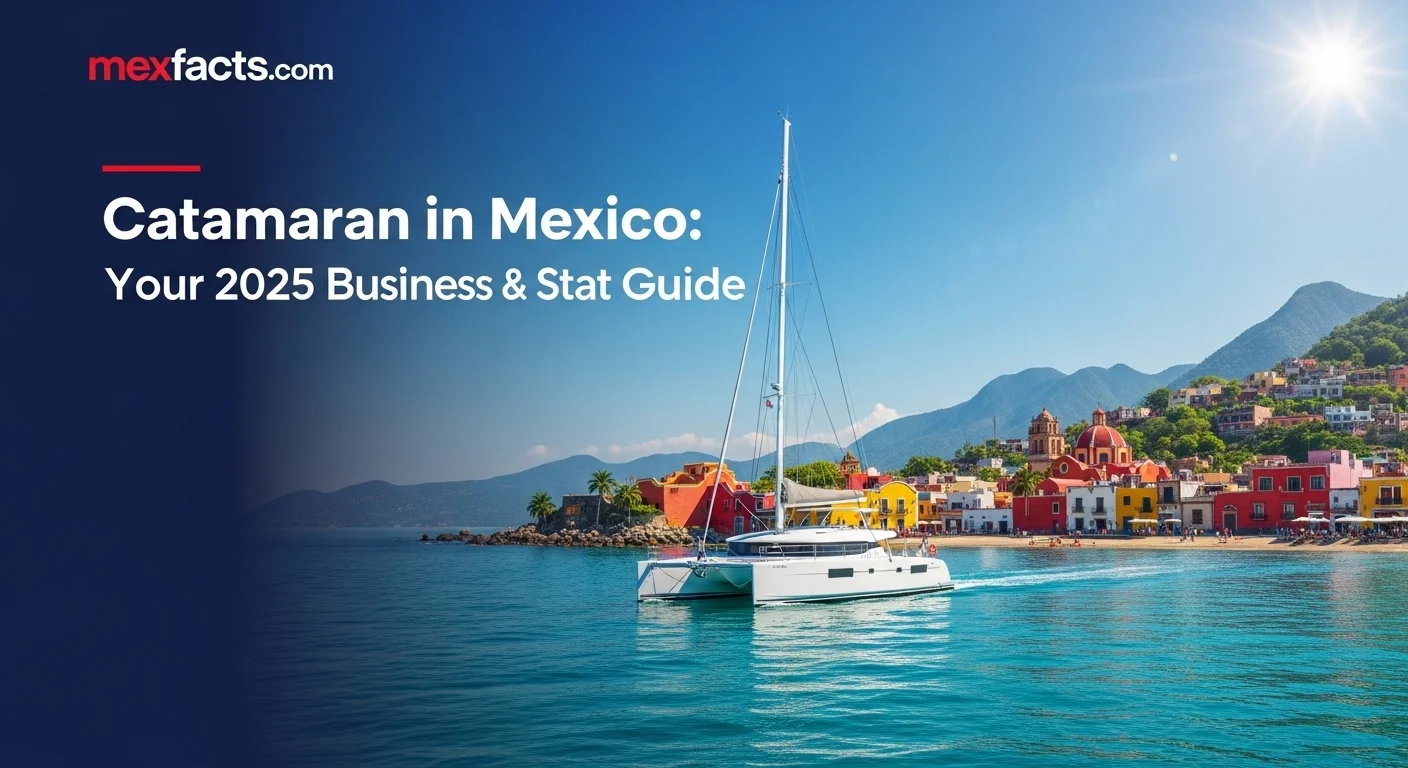
Catamaran excursions represent one of the most popular ways to experience Mexico's coastal waters, combining sailing, snorkeling, and maritime sightseeing across both the Caribbean Sea and the Pacific Ocean. As a celebrated component of the Mexican travel experience, catamaran tours range from high-energy day trips departing Cancun toward Isla Mujeres to wildlife-oriented coastal voyages along the Riviera Nayarit near Sayulita. Marine industry estimates valued Mexico's specialized catamaran charter sector at roughly USD 24 million in 2022, with projections approaching USD 33.3 million by 2030 amid steady leisure travel demand. This guide analyzes Mexico's primary sailing regions, compares shared day tours with private charters, outlines mandatory marine park protections, and delivers practical planning essentials for travelers.
Table of Contents
- The Catamaran: Coastal Excursion Overview
- Cancun and Isla Mujeres: The Caribbean Excursion Center
- Sayulita and Riviera Nayarit: Pacific Coast Sailing
- Marine Conservation and Protected Biosphere Reserves
- Fleet Dynamics: Sailing vs. Power Catamarans
- Comparing Key Markets: Caribbean vs. Pacific Charters
- Shared Excursions vs. Private Charters
- Weather Policies and Port Authority Oversight
- Emerging Sailing Destinations and Sustainability
- Navigating Environmental Challenges
The Catamaran: Coastal Excursion Overview
A catamaran is a multi-hulled vessel characterized by two parallel hulls of equal size. Because this dual-hull architecture provides high initial stability, reduced water resistance, and an expansive deck platform, catamarans serve as the premier choice for day cruising, group excursions, and coastal charters in Mexico. For travelers envisioning a perfect day in the Mexican Caribbean or along Pacific coves, catamarans provide comfortable open-deck lounging, spacious forward netting (trampolines), and minimal rolling motion compared to traditional mono-hull sailboats.
Mexico possesses more than 11,000 kilometers of coastline spanning the Caribbean Sea, the Pacific Ocean, the Gulf of California (Sea of Cortez), and the Gulf of Mexico. This geographical diversity supports distinct sailing conditions, from the calm, shallow turquoise flats of Quintana Roo to the deeper oceanic swells of Nayarit and Baja California Sur. Within the broader global leisure boat industry—where the worldwide catamaran market is forecast to reach $2.7 billion by 2031—Mexico has developed a comprehensive excursion infrastructure. Operators blend coastal navigation with guided reef snorkeling, paddleboarding, and regional culinary offerings.
Cancun and Isla Mujeres: The Caribbean Excursion Center
Cancun and the surrounding Riviera Maya form the busiest marine excursion hub in Latin America. Serving a major portion of the more than 45 million international visitors who come to Mexico each year, the crossing from Cancun across the Bahía de Mujeres to Isla Mujeres is a foundational itinerary for coastal travelers. Fleets depart daily from commercial marinas along Kukulcan Boulevard in the Hotel Zone and modern facilities such as the US$25 million GOS Marina in Puerto Cancun, which was engineered to service large catamaran and yachting operations.
The standard Caribbean day sail encompasses a 4-to-7-hour round-trip journey. Vessels anchor along portions of the Mesoamerican Barrier Reef—the second-largest barrier reef system in the world—allowing passengers to snorkel among coral gardens inhabited by rays, sea turtles, and schools of tropical fish. Most shared itineraries incorporate an open domestic bar, an onboard or beachside buffet, free time to explore downtown Isla Mujeres or Playa Norte, and seasonal spinnaker flying during open-water segments when trade winds are favorable. Private charters follow tailored routes, often adding stops at shallower, quieter sandbars like Playa El Niño or the underwater sculpture installations of MUSA.
Sayulita and Riviera Nayarit: Pacific Coast Sailing
In contrast to the high-density Caribbean fleet, the Pacific coast of Riviera Nayarit offers an intimate sailing experience centered around ecotourism and coastal topography. In the bohemian enclave of Sayulita and adjacent departure points in Punta de Mita and La Cruz de Huanacaxtle, established operators such as Ally Cat and Chica Locca run multi-hull day trips that emphasize marine exploration and smaller passenger groups.
The focal point of northern Banderas Bay charters is the Marietas Islands (Islas Marietas), a volcanic archipelago designated as a national park and UNESCO Biosphere Reserve. Sailing through these waters provides opportunities to encounter distinctive seabirds, including the blue-footed booby, and snorkel through rocky volcanic archways. During the winter season spanning December through March, these excursions frequently double as whale-watching expeditions, as migratory humpback whales enter the bay to calve and nurse their young in protected waters.
Marine Conservation and Protected Biosphere Reserves
Mexico's commercial catamaran fleet operates in fragile marine ecosystems requiring coordinated stewardship. Both the Mesoamerican Reef off the Yucatan Peninsula and the Marietas Islands in Nayarit fall under federal protection managed by Mexico's National Commission of Protected Natural Areas (CONANP). Operating licenses require tour companies to observe rigorous conservation criteria to prevent ecosystem degradation.
Key regulatory requirements include mandatory environmental entrance bracelets, strict limits on daily vessel and snorkeler capacity, the mandatory use of certified reef-safe biodegradable sun protection (or chemical-free UV rashguards), and prohibitions on anchoring directly into living coral heads. Commercial boats rely on designated mooring buoys installed by maritime authorities. Professional crews conduct structured briefings before water activities, educating passengers on non-contact wildlife observation and the ecological significance of Mexico's coastal barrier systems.
Fleet Dynamics: Sailing vs. Power Catamarans
Mexico's maritime tourism forms an integral component of a national tourism industry that generates over USD 30 billion annually in foreign exchange receipts. Within this marine leisure sector, specialized market valuations placed the country's catamaran excursion and charter market at approximately USD 23.8 million in 2022, with industry projections estimating growth to USD 33.3 million by 2030—a compound annual growth rate of roughly 4.3%. This expansion is driven by sustained international passenger volume, fleet modernizations, and increasing demand for private maritime experiences.
The operational fleet in Mexico is divided into two primary vessel configurations:
- Sailing Catamarans: Comprising over 50% of the active excursion fleet, sailing catamarans are the staple of day tours in Cancun and Riviera Maya. Powered primarily by trade winds supplemented with auxiliary diesel engines, these vessels provide a quiet, classic sailing experience, extensive forward trampoline netting for sunbathing, and lower operational fuel overhead.
- Power Catamarans: Motorized power catamarans represent the fastest-growing fleet segment. Lacking sails and rigging, power catamarans offer multi-tiered air-conditioned cabins, expanded flybridges, and higher cruising speeds. Their velocity allows operators to navigate longer routes, making them especially popular for private luxury charters, offshore sport fishing, and deep-bay coastal excursions along the Pacific.
Comparing Key Markets: Caribbean vs. Pacific Charters
The practical experience of chartering a catamaran in Mexico depends heavily on the geographic region, sea conditions, and local maritime environment:
- Mexican Caribbean (Cancun, Riviera Maya, Cozumel):
- Characterized by shallow turquoise water, minimal open-ocean swell, and consistent trade winds. The protected waters of Bahía de Mujeres offer gentle conditions ideal for travelers prone to motion sickness. Infrastructure is dense, with hundreds of vessels operating scheduled morning and sunset departures daily.
- Central Pacific (Riviera Nayarit, Sayulita, Puerto Vallarta):
- Defined by deep oceanic water, long Pacific swells, and dramatic volcanic shorelines. Charters here emphasize pelagic wildlife encounters, scenic coastal navigation along Banderas Bay, and secluded coves inaccessible by road. Sailing schedules in winter align with humpback whale migrations.
Shared Excursions vs. Private Charters
When selecting a catamaran tour in Mexico, travelers choose between two principal operational formats:
- Shared Group Excursions: Priced typically between USD 70 and USD 130 per person. These tickets include shared deck space (often with 25 to 60 passengers), basic snorkeling equipment, a domestic open bar, light onboard snacks or a buffet lunch at a beach club, and music. Shared tours are cost-effective and social, but adhere to rigid schedules and predetermined snorkel stops.
- Private Yacht Charters: Priced from USD 800 for half-day packages on smaller 36-foot vessels up to USD 3,500 or more for full-day charters on 50-foot luxury catamarans. Private bookings include dedicated crews, customized itineraries, premium open bars, tailored catering, and flexible departure times, making them well-suited for families, celebrations, and corporate groups.
Weather Policies and Port Authority Oversight
Maritime safety across Mexican waters is strictly regulated by the federal Port Captaincy (Capitanía de Puerto), an arm of the Secretariat of the Navy (SEMAR). The Port Captain monitors atmospheric conditions, wind velocity, and wave swell, issuing mandatory harbor closures (puerto cerrado) whenever sea conditions present hazards to small vessels. Commercial catamaran operators cannot legally leave the dock during an official port closure.
Travelers booking catamaran tours should plan around regional seasonal weather patterns and operator cancellation terms:
- Atlantic & Caribbean Patterns: Summer brings warm seas and light winds, though the tropical storm season runs from June through November, peaking between August and October. During winter months, cold weather fronts known as nortes can generate strong northern winds that occasionally shut down small-craft harbor departures in Cancun for 24 to 48 hours.
- Pacific Ocean Patterns: The Pacific coast experiences dry, mild winters from November through April, with calm morning seas ideal for snorkeling and whale watching. Summer and early autumn bring afternoon tropical showers and increased ocean swell.
- Cancellation and Reschedule Protocols: Legitimate charter operators provide full refunds or fee-free rescheduling when the Port Captain declares an official weather closure. Independent travelers should verify whether their booking includes explicit weather guarantees and check whether the federal marine park conservation fee (CONANP bracelet) and dock fee (typically USD 15 to USD 25 per passenger) are included in the upfront price or payable in cash at the marina.
Emerging Sailing Destinations and Sustainability
While Cancun and the Riviera Nayarit remain Mexico's most famous catamaran hubs, new coastal regions are emerging as centers for sustainable sailing:
- Sea of Cortez (Baja California Sur): Departing from La Paz and Loreto, catamaran expeditions navigate the tranquil waters of the Gulf of California. Known as the "Aquarium of the World," this region offers sailing itineraries focused on snorkeling with sea lions at Isla Espiritu Santo, encountering whale sharks in La Paz Bay, and visiting the strictly regulated coral reefs of Cabo Pulmo National Park.
- Oaxacan Coast: Ports like Huatulco feature nine protected bays and dozens of pristine beaches where catamaran charters offer low-density coastal cruising along the southern Pacific.
Navigating Environmental Challenges: Sustainability as a Standard
The ongoing growth of Mexico's catamaran fleet places heightened importance on sustainable operational practices. High passenger volumes at popular snorkeling sites can result in anchor damage, physical contact with delicate coral colonies, and sunscreen runoff. In response, modern operators are adopting eco-friendly operational standards:
- Eliminating single-use plastics onboard through refillable drink stations and biodegradable service items.
- Adopting cleaner low-emission marine diesel and hybrid propulsion engines to reduce fuel discharge and carbon footprint.
- Strict enforcement of non-contact reef snorkeling guidelines and mandatory use of certified mineral-based sunscreen.
- Direct operator contributions to marine conservation funds and local beach-cleaning initiatives.
By balancing tourist access with conscientious environmental preservation, Mexico's catamaran sector continues to support sustainable economic growth while protecting the delicate marine habitats that draw travelers from across the globe. For deeper economic perspectives on Mexico's tourism infrastructure, resources such as Oxford Business Group provide detailed macro-level reports.
Expert Reviews
Laura G., from Toronto, Canada ⭐⭐⭐⭐⭐
Our family's catamaran trip to Isla Mujeres from Cancun was the absolute highlight of our vacation! The crew was fantastic with our kids, the snorkeling was breathtaking, and the boat itself was just beautiful. I'm already dreaming of coming back. This article perfectly captures that magical feeling.
Mark and Sarah, from San Diego, CA ⭐⭐⭐⭐⭐
We did a catamaran tour in Sayulita last winter and it was incredible. Much more laid-back than we expected. We saw a whale and her calf, explored the Marietas Islands, and had the best ceviche right on the boat. It felt authentic and special. This guide is spot-on about the difference between the two coasts.
Daniel Chen, Investor ⭐⭐⭐⭐⭐
An outstanding analysis. As an investor looking into Mexico's tourism sector, it's rare to find content that so skillfully blends cultural insight with hard data. The breakdown of the Cancun and Sayulita markets and the forward-looking opportunities gave us the clarity we needed. Excellent work.