
Mexico Adventure Travel: Top Destinations, Activities, and Logistics

Mexico has evolved into a premier global destination for adventure tourism, combining rugged geographical diversity with deep cultural heritage. From cavern diving in the limestone cenotes of the Yucatán Peninsula to riding Pacific swells along the Riviera Nayarit, the country offers distinct regional profiles for active travelers. This comprehensive guide examines the two primary adventure travel hubs—the high-energy, park-driven ecosystem around Cancun and the bohemian surf enclave of Sayulita—while evaluating physical difficulty levels, guide licensing, seasonal weather windows, and the broader economic footprint driving sustainable tourism across Mexico.
Table of Contents
- What Defines Adventure Tourism in Mexico?
- The Caribbean Hub: Cancun and Riviera Maya
- The Pacific Enclave: Sayulita and Riviera Nayarit
- Activity Selection, Gear, and Physical Demands
- Market Realities and Regional Infrastructure
- Seasonal Timing, Safety Standards, and Conservation
- Frequently Asked Questions
What Defines Adventure Tourism in Mexico?
Adventure tourism in Mexico is defined by its geographic scale and ecological variety. Spanning two major mountain cordilleras, volcanic belts, subterranean river networks, and thousands of miles of Pacific and Caribbean coastline, the country accommodates the full spectrum of adventure travel. The sector is broadly divided into 'hard adventure'—activities requiring technical certifications, specialized gear, and elevated physical stamina, such as cave diving and multi-pitch rock climbing—and 'soft adventure,' which encompasses guided nature trekking, beginner surf sessions, canopy zip-lines, and wildlife observation.
Globally, adventure travelers increasingly seek experiences that integrate physical activity with authentic cultural contexts. Mexico fulfills this demand by situating adventure within living historical landscapes. Cenote exploration traverses sacred Maya waterways, while coastal hiking routes in Nayarit cross ancestral Huichol (Wixárika) trading territory. Beyond visitor enrichment, adventure travel acts as a vital vehicle for decentralized economic development, redirecting capital directly to rural guides, boatmen, and conservation cooperatives operating outside conventional resort corridors.
The Caribbean Hub: Cancun and Riviera Maya
Cancun and the northern Riviera Maya represent Latin America's most highly capitalized adventure tourism corridor. Supported by sophisticated international air connections, the region has turned Quintana Roo's subtropical jungle and underground karst formations into accessible, high-volume adventure destinations.
At the center of this ecosystem are the cenotes—collapsed subterranean limestone sinkholes leading into the world's largest flooded cave networks, including Sac Actun and Ox Bel Ha. Open-water cenotes accommodate casual snorkeling and cavern tours under natural sunlight, whereas deep cavern and cave penetrations require advanced cavern or full-cave scuba certifications (such as TDI or IANTD credentials) along with double tanks and guideline training. These geological features served as sacred portals to Xibalba for the Maya, and their preservation requires strict adherence to environmental protocols, such as mandatory showers and prohibitions on chemical sunscreens.
The Quintana Roo jungle also sustains a massive commercial excursion sector. Off-road all-terrain vehicle (ATV) tracks, underground river swims, and multi-tier canopy zip-line courses are widely packaged into single-day guided tours. Pioneered by operators such as Grupo Xcaret, purpose-built adventure eco-parks—most notably Xplor, Xel-Há, and Xcaret Park—integrate extreme activities within controlled, engineered environments that emphasize standardized safety harnesses, certified bilingual staff, and all-inclusive logistics tailored for families and first-time adventurers.
The Pacific Enclave: Sayulita and Riviera Nayarit
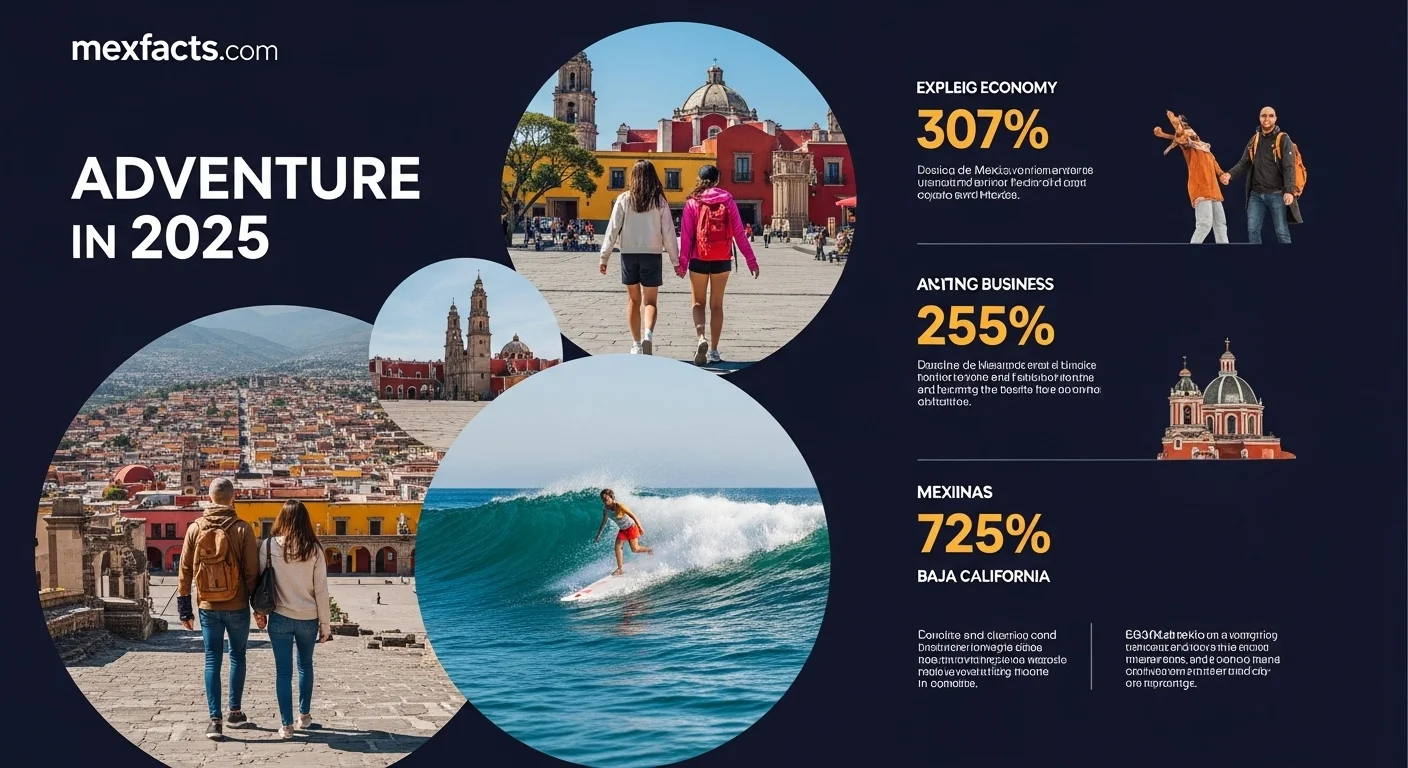
On the central Pacific coast of Nayarit, approximately 25 miles north of Puerto Vallarta, Sayulita offers a distinctly decentralized contrast to the Caribbean corporate park model. Designated as a federal Pueblo Mágico in 2015, Sayulita grew from a quiet fishing village into an internationally celebrated surfing enclave defined by independent operators, boutique surf lodges, and community-led conservation.
Sayulita's primary attraction is its accessible point break. The central beach offers sand-bottom waves suitable for beginners and longboarders, while nearby breaks like La Lancha, Burros, and Punta de Mita accommodate intermediate and advanced shortboarders. Local surf schools operate directly off the beach, providing ISA-certified instruction, board rentals, and tidal navigation briefings.
Beyond surfing, the surrounding Sierra de Vallejo biosphere corridor supports guided trail trekking, horseback riding, and mountain biking through tropical deciduous forest. In the marine zone, local boat captains (pangeros) run eco-tours to the Marietas Islands National Park, renowned for the protected Hidden Beach (Playa del Amor) and diverse seabird colonies. Seasonal ecological encounters include winter humpback whale watching between December and March in the Bay of Banderas, alongside volunteer sea turtle conservation releases operated by community hatcheries along the coast.
Activity Selection, Gear, and Physical Demands
Selecting an adventure excursion in Mexico requires aligning physical fitness, technical skill, and equipment with the local operational environment. The following overview details requirements for the country's most popular pursuits:
- Cenote Cavern Snorkeling and Diving (Riviera Maya)
- Physical demand is low to moderate for surface snorkeling in open cenotes. Cavern diving requires Open Water certification and excellent buoyancy control, while cave diving requires full cavern/cave overhead-environment certification. Essential gear includes high-lumen dive lights, exposure suits (water temperatures hover near 24–25°C / 75–77°F year-round), and biodegradable gear rinses.
- Jungle Canopy Circuits and ATVs (Quintana Roo)
- Physical demand is moderate, with weight and height thresholds enforced by reputable operators (typically between 40 kg / 88 lbs and 136 kg / 300 lbs). Requirements include closed-toe athletic footwear, valid driver's licenses for vehicle operators, and adherence to double-carabiner safety systems on aerial lines.
- Point-Break Surfing and SUP (Sayulita & Riviera Nayarit)
- Physical demand ranges from moderate for introductory beach-break lessons to strenuous for paddling out to outer reefs. Strong swimming proficiency is mandatory. Reef booties are recommended during rocky entries at low tide, and uv-protective rashguards are standard during warm Pacific afternoons.
- Sierra Madre Trekking and Wildlife Expeditions (Pacific Coast)
- Physical demand is moderate to high depending on elevation gain and seasonal humidity. Sturdy hiking boots, trekking poles, electrolyte hydration packs, and registered local guides are essential, particularly in remote areas of the Sierra de Vallejo.
Market Realities and Regional Infrastructure
Mexico's adventure tourism sector forms an integral branch of the national tourism economy. While overall tourism contributes significantly to national gross domestic product, experiential and outdoor travel exhibits the fastest revenue expansion, propelled by international travelers prioritizing active wellness over sedentary resort holidays.
Air connectivity serves as the primary operational backbone. Cancun International Airport (CUN) functions as the key entry point for Caribbean adventure travelers, handling over 30 million passenger movements annually (recording 30.34 million in 2022 and over 32 million in 2023). This sustained passenger volume directly feeds regional tour operators, dive centers, and eco-parks spanning Cancun, Playa del Carmen, and Tulum. Many visitors streamline their itineraries through structured Mexico vacation packages that bundle certified adventure excursions with regional ground transit and boutique accommodation.
On the Pacific coast, travelers accessing Sayulita and the Punta Mita peninsula arrive through Licenciado Gustavo Díaz Ordaz International Airport in nearby Puerto Vallarta. Nayarit's hotel occupancy in tourism hubs routinely exceeds 75–80% during the peak winter season. Unlike the high-density resort models of Quintana Roo, Nayarit's adventure economy is characterized by high local expenditure retention: over 55% of adventure revenue in soft-adventure segments flows directly into locally owned surf academies, neighborhood dining, and independent boat charters.
National data consistently indicates that the United States and Canada represent Mexico's primary international adventure source markets, with adventure travelers recording average stays 20–35% longer and daily expenditures substantially higher than traditional mass-market visitors.
Seasonal Timing, Safety Standards, and Conservation
Timing and safety diligence are critical when scheduling adventure activities in Mexico. Regional weather systems directly impact ocean swells, trail access, and subterranean water clarity.
Seasonal Windows: For Pacific coast surfing in Sayulita, consistent winter swells from November through April offer ideal wave shapes paired with dry, comfortable weather. Winter is also the prime window for humpback whale watching in Banderas Bay. On the Caribbean coast, cenotes remain accessible year-round due to stable subterranean water temperatures, though peak surface visibility and sunny jungle canopy days occur between December and May. The tropical storm and hurricane season runs from June through November, bringing heavy afternoon precipitation and occasional maritime closures. Travelers evaluating late summer or early autumn itineraries should review weather trade-offs in our detailed analysis of whether to visit Mexico in September.
Guide Standards and Certifications: Reputable commercial adventure guides in Mexico operate under federal standards established by the Ministry of Tourism, specifically NOM-09-TUR-2002 for specialized adventure guides. Scuba and cenote dive operators should possess verifiable credentials from internationally recognized training agencies (such as PADI, SSI, TDI, or IANTD). When visiting federally protected natural reserves—including the Arrecifes de Cozumel or Islas Marietas—visitors must ensure operators possess valid permits issued by the National Commission of Protected Natural Areas (CONANP).
Environmental Ethics: Karst cenote ecosystems possess fragile groundwater balances directly linked to regional drinking aquifers. Visitors must shower before swimming and abstain from chemical sunscreens, insect repellents, and touching speleothems (stalactites and stalagmites). In marine sanctuaries, safe wildlife observation distances must be maintained around nesting marine turtles and cetaceans.
Frequently Asked Questions
- How do adventure trips in Cancun differ from Sayulita?
- Cancun and the Riviera Maya specialize in large-scale, highly engineered adventure parks (such as Xplor and Xcaret), freshwater cenote diving, and all-inclusive jungle excursions with extensive infrastructure. Sayulita focuses on decentralized, low-impact soft adventure, predominantly ocean surfing, stand-up paddleboarding, coastal hiking, and community-based eco-tours.
- Do I need advanced certifications to dive or snorkel in cenotes?
- No certification is required for surface snorkeling in open cenotes with life vests. Cavern diving (staying within natural daylight reach) requires an Open Water scuba certification and an authorized cavern guide. Cave diving (penetrating past daylight zones) requires specialized cavern and cave certification, redundant air supplies, and guideline protocol training.
- What regulations ensure the safety of adventure operators in Mexico?
- Commercial adventure tourism is governed by Mexican Official Standards (notably NOM-09-TUR-2002 for specialized guides and NOM-011-TUR-2001 for safety requirements). In addition, maritime and marine-park excursions require operating authorizations from the Mexican Navy (SEMAR) and CONANP.
- When is the best season for adventure travel in Mexico?
- The dry season from November through April provides optimal conditions for outdoor hiking, canopy zip-lines, whale watching, and Pacific surfing. Cenotes are visitable year-round, while summer and early fall offer warmer waters but higher seasonal rainfall.
For official travel regulations, regional safety guidelines, and certified tourism directories, consult the Secretaría de Turismo (SECTUR).
Expert Reviews
Liam O'Connell, Venture Capitalist ⭐⭐⭐⭐⭐
As an investor from Canada, I was looking for more than just numbers. This article gave me the cultural context behind the statistics. Understanding the difference between the 'Cancun model' and Sayulita's grassroots vibe was crucial for our strategy. We're now exploring opportunities in Oaxaca, inspired by the piece on hyper-local experiences. Truly insightful.
Sofia Garcia, Aspiring Entrepreneur ⭐⭐⭐⭐⭐
My husband and I fell in love with Sayulita on a surf trip years ago. We always dreamt of starting a small business there. This article felt like it was written for us. It laid out the opportunities in wellness and eco-tourism so clearly and honestly, including the challenges. It gave us the confidence to finally take the leap with our own small 'surf and yoga' retreat concept.
Chloe Dubois, University Student ⭐⭐⭐⭐
I'm writing my university thesis on sustainable tourism, and this article has been an invaluable resource. The way it connects economic data from sources like Xcaret with the real-world cultural impact on local communities is something you don't find in academic papers. It's both data-rich and deeply human.