
Mexico's Tortilla: The Soul of a Nation and a Global Star
More than just food, the tortilla is the heartbeat of Mexico. It’s the warm, fragrant companion to every meal, a direct link to our Aztec and Mayan ancestors. I still remember the sound of the local tortillería in my grandmother's town, a rhythm that meant dinner was close. This simple disc of nixtamalized corn, an ancient process that unlocks incredible nutrition, is a symbol of our identity. But its story doesn't end at our borders. The tortilla has traveled the world, becoming the foundation of a multi-billion dollar industry and a beloved part of global cuisine. This article explores that incredible journey—from ancient traditions and surprising statistics to the future of this culinary icon, offering a deep look into Mexico's cultural and economic soul.
Table of Contents
What is a Tortilla and Why is it a Global Star?
To truly know Mexico, you have to understand the tortilla. It's the single most important piece of our cuisine, a food so woven into our history and daily lives that it’s almost like air. At its core, it’s a beautifully simple thing: a thin, circular flatbread made from corn, or 'maíz,' through an ingenious process called nixtamalization. This isn't just cooking; it's a kind of culinary alchemy developed by Mesoamerican cultures over 3,500 years ago. They discovered that by soaking dried corn in an alkaline solution, like water with food-grade lime, they transformed it. This magical step unlocked essential nutrients like niacin, boosted its protein quality, and made the corn soft enough to grind into the dough we call 'masa.' For our ancestors—the Olmecs, Mayas, and Aztecs—corn was a divine gift, the very stuff of life, and the tortilla was its most sacred form.
Here in Mexico, the tortilla is everything. It's our bread, our spoon, and sometimes our plate. It’s there at nearly every meal, ready to be used to scoop up a rich mole, wrap fillings into a perfect taco, or serve as the base for countless other dishes. For so many of us, the day begins with the smell of fresh tortillas warming on a 'comal,' a flat griddle. It’s a sensory experience that connects us directly to generations past. The Mexican tortilla is a great unifier; it's eaten by everyone, from the wealthiest families to the most humble farmers. While corn is king, the arrival of the Spanish introduced wheat, giving birth to the flour tortillas, or 'tortillas de harina.' I remember them well from trips to the northern states, where they are essential for making the burritos and quesadillas famous in that region, showing just how diverse this one staple can be.
Internationally, the tortilla’s rise has been nothing short of explosive. What was once our local secret has become a global sensation, carried on the wave of Mexican food's popularity. It’s the vehicle for the dishes the world has come to love: tacos, burritos, quesadillas, and enchiladas. Its amazing versatility has allowed it to be embraced and reinvented by cultures everywhere. This was fueled by Mexicans who carried their traditions abroad, by the boom of restaurant chains that made our food accessible to all, and by a world hungry for authentic, bold flavors. Today, you can find packaged tortillas in a supermarket in rural America or a major city in Japan, a testament to its universal appeal. This has turned our humble tortilla into a major export and a powerful economic engine, both for Mexico and for international food giants. Its journey from a local staple to a global superstar is a story of tradition meeting modernity.
The Ancient Magic of Nixtamalization
The story of the tortilla is really the story of nixtamalization. Think of it as ancient food science, a revolutionary discovery from around 1500 BCE. The name itself comes from the Nahuatl words 'nextli' (ashes/lime) and 'tamalli' (cooked corn dough). The process is brilliant in its benefits. First, it supercharges the corn's nutrition. The lime bath unlocks niacin (vitamin B3), preventing diseases like pellagra that plagued other corn-dependent cultures. It also boosts the available calcium and balances amino acids, making the corn a more complete food. Second, it makes grinding the tough kernels into soft masa a much easier task, especially with the traditional 'metate y mano' stone grinder. Finally, it creates an unforgettable flavor and aroma—that earthy, toasty corn taste with a hint of lime that you only get from a true nixtamalized tortilla. This ancient wisdom turned a simple crop into a superfood that sustained great civilizations, and it’s what gives an authentic Mexican tortilla its soul.
The Heartbeat of Mexico
In Mexico, there's a popular saying: “Sin maíz, no hay país” – “Without corn, there is no country.” It perfectly captures how we feel. The tortilla is a symbol of our national identity, our heritage. Every tortilla is a taste of history, a connection to our Aztec and Mayan roots. The daily ritual of going to the local 'tortillería' is a cornerstone of Mexican life. I can still close my eyes and hear the rhythmic clanking of the machine, feel the warmth, and see neighbors chatting as they wait for their fresh stack, wrapped carefully in a cloth. These shops are community hubs. This centrality makes the price of tortillas a deeply political issue; it's seen as a barometer of the nation’s economic health, and the government often steps in to keep it affordable. And on our tables, the tortilla is a canvas. It can be soft and fresh, fried crispy for 'tostadas' or 'totopos' (chips), or rolled into enchiladas. This incredible versatility ensures it will always be at the heart of our cuisine.
The Tortilla Goes Global: An International Success Story
The tortilla’s journey to becoming an international star is a fantastic story of cultural exchange. Its popularity exploded in the last century, thanks in large part to its incredible adaptability. It's the foundation of authentic Mexican food, but it's also the perfect base for Tex-Mex and countless other fusion dishes. Global fast-food chains like Taco Bell, Qdoba, and Chipotle were instrumental in this. They created a standardized, easy-to-love version of Mexican food and introduced it to billions. This created a cycle: people try a burrito at Chipotle, get curious about the tortilla itself, and start exploring more. This is where strategic product design becomes key. For its famous burritos, Chipotle needed a specific tortilla—large, pliable, and strong. The result was the 'Chipotle Mexican Grill flour tortilla,' engineered with simple ingredients like flour, water, and oil to meet a specific need. It was a brilliant move. Similarly, 'Qdoba tortilla soup' reimagines the ingredient entirely. The soup is a delicious chile-based broth, but it's the crispy tortilla strips sprinkled on top that give it its name, texture, and soul. Even dishes like 'enchiladas with flour tortillas'—a popular adaptation in the U.S.—show how a classic can be tweaked for new audiences who prefer the softer, more durable texture of flour. This story of adaptation is what turned our tortilla into a global comfort food and an economic powerhouse.
Current Statistics and Data About the Tortilla in Mexico
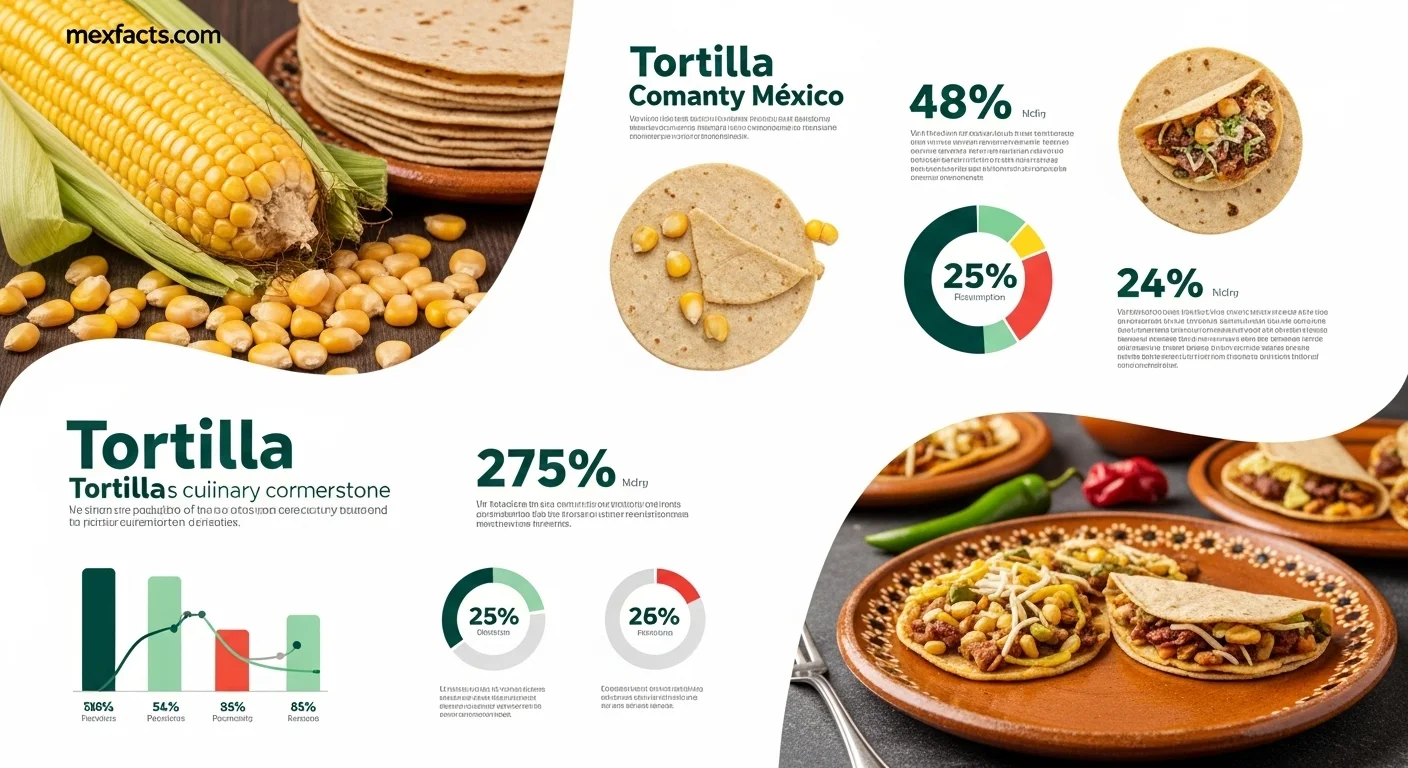
The tortilla industry in Mexico isn't just a business; it's an economic titan that is deeply woven into our national life. Looking at the numbers reveals the sheer scale of its importance for a country of over 126 million people. It’s hard to imagine a day in Mexico without tortillas. It’s estimated that the average Mexican eats around 56.7 kilograms (about 125 pounds) of tortillas a year. That breaks down to about six to eight tortillas every single day. While some dietary habits are changing, the tortilla remains the main source of calories, calcium, and protein for a huge part of our population. The total production is massive, reaching millions of tons annually. In fact, the bakery and tortilla sector represents about a quarter of the entire food processing industry in Mexico. The market's value is enormous. Recent analyses project the Mexican tortilla market to grow from USD 9.8 billion in 2025 to a staggering USD 16.0 billion by 2035. This value is created by a fascinating mix of producers, from the tiny, family-run 'tortillerías' you'll find on every other corner to massive industrial plants.
The Dual Market: 'Tortillerías' vs. Industrial Production
The tortilla market in Mexico is a tale of two worlds. On one side, you have tens of thousands of local 'tortillerías.' These small shops are the heart of their neighborhoods, producing fresh, hot tortillas every day. I love them because they are more than just businesses; they are community institutions and a huge source of local jobs. They face their own struggles, like rising corn prices and competition from big supermarkets. On the other side are the industrial giants. Companies like Gruma (with its famous brand Maseca) and Tortillas Guerrero dominate the market for packaged tortillas you find in stores and export worldwide. These companies have mastered large-scale production, offering products that last longer and are available everywhere. Tortillas Guerrero, for instance, is a name every Mexican knows, and it has a huge footprint in the U.S., serving both Mexican-Americans and the general public. Their success comes from offering a wide variety—from classic white corn to flour to healthier whole wheat options. This industrial scale is what allowed the Mexican tortilla to travel the globe, landing on shelves thousands of miles from where it was born.
The Globalized Tortilla: Case Studies in International Adaptation
To really grasp the tortilla's international success, you have to look at how global chains have masterfully adapted it. This isn't just about changing a recipe; it's about smart strategy, supply chains, and marketing to people who may have never tasted real Mexican food before.
Chipotle Mexican Grill built its empire on the burrito, which requires a very special tortilla. The 'Chipotle Mexican Grill flour tortilla' is a perfect example of designing a product for a purpose. It has to be big (around 12-14 inches), soft, and stretchy enough to hold a mountain of fillings without falling apart. For years, Chipotle has prided itself on using simple, recognizable ingredients. Their flour tortillas are made from just a handful of things: wheat flour, water, canola oil, and salt. This 'clean label' resonates with health-conscious customers and set them apart from competitors. Making the tortilla a high-quality, purpose-built product was absolutely fundamental to their success.
Qdoba Mexican Eats offers another brilliant example of adaptation with its famous 'Qdoba tortilla soup'. This dish breaks down the tortilla and uses it in two ways: as a flavor base and as a garnish. The heart of the soup is a rich, tangy broth made with fire-roasted tomatoes and Mexican chiles. To this, they add chicken, corn, and beans. But the real magic comes from the tortilla. Some recipes blend corn tortillas directly into the broth to thicken it and give it an authentic 'masa' flavor. Then, the whole thing is topped with crispy, fried tortilla strips for a satisfying crunch. This creative use shows a deep appreciation for the tortilla's potential beyond just being a wrapper. The soup has become a beloved signature item for Qdoba, proving that the essence of the tortilla can be sold in many successful forms.
Finally, you can see this evolution in recipes like 'enchiladas with flour tortillas.' In Mexico, traditional enchiladas are almost always made with corn tortillas that are flash-fried to make them pliable. But outside of Mexico, especially in the U.S., the flour tortilla version is incredibly popular. Why? Because flour tortillas are naturally softer and less likely to tear when rolled and baked in sauce, making them much easier for home cooks to handle. While a purist might scoff, its popularity shows how a classic dish can be successfully adapted for new tastes. This flexibility is what has helped make Mexican food, and the tortilla with it, a global comfort food, expanding its reach far beyond our borders.
Future Outlook and Opportunities for Mexico's Tortilla
The future of the tortilla is a vibrant landscape, full of exciting opportunities alongside some real challenges. As the world gets more connected and food lovers become more discerning, the industry is evolving in fascinating ways. I see a future where there's a deeper respect for authenticity, a rising demand for healthier choices, amazing technological innovations, and ever-expanding export markets. For anyone interested in this space, knowing these trends is key to spotting the opportunities ahead.
A major trend I'm passionate about is the 'gourmet' revival of the tortilla, driven by a new appreciation for heirloom corn. For a long time, the market was dominated by industrial 'masa harina' (corn flour) that valued convenience over flavor. Now, a powerful counter-movement is celebrating Mexico's incredible biodiversity. We are the birthplace of corn, with 59 unique native varieties, each with its own color, flavor, and texture. A new wave of chefs and entrepreneurs, both here and abroad, is working to save these 'criollo' varieties by connecting small farmers with premium markets. This movement celebrates traditional nixtamalization and the rich flavors of tortillas made from red, blue, or yellow corn. This is a huge opportunity for businesses that focus on artisanal, high-quality products. There is a growing group of consumers willing to pay more for a truly authentic Mexican tortilla with a story. This isn't just a trend; it's a return to valuing quality, tradition, and sustainability.
Opportunities in Health and Wellness
The global focus on healthy living is also transforming the tortilla market. People want food that's not just delicious but also good for them. This has opened the door for a whole range of innovative products, such as:
- Whole Wheat and Multigrain Tortillas: For those seeking more fiber and nutrients.
- Gluten-Free Tortillas: While corn tortillas are naturally gluten-free, there's a growing demand for flour-style tortillas made from almond, coconut, or even cauliflower flour.
- Low-Carb/Keto-Friendly Tortillas: A massive market for people on specific diets.
- Fortified Tortillas: Products enriched with extra vitamins, minerals, or protein.
Export and International Market Expansion
The world's love for Mexican food keeps growing, creating huge opportunities for export. The global tortilla market is set to grow steadily, with strong demand in North America, Europe, and now Asia. Mexican companies can lead this charge by leaning into their reputation for authenticity. Exporting high-quality, nixtamalized corn flour and tortillas allows restaurants and home cooks abroad to taste the real deal. There's also great potential in exporting finished products, like ready-to-eat meals, gourmet tortilla chips from heirloom corn, or frozen enchiladas. Of course, this requires navigating logistics and meeting international food safety standards, but the reward is immense.
The success of global chains provides a clear roadmap. The widespread love for the 'Chipotle Mexican Grill flour tortilla' shows that a consistent, quality product can become a staple anywhere. Likewise, the popularity of dishes like 'Qdoba tortilla soup' shows the power of innovation. Mexican companies could develop and export their own gourmet soup kits so people can make these dishes at home. Even the popularity of 'enchiladas with flour tortillas' points to a market that loves fusion, creating an opportunity for products that cater to that preference.
Challenges on the Horizon
Despite this bright outlook, we face real challenges. The price of corn can be volatile, affected by weather, global markets, and politics. Climate change, with its droughts and unpredictable weather, is a direct threat to our harvests. Sadly, security has also become a problem in some areas, with criminal groups disrupting the supply chain, which can drive up prices. There is also the ongoing tension between huge industrial producers and small, traditional 'tortillerías.' Finally, the debate over genetically modified (GMO) corn continues, as many of us fight to protect our native corn varieties. Overcoming these hurdles will take smart policy, innovation, and a commitment to sustainable and ethical practices. For those who can navigate these challenges, the future of the tortilla, our cherished heritage, looks as rich and rewarding as its incredible past.
For quality external information about business in Mexico, visit Mexico Business News.
Expert Reviews
Elena Flores, La Cocina Auténtica ⭐⭐⭐⭐⭐
As someone running a small Mexican eatery in Canada, this article was a revelation. The section on heirloom corn and nixtamalización has inspired me to connect with farmers back home to bring truly authentic flavors to my customers. ¡Gracias!
Mark Chen, Avid Traveler ⭐⭐⭐⭐⭐
Reading this brought me right back to my trip to Oaxaca. The description of the neighborhood tortillería—the smell, the sound—was spot on. It's so much more than food, and this article beautifully explains why. A fantastic and heartfelt read.
Sophia Miller, Economics Student ⭐⭐⭐⭐⭐
Incredibly insightful. The breakdown of the 'dual market' between local shops and giants like Guerrero, plus the analysis of how chains like Chipotle and Qdoba adapted the tortilla, was perfect for my market research paper. Clear, well-written, and packed with valuable data.