
Mexican Fiesta Traditions: History, Music, and Regional Celebrations

A Mexican fiesta is far more than an ordinary party; it is a central cultural institution rooted in communal reciprocity, historical syncretism, and spiritual expression. Throughout Mexico, celebrations bring together ancient Mesoamerican traditions and Spanish Catholic liturgical observances, resulting in deeply meaningful civic, religious, and family commemorations. From the reverent ofrendas of Día de Muertos to the communal dances of La Guelaguetza in Oaxaca, fiestas express regional identity, artistic heritage, and social solidarity.
Beyond their cultural value, fiestas serve as vital economic drivers that support traditional artisans, musicians, and regional tourism across the country. This editorial guide explores the historical origins, core festive categories, musical traditions, gastronomy, economic dynamics, and essential cultural etiquette of Mexican fiestas for travelers and cultural enthusiasts.
- What Is a Mexican Fiesta? Meaning and Historical Syncretism
- Categories of Mexican Fiestas: Religious, Civic, and Regional
- Traditional Music, Dance, and Visual Arts
- Fiesta Gastronomy: Communal Cooking and Sacred Flavors
- Economic and Tourism Impact of Mexico's Festival Culture
- Preservation vs. Commercialization: Modern Challenges
- Practical Guide for Visitors: Fiesta Etiquette and Annual Calendar
- Frequently Asked Questions About Mexican Fiestas
What Is a Mexican Fiesta? Meaning and Historical Syncretism
In Mexican culture, the word fiesta describes a wide range of gatherings, but its deepest significance lies in collective public celebration. Unlike casual social get-togethers, a traditional fiesta is structured around community obligations, ritual calendars, and shared heritage. These events suspend normal daily routines, transforming public plazas, churches, and neighborhoods into shared spaces of communal celebration.
The philosophical foundation of modern Mexican fiestas took shape in the 16th century through religious and cultural syncretism—the blending of indigenous Mesoamerican cosmovision with Spanish Catholicism. Prior to the Spanish conquest, Mesoamerican civilizations such as the Mexica, Maya, and Zapotec organized extensive ritual ceremonies around agricultural cycles, astronomical alignments, and sacred deities. When Catholic friars introduced the Gregorian calendar and liturgical feast days, these indigenous observances often merged with veneration for Catholic saints.
A prominent example of this syncretism is the celebration of the Virgin of Guadalupe on December 12th at the Tepeyac hill in Mexico City, a site previously dedicated to the Mesoamerican mother goddess Tonantzin. Similarly, pre-Hispanic rituals honoring deceased ancestors evolved alongside All Saints' Day and All Souls' Day into contemporary Día de Muertos traditions. Understanding these historical roots provides essential context for appreciating broader Mexico traditions and the resilience of indigenous identities within modern Mexican life.
Categories of Mexican Fiestas: Religious, Civic, and Regional
Mexican celebrations can be organized into four distinct categories, each defined by unique social structures, histories, and practices:
- 1. Religious and Patronal Feasts (Fiestas Patronales)
- Nearly every town, village, and parish neighborhood across Mexico celebrates its patron saint with an annual festival. These multi-day events feature dawn processions (mañanitas), solemn church masses, traditional street dances, and evening pyrotechnic displays called castillos. Organization is traditionally managed by a mayordomía, a community committee that coordinates finances, ceremonial meals, and decorations as a form of civic-religious stewardship.
- 2. Civic and National Commemorations
- National holidays celebrate Mexico's sovereign history. The most prominent is Independence Day on September 15th and 16th, marked by El Grito de Dolores, reenacting Miguel Hidalgo's 1810 call for independence with patriotic cheers, bell ringing, and fireworks in civic plazas across the nation. In contrast, Cinco de Mayo (May 5th), which commemorates the historic Mexican victory over the French army at the Battle of Puebla in 1862, is an official regional civic commemoration in Puebla, though it is often mistaken internationally as Mexico's primary national holiday.
- 3. Regional Cultural Festivals
- Many of Mexico's most renowned fiestas are regional cultural showcases. La Guelaguetza in Oaxaca, held annually in July, gathers indigenous delegations from eight regions to share traditional music, attire, and dance while distributing local agricultural gifts to attendees. Similarly, coastal carnivals in Veracruz and Mazatlán celebrate pre-Lenten periods with colorful parades, live brass bands, and Afro-Caribbean musical rhythms.
- 4. Lifecycle and Family Celebrations
- Family-centered celebrations such as quinceañeras (marking a young woman's fifteenth birthday), baptisms, and weddings play a vital role in reinforcing social bonds. These events rely heavily on compadrazgo (godparenthood networks), where family friends take on spiritual and financial responsibilities, emphasizing lifelong mutual support within extended families.
Traditional Music, Dance, and Visual Arts
Music, traditional dance, and artisanal arts form the sensory foundation of any Mexican fiesta, with styles varying markedly across geographic regions:
Regional Musical Traditions
While Mariachi music—recognized by UNESCO in 2011 as an Intangible Cultural Heritage—is celebrated internationally for its violins, trumpets, vihuela, and guitarrón, Mexico possesses a rich variety of distinct regional genres. In Veracruz, Son Jarocho blends indigenous, African, and Andalusian elements, featuring the jarana guitar and rhythmic zapateado danced atop a wooden resonant box (tarima). In northwestern Mexico, Banda Sinaloense relies on powerful brass sections, clarinets, and the resonant bass drum (tambora), while Son Huasteco showcases falsetto vocals, violin virtuosity, and poetic improvised verses.
Traditional Folkloric Dance
Traditional dances serve as vibrant storytelling mediums during festivals. Dances such as the Danza de los Viejitos (Dance of the Old Men) from Michoacán humorously celebrate elderly wisdom and ancestral resilience, while the Jarabe Tapatío from Jalisco dramatizes courtship and national pride. Dancers often perform in intricate regional attire, including embroidered Oaxacan huipiles, Tehuana headdresses, and formal charro suits.
Festive Art and Visual Symbolism
The visual landscape of a fiesta is marked by handmade decorations that carry symbolic significance. Papel picado—intricately hand-chiseled tissue paper banners originating in San Salvador Huixcolotla, Puebla—is strung across streets to represent the wind and the fragility of life. During autumn celebrations, golden orange cempasúchil (marigold) blossoms are laid along paths to guide visiting spirits, complemented by artistic calavera imagery and the cultural elegance of La Catrina, famously originated by graphic artist José Guadalupe Posada.
Fiesta Gastronomy: Communal Cooking and Sacred Flavors
Food is central to the Mexican fiesta, serving as both an expression of community identity and an act of hospitality. In 2010, UNESCO inscribed Traditional Mexican Cuisine on the Representative List of the Intangible Cultural Heritage of Humanity, specifically recognizing its ancestral agricultural foundations, culinary techniques, and community-centered preparation methods.
Traditional fiesta dishes are defined by collective preparation. Preparing festival food often involves entire extended families or neighborhoods working in coordinated shifts to roast chiles, grind nixtamalized corn, and stir massive clay pots (cazuelas) over wood fires. Key festive culinary specialties include:
- Mole Poblano: A complex, slow-simmered sauce prepared from dried chiles, seeds, spices, fruits, and Mexican chocolate. Typically reserved for patron saint feasts, weddings, and baptisms, an authentic mole can take several days of collective labor to prepare.
- Tamales: Seasoned masa steamed in corn husks or banana leaves, prepared in communal gatherings called tamalizas for Candlemas (Día de la Candelaria), Christmas posadas, and Día de Muertos.
- Pozole: An ancestral hominy corn broth simmered with pork, chicken, or regional herbs, traditionally served during Mexican Independence celebrations and family reunions.
- Chiles en Nogada: A seasonal Puebla specialty enjoyed during patriotic September holidays, featuring poblano chiles filled with spiced picadillo, smothered in a walnut cream sauce, and garnished with red pomegranate seeds and green parsley to represent the Mexican flag.
- Pan de Muerto: A sweet bread lightly perfumed with orange blossom water and anise, decorated with bone-shaped dough patterns and sprinkled with sugar for Day of the Dead altars.
Economic and Tourism Impact of Mexico's Festival Culture
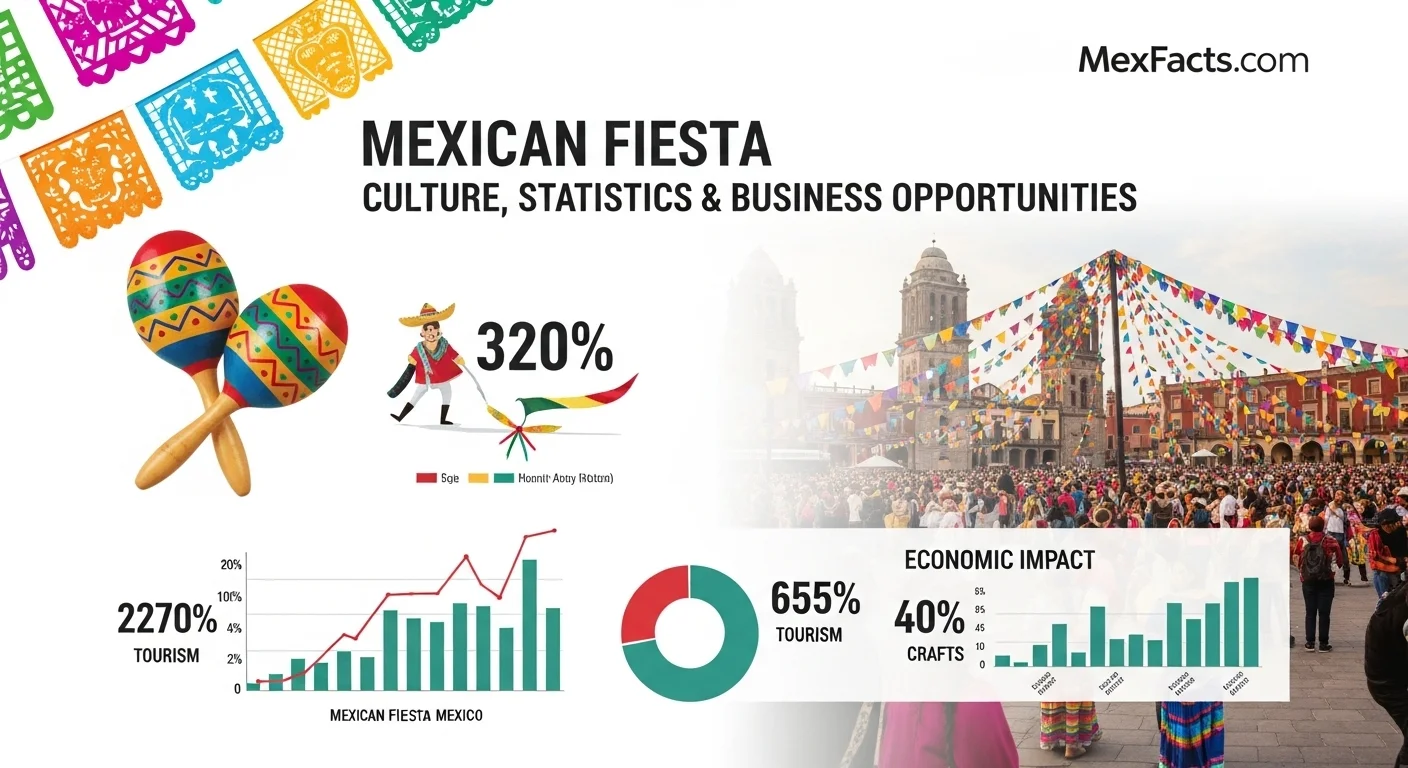
Cultural festivals generate substantial economic activity across Mexico, directly supporting the broader tourism industry and regional economies. According to data from the National Institute of Statistics and Geography (INEGI) and the Secretariat of Tourism (SECTUR), tourism contributes approximately 8.5% to 8.7% of Mexico's Gross Domestic Product (GDP). Mexico welcomed over 42 million international tourists in 2023 and surpassed 45 million international arrivals in 2024, with cultural heritage remaining one of the primary motivations for travel.
Major holiday periods create substantial economic spillovers (derrama económica) nationwide:
- Día de Muertos Spending: Official SECTUR estimates show that nationwide economic spillover during Day of the Dead activities reaches approximately 41 billion Mexican pesos (over $2.2 billion USD). In Mexico City alone, hotel occupancy, cultural events, floral markets, and seasonal commerce generate an estimated 11 billion pesos.
- Domestic Travel Surges: Millions of Mexican residents travel domestically during holiday weekends (puentes), particularly during the September Independence celebrations, driving regional hospitality in historic colonial centers like Guanajuato, Querétaro, and Puebla.
- Transport and Logistics: International travelers arriving through major hub airports like Cancún, Guadalajara, and Mexico City increasingly plan secondary regional itineraries to participate in authentic festivals across inland communities.
At the grassroots level, fiesta spending provides direct income for traditional textile artisans, candle makers, musicians, and independent street food vendors. However, community-based fiesta systems also involve economic trade-offs. In rural and agricultural communities, serving as a festival mayordomo entails significant financial responsibility, requiring families to save for years to host the community. Rather than treating national tourism figures as a single monolithic metric, observers should recognize how cultural festivals sustain local livelihoods while honoring shared heritage during travel in Mexico.
Preservation vs. Commercialization: Modern Challenges
The growing global interest in Mexico's vibrant festival traditions presents both meaningful opportunities and preservation challenges. As international recognition expands, safeguarding living heritage requires balancing economic tourism benefits with authentic cultural preservation:
- Preventing Over-Commercialization: Cultural researchers and community elders frequently emphasize the importance of protecting sacred rituals from trivialization. Fiestas are not staged performances; they are sacred community gatherings. Preserving the ceremonial dignity of events like indigenous cemetery vigils remains vital.
- Community-Led Tourism: Sustainable tourism initiatives in regions like Oaxaca, Michoacán, and Nayarit's coastal towns like Sayulita empower local residents to guide cultural experiences, ensuring economic earnings remain within indigenous and local households.
- Environmental Sustainability: Large public festivals are adopting eco-conscious practices, such as reducing single-use plastics, utilizing biodegradable artisanal tableware, and introducing dedicated recycling systems for floral and paper waste following major processions.
Practical Guide for Visitors: Fiesta Etiquette and Annual Calendar
Visitors are welcome at most public Mexican fiestas when they engage with respect and cultural sensitivity. Observing several fundamental principles ensures positive interactions for both travelers and host communities:
- Church and Procession Etiquette
- Maintain respectful decorum inside religious sanctuaries and during solemn processions. Avoid walking directly through dancers or interrupting ceremonial blessing rituals.
- Photography and Privacy
- Always ask for permission before photographing community elders, children, or family ofrendas (home altars). In certain indigenous municipalities, such as San Juan Chamula in Chiapas, photography inside sacred buildings is strictly prohibited.
- Direct Economic Support
- Support local communities by purchasing handmade crafts, regional textiles, and traditional food directly from village artisans and market vendors at fair prices without aggressive bargaining.
Key Mexican Fiestas by Month
| Month | Celebration | Primary Locations | Key Cultural Highlights |
|---|---|---|---|
| February | Día de la Candelaria | Nationwide; Tlacotalpan, Veracruz | Blessing of Niño Dios figures, communal tamal feasts, Son Jarocho music. |
| February/March | Carnaval | Veracruz, Mazatlán, Tlaxcala | Pre-Lenten street parades, colorful masquerades, live regional brass and tropical music. |
| March/April | Semana Santa (Holy Week) | Taxco, San Cristóbal de las Casas, Iztapalapa | Solemn Passion plays, penitential processions, sacred floral carpets. |
| May | Cinco de Mayo | Puebla | Civic military parade and historical reenactment of the 1862 Battle of Puebla. |
| July | La Guelaguetza | Oaxaca City, Oaxaca | Indigenous dance delegations, regional textiles, communal gift-giving traditions. |
| September | Día de la Independencia | Nationwide; Dolores Hidalgo, Mexico City | El Grito de Dolores, fireworks, patriotic food such as pozole and chiles en nogada. |
| November | Día de Muertos | Michoacán (Pátzcuaro), Oaxaca, Mexico City | Cemetery vigils, cempasúchil marigolds, decorative ofrendas, sugar skulls, pan de muerto. |
| December | Día de la Virgen de Guadalupe | Nationwide; Basilica of Guadalupe, CDMX | Massive religious pilgrimages, indigenous conchero dances, festive dawn serenades. |
| December | Las Posadas | Nationwide | Neighborhood candlelit processions reenacting Mary and Joseph's journey, star piñatas, fruit ponche. |
Frequently Asked Questions About Mexican Fiestas
- What is the difference between a fiesta and an ordinary party?
- While the word fiesta translates to party, in Mexican cultural terminology it denotes a communal celebration anchored in shared traditions, religious calendars, or civic history. Unlike private social parties, public fiestas involve community reciprocity, sacred or civic rituals, and heritage customs passed down across generations.
- Is Cinco de Mayo widely celebrated across all of Mexico?
- No. Cinco de Mayo commemorates the Mexican victory over French forces at the Battle of Puebla on May 5, 1862. It is a major civic celebration and official holiday in the state of Puebla, but throughout most of Mexico it is a minor observance. Mexican Independence Day, celebrated on September 16th, is the primary national holiday celebrated across the country.
- What is a mayordomía in a Mexican fiesta?
- A mayordomía is a traditional civil-religious stewardship system found in many indigenous and rural Mexican communities. An individual or family is appointed as mayordomo to coordinate and finance the annual feast of the local patron saint, overseeing food, music, church decorations, and ceremonial hospitality on behalf of the community.
- When is the best time of year to experience a traditional Mexican fiesta?
- Mexico celebrates vibrant festivals throughout the year. However, late October through early November (for Día de Muertos), mid-September (for Mexican Independence Day), and December (for the Virgin of Guadalupe and Las Posadas) offer some of the most dynamic and widespread cultural celebrations across the country.
Expert Reviews
Michael Chen, Traveler ⭐⭐⭐⭐⭐
My wife and I visited Oaxaca during the Guelaguetza after reading this. The article helped us understand we weren't just watching dances; we were seeing the heart of Zapotec culture. It made the experience so much richer. Thank you!
Sofia Garcia, Cultural Anthropology Student ⭐⭐⭐⭐⭐
As a student, I found this piece incredibly insightful. It connects the historical roots of the fiestas with their modern economic impact without being dry or academic. The personal, human tone makes it so accessible and a pleasure to read.
David Miller, Entrepreneur ⭐⭐⭐⭐⭐
I'm looking to source authentic artisanal goods for my shop in California. This article gave me a crucial perspective on the importance of working with communities respectfully and sustainably. It’s about cultural partnership, not just business. Invaluable advice.