
Riviera Maya Resorts: Regional Guide, Transport & Hotel Corridor

The Mexican Caribbean resort corridor along the state of Quintana Roo represents one of the world's most successful master-planned tourism ecosystems. Stretching from the southern edge of Cancun through Puerto Morelos, Playa del Carmen, and Akumal to the archaeological enclave of Tulum, this coastal highway connects more than 130,000 hotel rooms. Unlike Cancun's urbanized high-rise Hotel Zone, the Riviera Maya is characterized by expansive, low-density beachfront properties set within coastal jungle, mangrove reserves, and freshwater cenote systems. Understanding this geographic distinction is critical for travelers navigating accommodations, airport transfers via Cancun (CUN) or Tulum (TQO), and day excursions across the Yucatán Peninsula, including trips toward Isla Holbox in the north. This editorial guide breaks down the regional resort zones, transport infrastructure, key accommodation models, and current statistical benchmarks defining Mexico's Caribbean coast.
Table of Contents
- The Mexican Riviera Resort Corridor Explained
- Regional Statistics: Tourism, Occupancy, and Hotel Capacity
- Major Resort Styles and Notable Properties
- Transport Logistics, Infrastructure, and Future Outlook
- Frequently Asked Questions
The Mexican Riviera Resort Corridor Explained
When travelers search for Mexico's resort riviera, they are almost universally referring to the 130-kilometer (80-mile) coastal strip along Federal Highway 307 in the state of Quintana Roo. The destination began with the deliberate development of Cancun in 1970 by Mexico's National Fund for Tourism Promotion (FONATUR), which utilized computer-assisted demographic and meteorological analysis to identify the northeast Yucatán coast as the country's prime international tourism hub. While Cancun developed into an energetic barrier-island destination lined with vertical high-rises and dense nightlife, the coastline to the south took a fundamentally different architectural path.
Officially branded as the Riviera Maya in 1999, this southern corridor prioritized sprawling, low-rise resort complexes integrated directly into coastal mangrove ecosystems and tropical jungle. The corridor divides naturally into distinct geographic sectors:
- Riviera Cancun & Puerto Morelos: Located just 20 to 30 minutes south of Cancun International Airport, this transitional zone features large, self-contained resort compounds alongside the traditional fishing village of Puerto Morelos, anchored by the National Reef Park of Puerto Morelos.
- Playa del Carmen & Playacar: The commercial and urban heart of the Riviera Maya, combining gated residential resort communities with the pedestrian-friendly Quinta Avenida (Fifth Avenue), offering international dining and direct ferry connections to Cozumel.
- Puerto Aventuras & Akumal: A quieter, mid-corridor stretch known for marina living, private residential developments, and protected coastal bays renowned for green sea turtle conservation.
- Tulum & the Sian Ka'an Biosphere: The southern terminal of the corridor, where luxury eco-chic cabanas, boutique wellness retreats, and clifftop Mayan ruins meet the UNESCO-designated Sian Ka'an Biosphere Reserve.
Rather than a single uniform destination, the corridor functions as a multi-tier hospitality network catering to varied travel styles, from classic all-inclusive options in Cancun to secluded luxury retreats further south along Highway 307.
Regional Statistics: Tourism, Occupancy, and Hotel Capacity
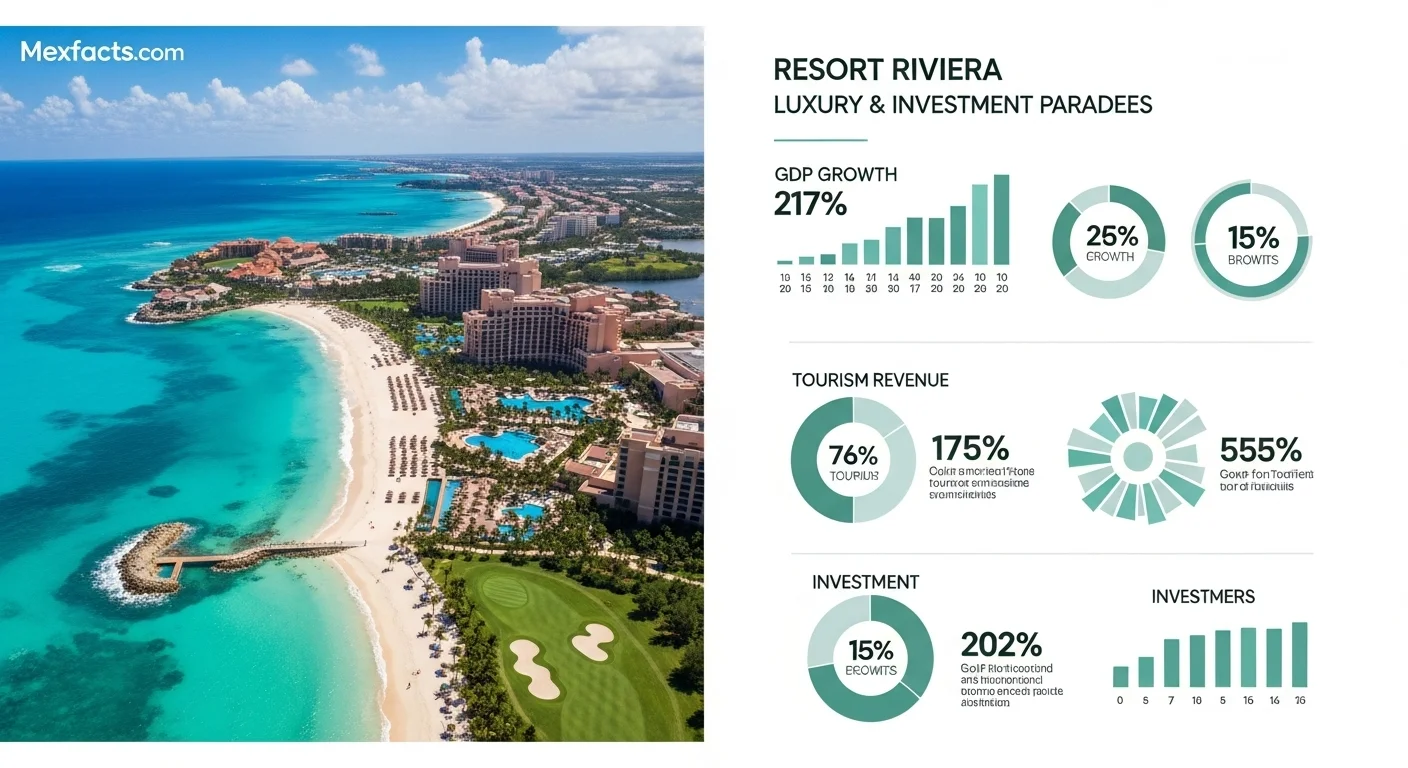
The scale of Quintana Roo's resort sector makes it the primary driver of Mexico's foreign tourism revenue. According to data from Mexico's Ministry of Tourism (SECTUR) and the Quintana Roo Tourism Board (SEDETUR), the state accounts for nearly half of all international tourist spending in the country. In 2024, Mexico welcomed more than 45 million international tourists nationwide, generating approximately $33 billion in foreign exchange earnings, with the Caribbean corridor capturing the dominant market share.
Key structural metrics shaping the region include:
- Hotel Inventory: Quintana Roo maintains more than 130,000 operational hotel rooms across its municipalities, with the Riviera Maya and Cancun together hosting the overwhelming majority of these keys.
- Airport Passenger Traffic: Cancun International Airport (CUN), managed by Grupo Aeroportuario del Sureste (ASUR), consistently handles over 32 million commercial passengers annually, serving as the primary international gateway for North American and European travelers.
- Average Annual Occupancy: Hotel occupancy across the Riviera corridor routinely averages between 70% and 85%, reaching 90% or higher during peak winter and spring holiday periods.
- Economic Multiplier: Tourism activity in the state generates upwards of $20 billion annually in regional economic activity, directly supporting hundreds of thousands of hospitality, transport, and service sector jobs.
Major Resort Styles and Notable Properties
The all-inclusive format in Mexico has shifted from basic buffet models to specialized, high-tier hospitality concepts. Understanding how individual properties categorize their services helps travelers select the appropriate resort type for their vacation objectives:
Large-Scale Luxury All-Inclusive Compounds
Properties in this segment function as self-contained destinations with multiple culinary concepts, private beach clubs, and segmented guest wings. A prominent example is the Royalton Riviera Cancun Resort & Spa, situated on the coastal strip north of Puerto Morelos. Spanning approximately 840 suites, the property divides its footprint into family-friendly zones, premium Diamond Club suites, and the Hideaway adult-only enclave, supported by a dozen dining venues, wellness facilities, and on-site entertainment.
Family-Focused Luxury
Other resorts prioritize structured programming for multi-generational travelers. The Dreams Riviera Cancun Resort & Spa, located in Puerto Morelos with 486 rooms, centers its AAA Four Diamond model on an 'Unlimited-Luxury' framework that eliminates wristband requirements and dining reservations. Its oceanfront layout incorporates dedicated youth programs like the Explorer's Club alongside tiered family pools and full-service spa facilities.
Entertainment and Themed Resorts
A rapidly growing trend along the corridor is the integration of world-class water parks and licensed brand entertainment directly into the luxury resort model. The Royalton Splash Riviera Cancun (an Autograph Collection All-Inclusive Resort) added more than 1,000 suites to the region alongside one of the largest on-site resort water parks in the Caribbean, complete with multiple drop slides, lazy rivers, bowling alleys, and indoor gaming complexes. Similarly, the Nickelodeon Riviera Maya provides all-inclusive oceanfront suites paired with the sprawling Aqua Nick water park, targeting family travel with character experiences and specialized aquatic attractions. For travelers navigating broader itinerary options, choosing between self-contained entertainment hubs and quieter boutique sanctuaries remains a primary planning step for a Mexican vacation.
Transport Logistics, Infrastructure, and Future Outlook
Navigating the Riviera Maya has evolved significantly due to major transportation infrastructure initiatives completed between 2023 and 2025. Highway 307 remains the central arterial road, but dual airport access and passenger rail have reshaped traveler mobility:
- Cancun Airport (CUN) vs. Tulum Airport (TQO): Travelers staying in Puerto Morelos, Playa del Carmen, or north Riviera Maya typically land at Cancun International Airport, with transfer times ranging from 25 to 60 minutes. For travelers visiting Akumal, Tulum, or southern eco-resorts, the Felipe Carrillo Puerto International Airport in Tulum (TQO) provides direct access without the standard 90-to-120-minute highway drive from Cancun.
- Tren Maya Intercity Rail: The Tren Maya project connects Cancun Airport, Puerto Morelos, Playa del Carmen, and Tulum via dedicated passenger rail stations, before continuing inland toward Chichén Itzá, Mérida, and Palenque. This rail alternative provides travelers with a reliable ground transit option for multi-destination itineraries across the Yucatán Peninsula.
- Pre-Booked Transfers vs. Car Rental: Due to distance and local highway dynamics, pre-arranged private shuttle transfers remain the recommended standard for resort arrivals. While car rentals offer freedom for cenote and ruin exploration, travelers must account for mandatory Mexican third-party liability insurance (Seguro de Responsabilidad Civil) and highway checkpoints.
Environmental Stewardship and Coastal Management
Sustaining the Riviera's appeal requires active management of sensitive natural assets. The Mesoamerican Barrier Reef—the second-largest barrier reef system in the world—runs parallel to this coastline, requiring strict municipal protections on water treatment, sunscreen regulations (requiring biodegradable formulas in marine reserves), and mangrove conservation. Additionally, seasonal pelagic sargassum influxes between April and August are managed via multi-layered coastal barrier systems, specialized harvesting vessels, and daily municipal beach clearing. Resorts with active green certifications (such as EarthCheck or Rainforest Alliance) increasingly incorporate on-site solar systems, desalination plants, and plastic-reduction initiatives to minimize ecological disruption.
Frequently Asked Questions
- What is the difference between staying in Cancun and staying in the Riviera Maya?
- Cancun is known for its high-density Hotel Zone, featuring vertical high-rise resorts, calm lagoon-facing waters, and immediate proximity to vibrant commercial shopping and nightlife. In contrast, the Riviera Maya features expansive, low-rise, horizontal resort properties spread across tropical jungle, private bays, and nature reserves, offering greater seclusion and direct proximity to cenotes and archaeological sites.
- Should I fly into Cancun (CUN) or Tulum (TQO) for my resort stay?
- Fly into Cancun International Airport (CUN) if your resort is located in Cancun, Puerto Morelos, or Playa del Carmen. If your resort is located in Akumal, the Tulum Hotel Zone, or the southern Riviera Maya, flying into Felipe Carrillo Puerto International Airport (TQO) can save more than an hour of highway transfer time.
- How do all-inclusive resort wristband rules and reservations work?
- Traditional all-inclusive resorts often require wristbands and daily restaurant reservations. However, modern luxury concepts such as Dreams' 'Unlimited-Luxury' or Royalton's Diamond Club have largely phased out physical wristbands and mandatory dinner reservations, offering open dining and personalized concierge service.
- When is the best time of year to visit the Riviera Maya?
- Peak season runs from December through April, featuring warm temperatures, minimal rainfall, and low humidity. The summer months (June to August) are hotter with occasional tropical showers and higher sargassum probability, while the shoulder months of November and May often offer lower accommodation rates and pleasant weather.
Expert Reviews
Elena V., Annual Family Traveler ⭐⭐⭐⭐⭐
This article truly captures the evolution we've seen over the last decade. We started with a simple hotel in Playa del Carmen, and last year we stayed at the Royalton Splash – our kids still talk about the water park! It’s amazing to see the growth, and this piece explains the ‘why’ behind it all with such heart. It feels like it was written by someone who truly loves the region.
Marcus Thorne, Real Estate Investor ⭐⭐⭐⭐⭐
As an investor who has been monitoring Quintana Roo for years, I found this analysis incredibly insightful. It goes beyond the surface-level numbers and discusses the real drivers of the economy, like the Tren Maya and the diversification of resort offerings. The human perspective and cultural context are what make this article stand out from typical market reports. Very well done.
Sophie Chen, First-Time Visitor ⭐⭐⭐⭐
My partner and I are planning our first trip to Mexico and were feeling a bit overwhelmed. This article was so helpful in explaining the difference between Cancun and the Riviera Maya and what makes each special. Learning about the history and future plans makes me even more excited to visit!