
Cancun Spring Break: Dates, Nightlife, Safety, and Travel Guide

Cancun Spring Break is one of the world's largest youth travel phenomena, drawing hundreds of thousands of university students and vacationers to the Mexican Caribbean each year. Concentrated between late February and early April, the season transforms Cancun's Hotel Zone into an energetic hub of beachfront entertainment, premier concerts, and legendary nightclub events. Beyond the festive atmosphere, this annual influx forms a cornerstone of Quintana Roo's regional economy, generating substantial revenue and supporting tens of thousands of local hospitality jobs. Whether you are organizing your first group trip or looking for a comprehensive Cancun travel guide, this resource details essential travel dates, nightlife expectations, transportation logistics, safety rules, and local tourism facts.
Table of Contents
- When is Cancun Spring Break? Peak Weeks and Seasonality
- Where the Action Happens: Hotel Zone vs. Downtown Cancun
- Nightlife, Beach Clubs, and Entertainment
- Accommodation Options: All-Inclusive Resorts to Independent Stays
- Getting Around Cancun: Airport Transfers, Buses, and Taxis
- Beyond the Parties: Excursions, Cenotes, and Mayan Heritage
- Safety, Local Laws, and Essential Travel Advice
- Economic Scale and Regional Significance: By the Numbers
- Frequently Asked Questions
When is Cancun Spring Break? Peak Weeks and Seasonality
Unlike a single holiday weekend, Spring Break in Cancun spans an extended multi-week period from mid-February through early April. The exact rhythm of arrivals corresponds to university academic schedules across North America:
- Late February (Opening Waves): Early-recess universities and Canadian colleges begin arriving, marking the start of the resort party season with moderate crowd densities.
- First Three Weeks of March (Peak Density): The undisputed high season. Major American universities schedule their recesses during these consecutive weeks, producing peak capacity at beachfront resorts, packed day clubs, and sold-out headline DJ concerts in Punta Cancún.
- Late March to Early April (Semana Santa Overlap): As university departures ramp down, the season frequently intersects with Semana Santa (Holy Week) and Easter. During this phase, domestic family travel from Mexico and Latin America surges alongside lingering international students.
From a meteorological standpoint, this period coincides with Cancun's dry season. Daytime temperatures consistently hover between 82°F and 88°F (28°C to 31°C) with low relative humidity, calm Caribbean waters, and minimal tropical rain, providing ideal beach conditions.
Where the Action Happens: Hotel Zone vs. Downtown Cancun
Understanding Cancun's layout is essential for trip planning. The municipality of Benito Juárez is divided into two distinct zones separated by the Nichupté Lagoon system:
- The Hotel Zone (Zona Hotelera / Isla Cancún)
- A 14-mile (23-kilometer) narrow barrier sandspit shaped like a number '7'. Connected to the mainland by bridges at Calinda and Nizuc, this strip holds nearly all beachfront all-inclusive resorts, beach clubs, and tourist dining along Boulevard Kukulcán. The epicenter of nightlife is concentrated at Punta Cancún (Km 9 to 9.5), widely known as the 'Party Center.'
- Downtown Cancun (El Centro)
- The mainland city where local residents live and work. Centered around Avenida Tulum, Parque Las Palapas, and Mercado 28, downtown offers authentic Yucatecan eateries, traditional taco stands, banking services, and budget accommodations. While students spend their days and nights in the Hotel Zone, visiting downtown provides genuine local culture at significantly lower prices.
Nightlife, Beach Clubs, and Entertainment
Cancun's world-renowned reputation rests heavily on its coordinated nightlife ecosystem. Located at Punta Cancún, major multi-level venues host high-production shows, international touring artists, and open-bar events that run well past sunrise:
- Coco Bongo: A high-energy blend of Cirque du Soleil-style acrobats, tribute acts, video spectacle, and dance club ambiance.
- The City Nightclub: One of Latin America's largest indoor music venues, featuring multi-tiered seating, stadium-grade sound systems, and a capacity exceeding 5,000 attendees for major international DJs.
- Mandala & Mandala Beach Club: Offering an upscale Asian-inspired aesthetic, featuring day-to-night pool parties directly facing the Caribbean Sea alongside its vibrant nightclub venue.
- D'Cave and La Vaquita: Premier choices for underground hip-hop and electronic beats, alongside playful themed party nights.
For adult travelers seeking party-focused all-inclusive accommodations, properties such as Temptation Cancun cater specifically to 21+ entertainment with themed day parties and dedicated social atmospheres. Most clubgoers purchase official party passes or pre-reserved table services online to bypass general admission lines and secure drinks-included packages.
Accommodation Options: All-Inclusive Resorts to Independent Stays
Accommodations in Cancun range from large beachfront mega-resorts to boutique hotels and city hostels. Choosing the right lodging setup determines your overall budget, social experience, and logistics:
- All-Inclusive Beachfront Resorts: Located along Boulevard Kukulcán, all-inclusive properties include all meals, snacks, domestic cocktails, and on-site entertainment within the nightly rate. While popular party resorts cater heavily to collegiate groups, visitors seeking a calmer vacation or family-friendly environment can explore dedicated Cancun all-inclusive resorts situated farther south along the Hotel Zone or in Playa Mujeres.
- European Plan Hotels & Vacation Rentals: Properties that do not bundle meals allow guests the flexibility to dine at local restaurants and explore street markets. Vacation apartments in areas like Puerto Cancún or Downtown provide economical alternatives for larger travel parties sharing costs.
Important Booking Note: Many Cancun resorts enforce strict Spring Break policies. These can include minimum check-in age requirements (often 18 to 21 years old), mandatory Spring Break identification bracelets, or refundable damage deposits collected at check-in. Always confirm your property's age and student group policy directly before finalizing reservations.
Getting Around Cancun: Airport Transfers, Buses, and Taxis
Navigating Cancun during high season is straightforward once you know how the local transit systems operate:
- Cancun International Airport (CUN) Transfers: Located roughly 12 miles (20 kilometers) southwest of the Hotel Zone, CUN operates four active passenger terminals. Always book private or shared airport shuttles in advance through authorized providers. Avoid soliciting unverified ground transportation in the arrival terminal corridors.
- Hotel Zone Public Buses (R-1 and R-2): The most practical and affordable way to traverse Boulevard Kukulcán. Buses run continuously 24 hours a day during peak season, costing roughly 12 Mexican pesos (under $1 USD) per ride. Route R-1 connects the Hotel Zone with Downtown Cancun and the ADO bus terminal, while R-2 connects the Hotel Zone with Walmart Downtown and Mercado 28.
- Taxis: Taxis in Cancun do not utilize digital meters; instead, rates are dictated by predefined geographical zones. Always agree upon the exact fare with the driver before stepping into the vehicle, and keep local pesos on hand for payment.
Beyond the Parties: Excursions, Cenotes, and Mayan Heritage
While beachfront events dominate the evenings, the Yucatan Peninsula offers some of the Western Hemisphere's most significant cultural and ecological wonders within easy reach of Cancun:
- Mayan Archaeological Sites: Full-day guided excursions run daily to Chichén Itzá, a UNESCO World Heritage site and New Wonder of the World. Closer to the coastline, travelers frequently arrange day trips southward to tour the clifftop fortress of Tulum overlooking the turquoise Caribbean waters.
- Cenote Exploration: Natural limestone sinkholes filled with crystalline subterranean freshwater are unique to the Yucatan Peninsula. Popular clusters along the Ruta de los Cenotes near Puerto Morelos offer cliff jumping, snorkeling, and cave diving.
- Isla Mujeres Ferry: Located just 8 miles off Cancun's coast, Isla Mujeres can be reached in 20 minutes via the Ultramar ferry departing from Puerto Juárez or Playa Tortugas. Visitors rent golf carts to tour the island, relax on Playa Norte's calm shallow waters, and snorkel over the Mesoamerican Barrier Reef.
Safety, Local Laws, and Essential Travel Advice
Cancun remains a welcoming and heavily secured destination for millions of global travelers annually. Following local laws and standard travel common sense ensures a safe, hassle-free trip:
- Legal Drinking Age and Identification
- The legal drinking age across Mexico is strictly 18 years old. Bartenders, bouncers, and resort staff routinely verify government-issued photo identification (such as an original passport or driver's license). Underage drinking is not tolerated, and supplying alcohol to minors carries legal penalties.
- Public Conduct and Narcotics Laws
- Consuming alcohol on public roadways outside authorized club perimeters is prohibited by municipal ordinances. Mexico enforces strict federal narcotics laws; possession or purchase of illegal substances carries severe criminal penalties and immediate detention.
- Beach Safety and Surf Conditions
- Cancun's eastern-facing beaches (along Km 10 to Km 20) can experience strong undertows and open-ocean currents. Pay close attention to beach warning flags: Green indicates safe conditions, Yellow advises caution, Red warns of hazardous surf, and Black signals that swimming is strictly prohibited.
- Police and Medical Assistance
- During high-occupancy holiday periods, the state of Quintana Roo deploys coordinated security patrols involving the Tourist Police, State Police, and the National Guard across Boulevard Kukulcán. For immediate emergencies, dial 911 anywhere in Mexico for multi-lingual dispatch.
Economic Scale and Regional Significance: By the Numbers
Cancun's Spring Break is not merely a holiday season; it serves as a massive economic catalyst for Quintana Roo and Mexico's national tourism sector:
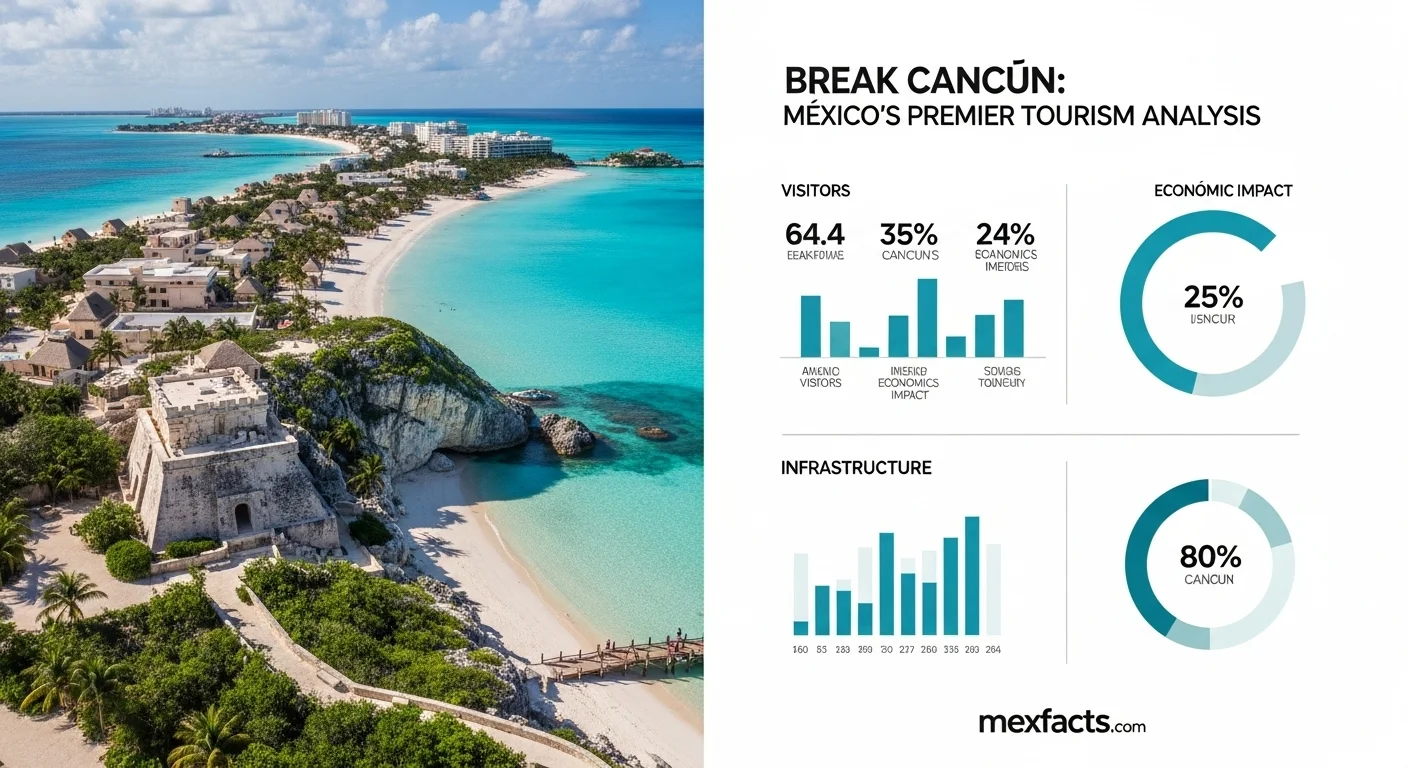
- 1.2 Million Seasonal Visitors: According to official estimates from the Quintana Roo Tourism Secretariat (SEDETUR), the combined Spring Break and Holy Week holiday window generates approximately 1.2 million tourist arrivals across the state.
- $1.3 Billion in Regional Expenditure: This seasonal influx produces nearly US $1.3 billion in economic revenue across hospitality, transport, gastronomy, and retail sectors, providing vital tax revenues and sustaining local employment.
- 85% Peak Hotel Occupancy: Across Cancun's extensive inventory of hotel rooms, occupancy rates frequently surpass 85% during peak March periods, driving ongoing commercial investment across the corridor.
- Over 32 Million Airport Passengers: Cancun International Airport (CUN), managed by ASUR, serves as Mexico's primary gateway for international arrivals, handling over 32 million commercial passengers annually and processing more than 600 flight operations on peak weekend days.
For official statistical monitoring and destination data, travelers and researchers can consult the Secretariat of Tourism's platform, DataTur.
Frequently Asked Questions
- What is the best month to visit Cancun for Spring Break?
- March is the definitive peak month for university Spring Break, offering the largest pool parties, celebrity DJ appearances, and peak nightlife energy. Late February and early April offer warm weather with slightly lighter collegiate crowds.
- Is Cancun safe for student travelers?
- Yes, Cancun's Hotel Zone is one of the most secure and heavily monitored resort corridors in the Americas. Travelers should stay in designated tourist areas, utilize authorized transportation, avoid excessive intoxication, and keep emergency contact numbers accessible.
- Do I need to carry Mexican pesos or are US dollars accepted?
- While US dollars are widely accepted in the Hotel Zone for tips and tourist activities, paying in Mexican pesos (MXN) generally avoids unfavorable retail exchange rates. Always pay for public buses (R-1/R-2) and street dining in pesos.
- How do I travel between the Hotel Zone and Downtown Cancun?
- The R-1 and R-2 public city buses run continuously along Boulevard Kukulcán into downtown for roughly 12 pesos per passenger. They are safe, highly economical, and frequented by both locals and international visitors.
Expert Reviews
Jenna K., Visitor from Ohio ⭐⭐⭐⭐⭐
I went for Spring Break expecting just parties, but this article nails it—there's so much more! We took a day trip to a cenote and it was life-changing. Cancun is beautiful, and the energy is incredible, but seeing the culture behind it all made the trip unforgettable.
Carlos G., Cancun Hotel Manager ⭐⭐⭐⭐⭐
As someone who has worked in the Hotel Zone for 15 years, this season is our Super Bowl. It's intense, demanding, but it supports my family and thousands of others. This analysis correctly shows how vital Spring Break is for our local economy. It's a well-oiled machine that we've perfected over decades.
Michael T., Travel Industry Investor ⭐⭐⭐⭐⭐
This is the kind of deep dive I look for. It moves past the clichés and gets to the heart of the business ecosystem. Understanding the new trends—like the move towards eco-tourism and cultural experiences—is crucial for identifying smart investments. Very insightful.