
Mexico's Two Coasts: A Traveler's Guide to the Caribbean and Pacific

As someone who has spent years exploring Mexico, I can tell you there's a world of difference between its two coastlines. One is the calm, turquoise embrace of the Caribbean; the other is the dramatic, powerful spirit of the Pacific. This article is your personal guide to understanding both. We'll go beyond the postcards to explore why these shores are the heart of Mexico's economy and culture, from bustling tourism to growing investment opportunities. Whether you're planning a dream vacation or thinking of making a move, you'll discover the unique personality of each coast and why knowing the difference is everything.
Table of Contents
What is Coast Mexico and Why Does it Matter Globally?
When people think of Mexico, they often picture its vibrant culture, incredible food, and ancient history. But to me, the true soul of the country is revealed along its incredible 9,330 kilometers of coastline. 'Coast Mexico' isn't just a place; it's a tale of two oceans. To the west, you have the wild, majestic Pacific. To the east, the gentle, jewel-toned Caribbean Sea. This incredible geography is more than just a pretty picture—it's the engine of Mexico's tourism, a vital link for global trade, and a cultural cradle that has shaped what it means to be Mexican for centuries. Its importance on the world stage is huge, acting as a magnet for travelers, investors, and anyone seeking a slice of paradise.
Internationally, Mexico's beaches are legendary. We're not just talking about a vacation spot; we're talking about a global benchmark for hospitality and beauty. In recent years, tourism has made up a huge slice of Mexico's economy, with coastal gems like Cancún, the Riviera Maya, Los Cabos, and Puerto Vallarta leading the charge. These aren't just dots on a map; they are world-famous brands. The economic energy they create is immense, supporting not just hotels and restaurants but also local artisans, farmers, and countless families. It’s a powerful cycle where tourism dollars help build stronger communities, highlighting just how precious these coastal treasures are.
The Two Faces of Paradise: Pacific vs. Caribbean
To really get a feel for coastal Mexico, you have to understand its split personality. The eastern and western shores offer completely different worlds. Trust me, knowing the difference is crucial whether you're planning a two-week holiday or a life-changing investment.
The Caribbean Coast: The Jewel of the Yucatan Peninsula
The eastern coast, home to the state of Quintana Roo, is the postcard you've always dreamed of. Think brilliant turquoise water, sand as soft and white as flour, and the breathtaking Mesoamerican Reef, the second-largest barrier reef on Earth. The whole stretch from Cancún down to Tulum, known as the Riviera Maya, is a masterclass in tourism. It’s packed with everything from sprawling all-inclusive resorts to chic boutique hotels and a nightlife that buzzes with energy. I've seen firsthand how places like Cancún, Cozumel, and Playa del Carmen have become global hubs, with Cozumel and Mahahual alone welcoming millions of cruise passengers. For travelers, the big question is always the best time to visit the Mexican Caribbean coast. The dry season, from December to April, is picture-perfect with sunny days and lovely weather. But it's also peak season, meaning more people and higher prices. My personal tip? Consider the shoulder months like May or November. You often get the best of both worlds: great weather with fewer crowds. Just be mindful of the hurricane season from June to November, as planning your trip around it can make all the difference between a perfect escape and a logistical headache.
The Pacific Coast: The Majestic Mexican Riviera
Head west, and you'll find a coastline with a completely different rhythm. Stretching from Baja California down to the shores of Oaxaca, the Pacific Coast is wilder, more dramatic. I'm talking rugged cliffs that plunge into the sea, beaches with golden sand, and legendary surf breaks that call to wave riders from across the globe. This is the 'Mexican Riviera'. You have the chic luxury of Los Cabos, the old-world charm of Puerto Vallarta nestled in Banderas Bay, and laid-back surf towns like Sayulita and Puerto Escondido. The Pacific side feels more adventurous. While it's a huge tourist draw—Los Cabos, for instance, has seen incredible growth in hotel stays—it's also a sanctuary for ecotourism. One of the most magical experiences is whale watching, when majestic humpbacks, gray whales, and blue whales visit between December and March. This makes winter the absolute best time to go to Mexico's Pacific coast for nature lovers. For surfers, the biggest swells hit in the summer. Similar to the Caribbean, the peak season for weather is December to April. However, I have a soft spot for the rainy season (May to October). The afternoon showers are often brief, leaving everything lush and green, and you'll find better deals and a more relaxed vibe.
Beyond Tourism: A Hub for Trade and Investment
While shimmering beaches get all the attention, Coast Mexico's role in global trade and investment is just as vital. Its strategic location makes ports like Manzanillo on the Pacific and Veracruz on the Gulf essential gateways for goods moving between Asia, the Americas, and Europe. This creates a powerful ecosystem for business that attracts major international companies.
On top of that, the beautiful coastline has sparked a blazing hot real estate market, especially among foreign buyers. You might have heard that foreigners can't own land right on the coast, but there's a secure and common legal tool called a 'fideicomiso' (a bank trust) that makes it possible. This has given investors the confidence to pour billions into coastal properties in places like Tulum, Cabo San Lucas, and Puerto Vallarta. It’s easy to see the connection: a thriving tourism scene creates high demand for rental homes, which fuels construction, creates jobs, and strengthens the whole economy. As more people look for lifestyle investments and the freedom to work remotely, I see the demand for a home on the Mexican coast only getting stronger, cementing its place as a top destination for global capital.
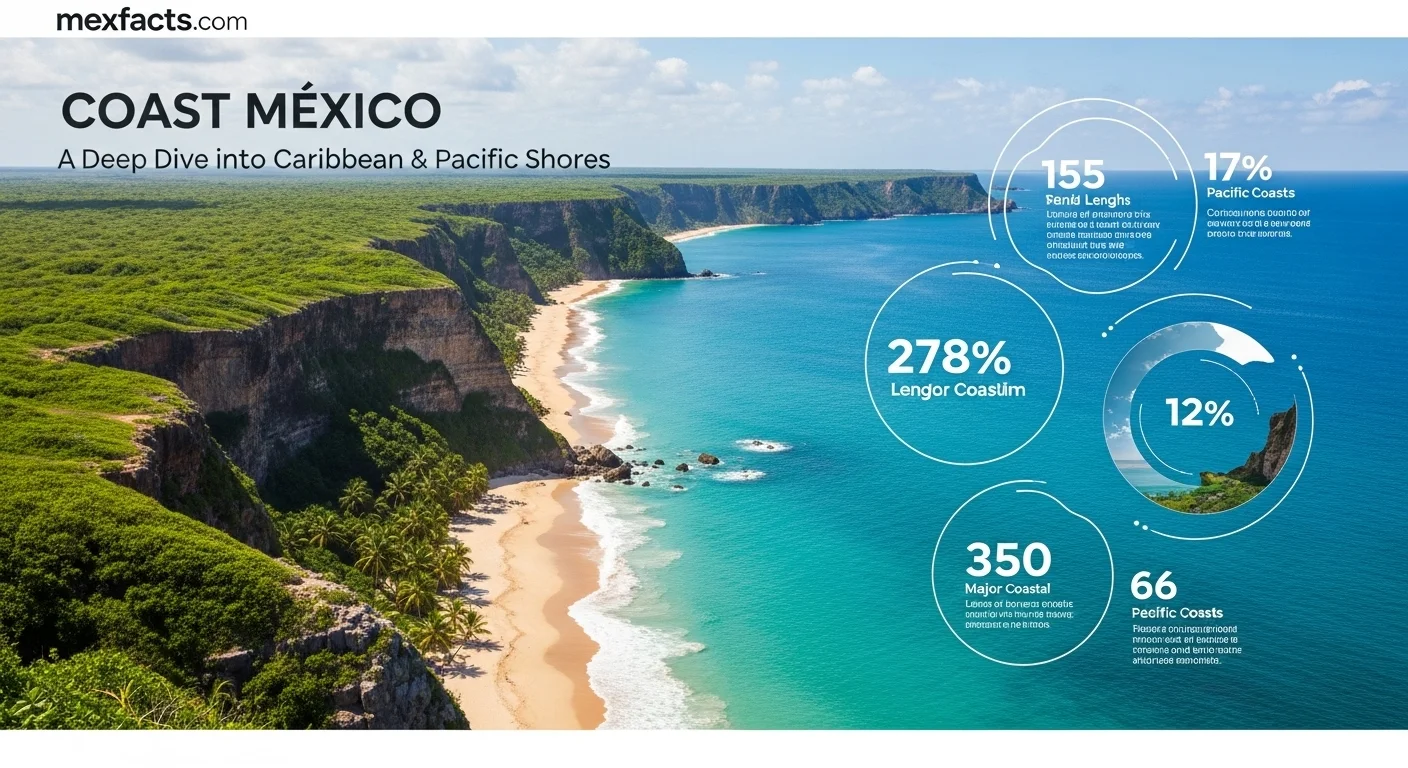
The Story Behind the Numbers: A Look at Coastal Mexico Today
When you dive into the numbers behind Mexico's coasts, you see a story of incredible strength and growth. The data shows a tourism scene that has not only bounced back from global challenges but is soaring to new heights. This energy is fueling a vibrant real estate market and major new infrastructure projects. The statistics clearly show two powerful, distinct coastal engines driving Mexico's success: the ever-popular Caribbean and the rapidly rising Pacific.
Tourism: The Billion-Dollar Heartbeat
Tourism is, without a doubt, the economic heart of coastal Mexico. Just last year, Mexico welcomed around 45 million international tourists, making it one of the most visited countries on the planet. These visitors brought in a record-breaking amount of revenue, and the vast majority of that activity happens right here on our coasts.
Caribbean Coast: The Undisputed Leader
The state of Quintana Roo, with Cancún and the Riviera Maya, is the king of Mexican tourism. Cancún's airport is the main gateway for international travelers, welcoming over 10 million in a single year. The cruise industry here is also massive. In early 2024, the ports of Cozumel and Mahahual were buzzing, with Cozumel alone seeing a 14% jump in passengers from the previous year. This flood of visitors brings direct economic benefits, with each cruise passenger spending a healthy average on shore.
From a numbers perspective, the best time to travel to the Mexican Caribbean coast is clear. Hotel occupancy soars above 80% during the dry season from December to April. I’ve seen popular spots like Playacar and Akumal nearly full during these months. This means high energy and peak revenue. But data also shows a shift, with more people discovering the charm of the shoulder seasons. The decision on the best time to go to the Caribbean coast is becoming more personal, as travelers weigh perfect weather against better prices. September is usually the rainiest, which means the lowest prices—a great tip for budget-savvy travelers.
Pacific Coast: The Rise of a Luxury Powerhouse
While the Caribbean might win on sheer volume, the Pacific coast is making waves with its incredible growth, especially in luxury travel. In a fascinating turn, Los Cabos recently boasted a higher hotel occupancy rate than Cancún. This tells me there's a growing appetite for the premium, high-end experiences that Los Cabos offers, backed by its reputation for luxury and safety. Puerto Vallarta is another Pacific star, consistently ranking as a top cruise destination. What's truly impressive is the growth rate; a couple of years back, cruise passenger numbers on the Pacific side grew nearly 90% year-on-year, outpacing the Caribbean.
Statistically, the best time to go to Mexico's Pacific coast aligns with its unique attractions. The peak season from December to April not only offers the best weather but also coincides with the spectacular whale watching season, a major draw. However, if you're looking for value, the summer months can be a fantastic choice. While it's the rainy season, the showers are usually quick, and it's the best time for surfing, attracting a completely different, adventurous crowd.
Real Estate and a Welcome to Foreign Investors
The success of coastal tourism has a direct and exciting impact on the real estate market. I've watched as foreign investment in Mexican coastal property has boomed, driven by the dream of owning a piece of paradise and the potential for great rental income.
The key to this is the 'fideicomiso' (a bank trust), a secure legal path that allows non-Mexicans to buy prime property near the coast. It’s been a game-changer. Hotspots like the Riviera Maya and Los Cabos are seeing incredible development. It's not just about vacation homes anymore; there's a huge market for long-term rentals thanks to the rise of digital nomads and retirees drawn by Mexico's amazing lifestyle and lower cost of living.
While it’s tricky to get one single number for the value of all foreign-owned property, local reports show steady growth. I'm keeping my eye on emerging markets on the Pacific coast like Huatulco and the beautiful shores of Yucatan state, like Progreso, which are showing huge potential due to their affordability and growing expat communities. For anyone thinking of investing, it's important to know the costs, like the Capital Gains Tax (ISR), which is a key part of the financial picture.
Building for the Future: Infrastructure Growth
To support all this growth, Mexico is investing heavily in new infrastructure along its coasts. This is where you can really see the confidence in the future.
The Tren Maya: The most talked-about project is the Tren Maya, a massive 1,554-kilometer railway designed to connect the Yucatan Peninsula's top destinations and ancient Mayan sites. As someone who loves exploring the history of this region, I see this as a way to share the magic beyond the main beach towns. It's a monumental project aimed at spreading tourism wealth and making it easier for everyone to explore. It will completely change the game, making inland travel a breeze and potentially altering the best time of year to visit the Mexican Caribbean coast by opening up new year-round destinations.
Airport and Port Upgrades: Coastal airports are constantly expanding to keep up with demand. We're seeing millions of international arrivals, and that number keeps climbing. This means airports in places like Cancún, Los Cabos, and Puerto Vallarta are always being modernized. At the same time, our ports are being upgraded to welcome larger cruise ships and handle more cargo, securing Mexico's role in global trade. These aren't just statistics; they are proof of a bright future and a strong belief in the lasting appeal of Mexico's coasts.
The Future of Mexico's Coasts: Opportunities on the Horizon
Looking ahead, the future of coastal Mexico is incredibly bright, filled with opportunities but also balanced by important responsibilities. As the world of travel and investment continues to change, our coastlines are ready for a new chapter of growth and innovation. The outlook is fantastic, built on a strong foundation and growing global interest. To truly be a part of this future, however, we must focus on sustainability, smart development beyond the usual tourist spots, and adapting to what modern travelers and investors are looking for. For anyone dreaming of Mexico, understanding this future is the key to finding the next great opportunity.
New Horizons: Emerging Destinations and Diverse Markets
While powerhouses like Cancún and Los Cabos will always be popular, I believe the most exciting growth will happen in emerging coastal areas. There's a smart push to diversify, which helps ease the pressure on famous hotspots and spreads the economic benefits more widely.
On the Pacific, a perfect example is the 'Costalegre' (Happy Coast) in Jalisco, tucked between Puerto Vallarta and Manzanillo. I've seen this area blossom into a low-density, high-end destination, with world-class luxury brands setting up shop. It’s all about exclusivity and nature, appealing to travelers who want privacy and authentic experiences. Just north of Puerto Vallarta, the coast of Nayarit continues to grow with chic towns like Sayulita and San Pancho. If you're an investor, the best time to go to the Pacific coast of Mexico to scout these spots is right now, before they hit the mainstream.
Over on the Caribbean side, the focus is shifting south. The new Tren Maya is the key, opening up access to incredible places like Bacalar, with its 'Lagoon of Seven Colors,' and the regional capital, Chetumal. This will spark a new wave of eco-tourism and smaller, boutique-style developments. This changes the whole conversation about the best time to travel to the Mexican Caribbean coast, as these new destinations offer different climates and attractions, potentially extending the prime travel season.
The Green Imperative: Sustainability and Eco-Tech
The biggest long-term challenge for our coasts is protecting the very nature that makes them so special. Our beautiful coral reefs, beaches, and jungles are facing threats from overdevelopment and climate change. The sargassum seaweed on the Caribbean is a clear warning sign. But I see this challenge as a huge opportunity for innovation in the green economy.
There's a growing demand for sustainable tourism. This means eco-friendly hotels, renewable energy (we have plenty of sun and wind!), modern water treatment, and coral reef restoration projects. The future of tourism here is tied directly to how well we care for our environment. The projects that blend luxury with a light ecological footprint will be the true winners. The best time of year to visit the Mexican Caribbean coast might one day be judged not just by weather, but by the season with the lowest environmental impact—a new standard for the thoughtful traveler.
Real Estate: Digital Nomads and New Ways to Own
The coastal real estate market will remain a top draw for international buyers, but the demand is changing. The rise of remote work has created a new kind of buyer: the digital nomad. These aren't just people looking for a short vacation; they're looking for a place to live and work for months at a time. This is driving a market for homes with great internet, co-working spaces, and long-term amenities.
This is a chance for developers to create 'work-from-paradise' communities. I’m also seeing more interest in fractional ownership and branded residences, which give you the perks of owning a property without the full cost or hassle. For investors, thinking about the best time to go to Mexico's Pacific coast or Caribbean isn't just for vacation rentals anymore; it's about understanding year-round living. The milder winters on the Pacific might be more appealing for a long stay than the hotter Caribbean summers, which can influence where and what kind of property to invest in.
Infrastructure: The Catalyst for What's Next
Continued investment in infrastructure is what will unlock the full potential of Coast Mexico. Besides the Tren Maya, expanding regional airports is key. Tulum just opened a new international airport, which will provide more direct access to the southern Riviera Maya. Similar upgrades for airports serving Pacific gems like Puerto Escondido will be game-changers.
Modernizing our ports isn't just about cruise ships; it’s about strengthening Mexico's role in global trade. The 'nearshoring' trend, where companies move manufacturing closer to North America, is a massive opportunity for Mexico. Coastal states with efficient ports and strong logistics are perfectly positioned to benefit. This creates a wonderful cycle: better trade infrastructure makes travel easier, which boosts tourism and real estate investment.
In the end, the future of Coast Mexico is dynamic and full of promise. The opportunities go far beyond sun and sand, branching into green technology, new real estate models, and global logistics. The key will be smart, balanced development. By learning from the past, focusing on sustainability, and investing in the future, Mexico can ensure its stunning coastlines remain a source of economic strength and natural beauty for generations to come. For anyone looking to be part of that story, the time to explore is now.
Expert Reviews
Sarah and Tom P., Travelers ⭐⭐⭐⭐⭐
My husband and I were torn between the Riviera Maya and Puerto Vallarta for our anniversary. This article was a lifesaver! It didn't just list facts; it described the *feeling* of each coast. We chose the Pacific and the advice about the whale watching season was spot on. It made our trip unforgettable. Thank you!
Michael Chen, Real Estate Investor ⭐⭐⭐⭐⭐
I've been looking into real estate in Mexico, and the information overload is real. This breakdown of the 'fideicomiso' was the clearest I've seen. The insights on emerging markets like the coast of Oaxaca gave me a new direction for my research. Incredibly valuable.
Isabella Garcia, University Student ⭐⭐⭐⭐
I'm studying Latin American economics, and this piece connected the dots between tourism statistics and real-life cultural impact. The explanation of how the Tren Maya could change the Yucatan was fascinating. It’s more than just numbers; it’s about people and the future.