
Unforgettable Mexico: Your Ultimate Guide to Cities, Ruins, and Beaches

Mexico offers an extraordinary spectrum of travel experiences, blending millennia of indigenous civilization, vibrant contemporary urban culture, and protected marine ecosystems. From the monumental archaeological landscapes of Teotihuacán and Chichén Itzá to the colonial palaces, vibrant neighborhoods, and culinary institutions of Mexico City, the country presents travelers with unmatched cultural depth. Further east along the Yucatán Peninsula, the Mexican Caribbean anchors world-renowned coastal travel, from the turquoise waters and barrier reef adventures of Cancun to the dramatic cliffside Mayan ruins and cenote systems of Tulum. This guide examines the essential destinations, practical planning insights, economic tourism benchmarks, and emerging travel infrastructure shaping modern travel across Mexico.
What Makes Mexico a Global Travel Hotspot?
Mexico stands as one of the world's most multifaceted travel destinations, defined by a geographical and cultural breadth that bridges ancient civilizations, colonial architecture, mega-diverse ecosystems, and dynamic contemporary cities. Its appeal on the international stage extends far beyond standard resort vacations; Mexico functions as a global cultural superpower and an economic pillar in international tourism. The country's offerings accommodate a vast spectrum of travel styles, from travelers seeking deep archaeological immersion to culinary explorers, scuba divers, luxury vacationers, and eco-conscious adventurers. This exceptional variety consistently positions Mexico among the most visited nations globally.
At the foundation of this enduring appeal is Mexico's peerless historical and archaeological heritage. Mesoamerican civilizations left behind an extraordinary architectural record that ranks among humanity's greatest cultural achievements. Experiencing these archaeological complexes remains one of the foundational things to do in Mexico. Sites such as the monumental Pyramid of Kukulkán at Chichén Itzá, the vast ceremonial avenues of Teotihuacán, the jungle-shrouded temples of Palenque, and the mountaintop plazas of Monte Albán offer profound insights into the engineering, astronomy, and cosmology of the Maya, Zapotec, and Central Mexican peoples. Recognized globally through dozens of UNESCO World Heritage designations, these monuments anchor an authentic cultural journey through the country's formative eras.
Exploring Mexico City: A Universe of Experiences
Any comprehensive journey through the country begins in its cultural, political, and gastronomic capital. Prioritizing the best things to do in Mexico City is an enriching challenge given the sheer scale of the metropolis. Built directly atop the ancient Aztec capital of Tenochtitlan, modern Mexico City layers pre-Hispanic temple foundations beneath Spanish colonial palaces and cutting-edge contemporary design. First-time visitors generally begin at the Zócalo (Plaza de la Constitución), the historic core where the Metropolitan Cathedral borders the excavated ruins of the Templo Mayor and the murals of the National Palace. Travelers seeking a deeper dive into urban history and cultural districts can explore our dedicated guide to Mexico City's history and lifestyle.
Beyond the historic center, Chapultepec Park hosts the world-famous National Museum of Anthropology, which houses the world's most extensive collection of pre-Columbian Mesoamerican art and artifacts, including the Aztec Sun Stone and Pakal's jade burial mask. Southward, the leafy, cobblestone enclave of Coyoacán showcases colonial plazas, artisan markets, and the Casa Azul (Frida Kahlo Museum). Mexico City has also evolved into one of the globe's premier culinary capitals, celebrated equally for refined street gastronomy—from al pastor to blue-corn tlacoyos—and internationally acclaimed fine dining in the tree-lined, Art Deco corridors of Roma and Condesa.
Caribbean Dreams: Unforgettable Adventures in Cancun
For more than half a century, Cancun has served as the premier international gateway to the Mexican Caribbean. Master-planned in the early 1970s along a narrow coastal barrier island in Quintana Roo, Cancun has matured from a fledgling resort venture into a sophisticated hospitality and ecological hub. Today, the leading things to do in Cancun center on its spectacular natural assets: talcum-soft white limestone sand, crystalline turquoise waters, and direct access to the Mesoamerican Barrier Reef—the second-largest barrier reef system in the world.
Snorkeling and scuba diving along the reef system expose travelers to healthy coral gardens, sea turtles, nurse sharks, and seasonal whale shark migrations. A standout marine conservation highlight is MUSA (Museo Subacuático de Arte), established in the waters between Cancun and Isla Mujeres. Founded through the collaborative vision of Jaime González Cano of the National Marine Park, Roberto Díaz Abraham, and sculptor Jason deCaires Taylor, MUSA features hundreds of submerged, life-sized statues crafted from pH-neutral marine concrete that foster artificial coral growth. Beyond the shoreline, Cancun functions as a strategic launchpad for full-day excursions across Mexico's Yucatán Peninsula, enabling travelers to combine coastal leisure with visits to Chichén Itzá, the colonial city of Valladolid, and the mangrove lagoons of Puerto Morelos.
Bohemian Soul: The Unique Charm of Tulum
Located approximately 80 miles south of Cancun along the Riviera Maya coastline, Tulum delivers a distinctly different atmosphere centered on ecological immersion, heritage, and wellness. The primary things to do in Tulum start at the Tulum Archaeological Zone, where late-postclassic Mayan stone temples stand atop dramatic 40-foot limestone cliffs overlooking the turquoise Caribbean—a defensive coastal setting unmatched anywhere in the Maya world. This striking visual identity has made Tulum an internationally recognized icon of cultural travel.
Inland from the coastline lies the Yucatán Peninsula's extensive subterranean karst topography, featuring thousands of cenotes—natural freshwater sinkholes formed by the collapse of porous limestone bedrock. Sacred to the ancient Maya as ceremonial portals to Xibalba (the underworld), cenotes such as Gran Cenote, Dos Ojos, and Cenote Calavera offer crystal-clear freshwater swimming, cave diving, and snorkeling amid dramatic stalactites and stalagmites. The municipality divides naturally between Tulum Pueblo, a bustling urban center filled with authentic taquerías and boutique markets, and the beachfront hotel zone along the Boca Paila corridor. Bordering the southern end of the zone, the UNESCO-protected Sian Ka'an Biosphere Reserve safeguards pristine coastal wetlands, lagoons, and coral reefs, representing an indispensable sanctuary for regional biodiversity.
The Story Told by Numbers: Mexico's Tourism Economy
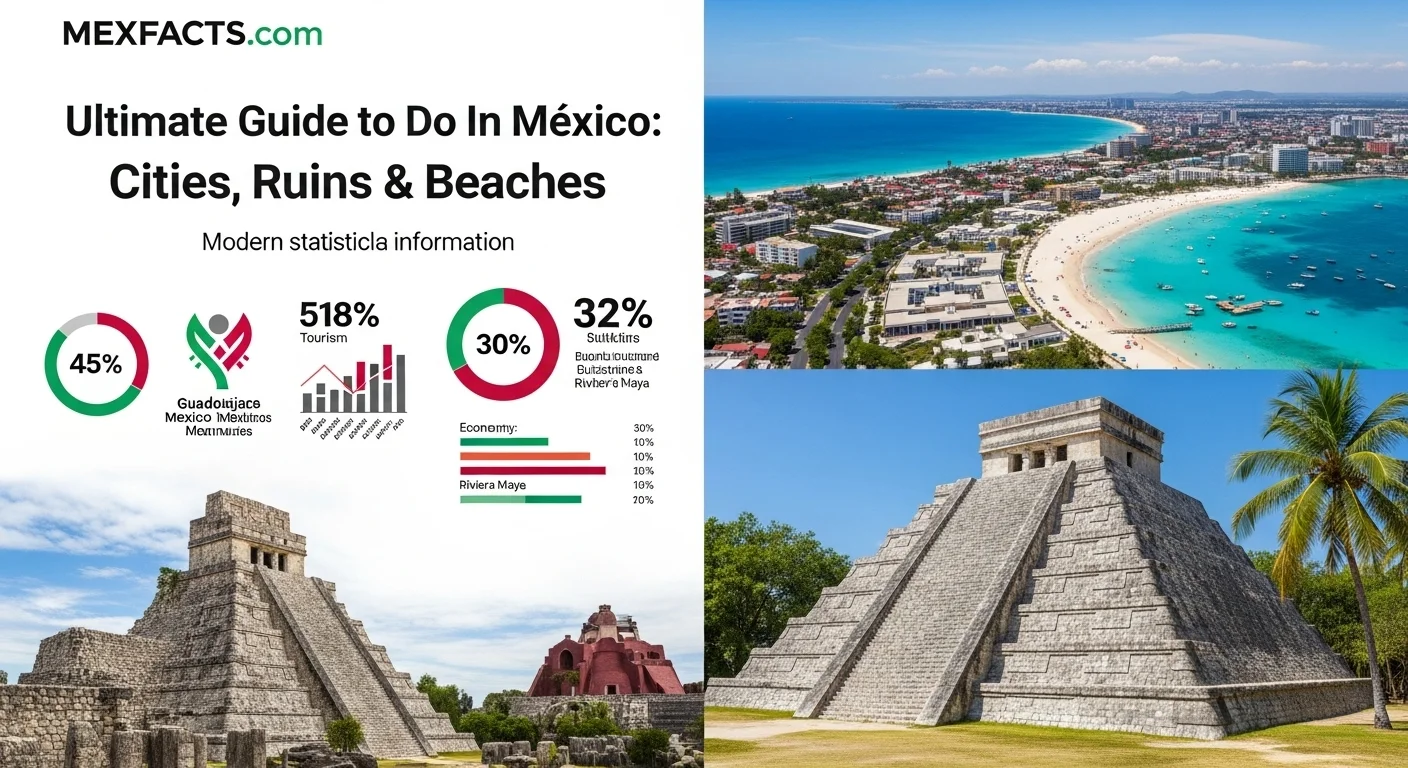
Official statistics compiled by the National Institute of Statistics and Geography (INEGI) and the Secretariat of Tourism (SECTUR) illustrate that tourism is not merely a cultural hallmark for Mexico, but an indispensable driver of macro-economic stability. According to INEGI's International Traveler Surveys, Mexico welcomed 45.03 million international tourists in 2024, a figure that climbed to 47.7 million in 2025. Total foreign exchange earnings generated by international travelers reached $30.25 billion in 2024 and rose to nearly $35 billion in 2025, providing critical foreign currency reserves that support local communities and regional infrastructure nationwide.
Key Gateways and Visitor Profiles
International passenger arrivals funnel predominantly through three major air hubs: Cancun International Airport (CUN), Mexico City International Airport (AICM), and Los Cabos International Airport (SJD), which collectively handle the vast majority of non-border foreign arrivals. Travelers originating from the United States and Canada represent the largest foreign contingents, followed by travelers from Colombia, Argentina, and Europe. This geographic proximity to the North American market establishes a consistent baseline of travel demand throughout the year, with coastal destinations like Cancun and Los Cabos commanding substantial seasonal winter volume.
Meanwhile, interior destinations attract travelers seeking cultural depth, heritage architecture, and culinary immersion. Mexico City stands out as an exceptional cultural hub, housing more than 170 registered museums and major cultural spaces—one of the densest museum networks in any global capital. (The frequently cited figure of roughly 1,300 museums actually reflects the total inventory spanning all 32 federal entities of Mexico, according to the National Cultural Information System). In the Mexican Caribbean, visitor traffic radiates south from Cancun through Playa del Carmen and Tulum, where high-yield wellness, archaeological, and boutique eco-resort models have created a premium travel sector along the Quintana Roo coast.
Economic Architecture: Employment and Domestic Demand
A rigorous examination of Mexico's economic data highlights the dual architecture of its tourism sector. According to INEGI's Tourism Satellite Account (Cuenta Satélite del Turismo de México), direct Tourism Gross Domestic Product (PIB Turístico) accounts for approximately 8.7% of the total national economy, generating more than 2.71 trillion pesos. A vital and frequently overlooked aspect of this economy is domestic travel: Mexican residents exploring their own country generate approximately 83% of all internal tourism consumption, while inbound international travelers account for the remaining 17%. Broader global economic analyses by bodies such as the World Travel & Tourism Council (WTTC), which factor in indirect supply-chain purchases and induced employee spending, evaluate the total economic footprint of the travel sector at roughly 14% to 15% of GDP.
This economic activity translates directly into widespread employment. Direct tourism-related activities generate approximately 2.9 million formal jobs according to INEGI, representing nearly 5% of the national workforce, with accommodation, passenger transit, and food services leading job creation. When considering the wider hospitality and service ecosystem tracked by SECTUR, the sector supports over 4.5 million livelihoods. This distribution proves crucial in regional economies where manufacturing or agricultural alternatives are limited, turning visitor spending into direct community wages.
The Horizon: Strategic Infrastructure and Sustainable Travel
Mexico's tourism trajectory is being reshaped by large-scale infrastructure investments and intentional policy shifts designed to diversify visitor distribution across less-traveled interior regions. Under federal planning frameworks such as the Plan México initiative, national tourism policy targets elevating Mexico into the top five most-visited international destinations by 2030. Achieving this goal requires modernizing transit corridors, expanding secondary airport connectivity, and incentivizing sustainable travel practices that preserve the nation's environmental and cultural patrimony.
Regional Connectivity and the Maya Train Corridor
The centerpiece of southeastern infrastructure development is the Tren Maya (Maya Train), an extensive rail network spanning approximately 1,554 kilometers across five federal entities: Quintana Roo, Yucatán, Campeche, Tabasco, and Chiapas. By linking premier resort gateways like Cancun and Playa del Carmen directly with inland destinations such as Valladolid, Mérida, Izamal, and Palenque, the railway provides an alternative to highway transit. This connectivity facilitates combined itineraries where beach travelers can easily venture into interior archaeological zones and community-managed ecological reserves.
Complementing this rail network is the Felipe Carrillo Puerto International Airport (TQO) in Tulum, which opened a dedicated air corridor for direct domestic and international flights into the central and southern Riviera Maya. Together, these infrastructure assets reduce ground travel times and encourage visitors to disperse beyond traditional hotel enclaves into rural craft communities and lesser-known historical landmarks.
Pueblos Mágicos and Experiential Tourism Expansion
To reduce overconcentration in mass coastal hubs, SECTUR continues to expand its Pueblos Mágicos (Magical Towns) program, which now encompasses more than 170 designated municipalities nationwide. These towns—ranging from mountain enclaves like Real de Catorce and San Cristóbal de las Casas to artistic colonial centers like Tequila and Todos Santos—highlight Mexico's intangible cultural heritage, indigenous culinary traditions, and vernacular architecture. Modern travelers increasingly seek authentic community-based experiences, creating fertile opportunities for boutique hospitality, agro-tourism, guided heritage walks, and artisan cooperatives that channel travel revenue directly to local producers.
Environmental Preservation and Long-Term Sustainability
Sustaining this expansion requires resolving critical environmental challenges, particularly along vulnerable coastal ecosystems and karst limestone terrains. Rapid urban growth in corridors like Tulum underscores the urgency of upgrading wastewater treatment infrastructure, enforcing rigorous zoning laws, and safeguarding subterranean aquifers that feed the sacred cenote systems. Simultaneously, marine conservation along the Mesoamerican Barrier Reef demands careful visitor management to prevent reef degradation, alongside coordinated regional strategies for mitigating seasonal pelagic sargassum arrivals.
Balancing economic vitality with environmental stewardship is central to the future of Mexican tourism. Travelers, hospitality operators, and public entities must collaboratively champion responsible practices—from supporting eco-certified accommodations and minimizing single-use plastics to respecting archaeological monuments. Official travel regulations, destination guidelines, and updated seasonal advisories are regularly published by the Mexican federal government through the Secretaría de Turismo (SECTUR).
Expert Reviews
Sarah K., First-Time Visitor ⭐⭐⭐⭐⭐
As someone visiting Mexico for the first time, this guide was a lifesaver. I was overwhelmed with options, but this article helped me plan the perfect trip, blending the history of Mexico City with the incredible beaches of Tulum. The descriptions felt so personal, like getting advice from a friend who’s lived there for years. Highly recommend!
Marco V., Repeat Traveler ⭐⭐⭐⭐⭐
I've been to Cancun several times, but I always felt I was missing something. This guide opened my eyes to the cenotes and the cultural experiences just a short trip away. The insights on Tulum's eco-conscious vibe were spot on. It’s completely changed how I’ll travel to Mexico in the future.
Dr. Elena Rios, Researcher ⭐⭐⭐⭐⭐
Incredible resource! I was researching the tourism economy in Latin America for a project, and the way this article presented the data was so clear and engaging. It connected the numbers to real-world impact, which was invaluable. It’s not just a travel guide; it’s a deep dive into what makes Mexico's tourism so successful.