
Cozumel: The Soul of the Mexican Caribbean & A Global Tourism Powerhouse

Cozumel is more than just Mexico's largest Caribbean island; it's a place where vibrant present-day life meets a deep, ancient past. I remember my first time seeing its almost impossibly clear waters, knowing the magnificent Mesoamerican Reef—the second-largest in the world—was just below the surface. This island isn't just a postcard paradise; it's a vital economic force, largely powered by its famous cruise port that welcomes millions. This constant flow of visitors has created a dynamic hub for hospitality and business. For those of us who look deeper, Cozumel offers a beautiful balance between a booming economy and a profound respect for nature, recognized by its UNESCO Biosphere Reserve status. In this article, I'll take you on a journey through the stories and numbers that make Cozumel so unique and explore what the future holds for this jewel of Mexico.
Table of Contents
- From Sacred Sanctuary to Pirate Hideout: Cozumel's Story
- A Natural Powerhouse: Reefs, Reserves, and Geography
- The Economic Engine: The World-Famous Cruise Port
- A World of Adventure: Things to Do in Cozumel
What is Cozumel, and why does it matter to the world?
When people ask me about Cozumel, I tell them to imagine an island cradled by the turquoise Caribbean Sea, just off the coast of the Yucatán Peninsula. It’s a name that immediately brings images of paradise to mind. But the story I love to share goes much deeper than its sun-kissed beaches and stunning reefs. Cozumel, or 'Ah Cuzamil Peten' as the Maya called it, is a global tourism giant, a crucial economic pillar for Quintana Roo, and a beautiful example of how a place can balance explosive growth with protecting its soul—its culture and ecology. Its importance isn't just about how many people visit; it's a rich story woven from ancient history, modern commerce, and a profound connection to the natural world.
From Sacred Sanctuary to Pirate Hideout: Cozumel's Story
The island's story begins long before any tourist set foot here. The first people to truly shape it were the Maya, who settled here around 2,000 years ago. They called it the 'island of the swallows,' a name that has beautifully evolved into Cozumel. For the Maya, this was a sacred place, the holy ground of Ixchel, the powerful goddess of the moon, fertility, and childbirth. It was a pilgrimage site; women from all over the Mayan world would journey here to honor her. Imagine the island then, not as a quiet getaway, but as a bustling spiritual and commercial hub, home to perhaps as many as 10,000 people.
The arrival of the Spanish in the 16th century brought a tragic and abrupt end to this era. The smallpox they carried with them devastated the local population, and within a few generations, the vibrant Mayan society on Cozumel had crumbled. For centuries, the island was mostly a ghost, its hidden coves becoming a perfect hideout for pirates like the infamous Henry Morgan and Jean Lafitte. It wasn't until the mid-1800s, when people fled the Caste War on the mainland, that Cozumel was resettled. They founded the town of San Miguel, planting the seeds for the modern island we know today.
A Natural Powerhouse: Reefs, Reserves, and Geography
You can't talk about Cozumel without talking about the treasures beneath its waves. The island is bordered by the Mesoamerican Barrier Reef System, the second-largest coral reef in the world. I've been diving here for years, and it never ceases to amaze me. This 'Great Mayan Reef' is the reason Cozumel is a legendary destination for divers and snorkelers from every corner of the globe.
Thankfully, Mexico understands the value of this natural wonder. Much of the southern reef system is protected as the Arrecifes de Cozumel National Park, a sanctuary for incredible marine life, including the splendid toadfish—a creature you can't find anywhere else on Earth. In 2016, UNESCO went a step further, designating the entire island a Biosphere Reserve. This recognizes everything: the vibrant reefs, the unique semi-deciduous forests, and the vital mangrove wetlands that act as nurseries for sea life and protect the coast. This honor highlights Cozumel's role as a guardian of global biodiversity, a responsibility it juggles with its bustling tourism.
The Economic Engine: The World-Famous Cruise Port
Today, Cozumel's identity is shaped by tourism, specifically cruise ships. It is, without a doubt, one of the busiest cruise destinations on the planet. With three large piers, the island can welcome several massive ships at once, making the Cozumel cruise port a vital hub for the Caribbean cruise industry. Every year, millions of passengers step ashore, creating a wave of economic activity. A single ship's visit can pump hundreds of thousands of dollars into the local economy in just one day.
Of course, this intense reliance on cruise ships has its challenges. It brings incredible prosperity and jobs, but it also puts a strain on resources and the very environment that attracts visitors. There's an ongoing debate about building a fourth pier, which really gets to the heart of the island's biggest question: how to balance economic growth with sustainability. Beyond the cruisers, Cozumel also thrives on stay-over tourism, with island's many resorts catering to visitors who want to spend more time exploring, especially divers and fishers. And here's a little inside secret: a big part of the local economy is driven by the thousands of crew members from the ships. They often look for authentic local food and services, providing a lifeline to small, family-run businesses.
A World of Adventure: Things to Do in Cozumel
The island's international fame is sealed by the incredible variety of things you can do here. There’s truly something for everyone.
Under the Sea
- Diving and Snorkeling: This is why many of us fell in love with Cozumel. Legendary sites like Palancar Reef and Santa Rosa Wall offer dramatic underwater landscapes. For a more relaxed experience, snorkeling at El Cielo, with its sandy bottom dotted with starfish, feels like swimming in a dream.
- Beach Clubs: The western side is lined with beach clubs where you can relax, enjoy water sports, or simply sip a margarita by the sea. For a more rugged experience, I recommend a trip to the 'wild side' on the eastern coast, with its dramatic, undeveloped beaches.
On Land
- Eco-Parks: Punta Sur Eco Beach Park is a must-see. You can climb the lighthouse for breathtaking views, spot crocodiles in the lagoons, and relax on pristine beaches. Chankanaab Park is another favorite, blending botanical gardens with sea life encounters.
- Mayan History: To connect with the island's past, you must visit the San Gervasio ruins in the jungle interior. Standing there, you can almost feel its history as the center of the Ixchel cult.
- Adventure Tours: For a bit of a thrill, renting a Jeep or taking an ATV tour to explore the island's wild side is an unforgettable experience.
This rich mix of adventure, culture, and nature is what makes Cozumel a complete destination. It ensures that people don't just visit once; they come back again and again, cementing its place as a true cornerstone of Mexican tourism.
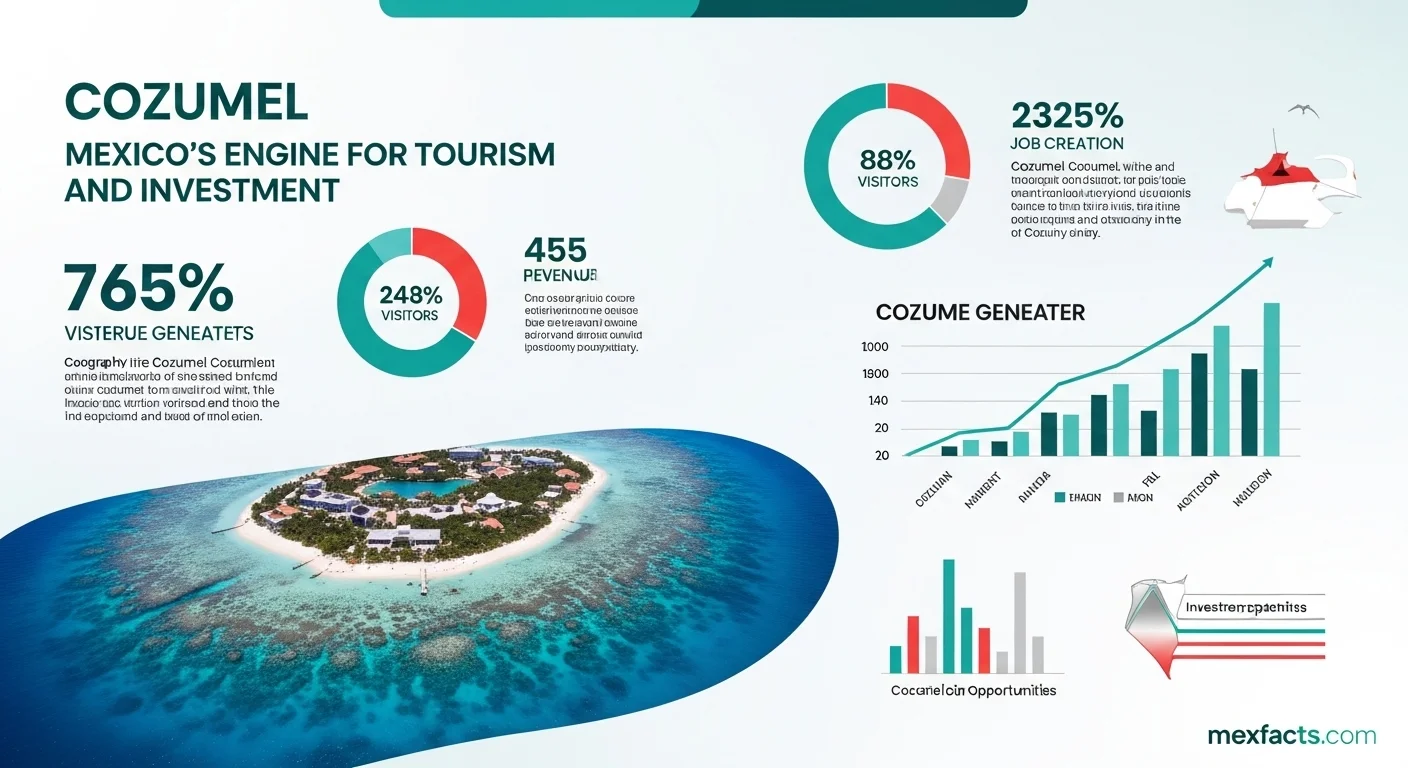
The Real Picture: Cozumel by the Numbers
To truly understand Cozumel's impact, you have to look at the numbers. They paint a clear picture of a global destination that’s working hard to manage its incredible popularity. The data on tourism, the economy, and real estate reveals the powerful engine that drives this island.
Tourism Statistics: An Island of Visitors
The lifeblood of Cozumel is tourism, and the cruise port is its beating heart. The numbers are simply mind-boggling.
- Cruise Passengers: In a typical year, Cozumel welcomes millions of cruise passengers. In 2023, for instance, the island saw over 4 million tourists arrive by sea. On the busiest days, you can have nearly 20,000 people stepping ashore. To put that in perspective, in a single week in January, the island can host over 100,000 visitors from cruise ships alone.
- Air & Ferry Travelers: It’s not just about cruises. In 2023, over 8 million people moved through the island's piers, including nearly 4 million who took the passenger ferry from Playa del Carmen. The Cozumel International Airport (CZM) is also bustling, with direct flights from major cities in the U.S. and Canada, bringing in visitors who stay longer.
- Hotel Occupancy: All those travelers keep the island's many resorts buzzing. During high season, it's common for hotels to be around 85% full, and during peak holidays like Easter week, that number can climb to 90%. This shows how strong the demand is for a longer Cozumel vacation.
- The Overtourism Question: With a local population of around 100,000 and visitor numbers approaching 5 million a year, the tourist-to-local ratio is one of the highest in the region. This puts real pressure on the island's water, waste management, and public services—a constant challenge for local leaders.
Economic Impact: Where the Money Goes
All those visitors translate into a powerful economic force. Tourism isn't just part of Cozumel's economy; it *is* the economy.
- Tourism Revenue: The industry generates hundreds of millions of dollars each year. One study estimated the total economic impact at over $760 million USD annually. That money flows through every part of the island, from hotels and tours to restaurants and shops.
- The Cruise Ship Footprint: A single cruise ship visit can inject over $370,000 into the local economy. It's a huge volume, but it's interesting to note that cruise passengers, while numerous, spend less per person than those who stay on the island. This creates an important discussion about which type of tourism brings the most value.
- The Crew Economy: This is a fascinating part of the island's financial fabric that many overlook. Cruise ship crew members on their day off don't usually book tourist excursions. Instead, they seek out local laundromats, internet cafes, and authentic taquerias. I’ve spoken to many small business owners who tell me the crew's consistent spending is what keeps their doors open.
- Jobs, Jobs, Jobs: Tourism is by far the island's biggest employer. Nearly 95% of businesses are in commerce and services, almost all of them connected to tourism. The cruise industry alone supports thousands of local jobs. This dependence, however, also makes the island vulnerable when global events disrupt travel, as we saw during the pandemic.
Real Estate Market: Investing in Paradise
The constant demand for Cozumel has created a hot real estate market, attracting investors and retirees from all over the world, especially the U.S. and Canada.
- Appreciation: Property values in Cozumel have been on a steady upward climb. With limited land, especially prime beachfront spots, prices have risen faster than the national average and can be up to 30% higher than on the nearby mainland.
- What's Driving the Market: The two biggest drivers are vacation rentals and retirement homes. Platforms like Airbnb have made it easy for foreign owners to earn rental income, making condos a very popular investment.
- Investment Hotspots: Opportunities range from buying pre-construction condos to luxury homes and commercial spaces near the tourist centers. When the government announced it was investing millions to upgrade the Malecón (the waterfront promenade), it was a clear signal that property values in that area are set to grow even more.
The People of Cozumel
Finally, to understand the island, you have to know its people. Cozumel’s community has been shaped by waves of migration, as people from all over Mexico have moved here for the opportunities tourism provides.
- Population: The island is home to just under 100,000 permanent residents. The population grew by over 11% in a decade, a clear sign of its economic pull. The vast majority live in the main town of San Miguel, which keeps the eastern and southern parts of the island wonderfully wild and undeveloped.
These numbers confirm that Cozumel is much more than a quiet island getaway. It's a high-stakes, high-volume international hub. For anyone looking to visit, invest, or simply understand modern Mexico, this data is the key to seeing the full picture.
What's Next for Cozumel? A Look at the Future
The future of Cozumel is a fascinating mix of huge opportunities and real challenges. As a world-famous destination, the island is at a turning point. Its future will be shaped by how it builds on its legendary brand, deals with the pressures of its own success, and innovates to meet the needs of a new generation of travelers and investors. I see a future for Cozumel focused on smart evolution, sustainability, and diversification.
Investment and Real Estate: Where to Look
The investment outlook for Cozumel is incredibly bright, thanks to its unwavering popularity and strong government support. If you're wondering where the opportunities are, here’s what I'm seeing.
- Infrastructure as a Growth Driver: The government is betting big on Cozumel's future. Recent announcements of a multi-million dollar investment to upgrade tourist infrastructure and reinforce its 'Pueblo Mágico' (Magical Town) status will directly boost the real estate market. This money is going into improving public spaces like the Malecón and upgrading water treatment facilities—a critical step for sustainable growth. For an investor, seeing this level of public commitment is a very good sign.
- The Rise of Vertical Living: With land becoming more precious, the trend is shifting upwards. Developers are focusing on multi-story condo buildings that offer modern amenities and maximize the use of prime locations. This is where a lot of the new and exciting opportunities will be, from condos designed for the booming short-term rental market to boutique hotels and commercial spaces near the cruise port.
- A Maturing Market: The move to regulate the short-term rental market is a sign of maturity. Bringing Airbnb-style properties into a formal tax and safety system creates a more stable and transparent environment. For serious international investors, this kind of regulation is a positive development, indicating a secure place to put their money.
The New Wave of Tourism: More Than Just Sun and Sand
While Cozumel's classic appeal will never fade, its long-term success will depend on offering more. The list of things to do in Cozumel is expanding to attract visitors with new priorities.
- Sustainable and Eco-Travel: Responsible travel is no longer a niche; it's a global movement. Cozumel, with its UNESCO Biosphere Reserve status, is perfectly positioned for this. The future is in creating real, bookable experiences that honor this designation—low-impact tours, supporting conservation-focused businesses, and protecting the reef. I’ve seen how organizations are training dive operators in reef-safe practices, which is crucial. Studies have shown tourists will pay more for healthy, vibrant marine environments, creating a powerful economic reason to protect them.
- Beyond the Cruise Ships: The island knows it can't rely solely on cruise tourism. A major priority is to strengthen other sectors. This means growing the scuba diving industry to attract more high-value, long-stay visitors. I also see huge potential in developing wellness tourism, culinary travel centered on Yucatecan cuisine, and cultural tours that dive deep into the island's Mayan history. Cozumel is also becoming a quiet hotspot for digital nomads, who bring a different kind of economic energy to the island.
Navigating the Challenges Ahead
Cozumel's bright future isn't guaranteed. It has to face some significant hurdles head-on to ensure its prosperity is sustainable.
- Protecting the Crown Jewel: The biggest threat to Cozumel is the health of its coral reefs. The combination of mass tourism, climate change, and regional issues like sargassum seaweed is a serious challenge. The debate over a potential fourth cruise pier brings this conflict into sharp focus. Finding the right balance between development and conservation is the most important task for the island's future.
- Managing Success: As visitor numbers continue to climb, the strain on the island's resources will only grow. Managing fresh water, waste, and ensuring a high quality of life for the nearly 100,000 residents is a critical job for the government. Smart urban planning is non-negotiable.
A Bright Horizon
Despite these challenges, I am overwhelmingly optimistic about Cozumel's future. The island has a rare combination of world-class natural beauty, a powerful tourism machine, and a global brand. The strategic government investments and a growing commitment to sustainability point toward a future of intelligent growth.
For international investors, Cozumel remains a mature market with clear opportunities for great returns. For Mexico, it will continue to be a jewel in its tourism crown—a showcase of the nation's incredible natural and cultural wealth. The key will be ensuring that this bright future is shared by everyone who calls this island paradise home.
Expert Reviews
Michael Chen, Avid Scuba Diver ⭐⭐⭐⭐⭐
My wife and I have been diving all over the world, but there's something about Cozumel that keeps calling us back. I read this article before our last trip, and it really deepened my appreciation for the island. Understanding the history of the Maya and the effort going into reef conservation made our dives at Palancar feel even more special. It's more than just a destination; it’s a living, breathing ecosystem with a soul. We saw two huge sea turtles this time! Truly magical.
Sarah Jenkins, Real Estate Investor ⭐⭐⭐⭐⭐
As someone looking to invest in a vacation property, this guide was invaluable. It cuts through the fluff and gives you the real numbers and trends. The insights on the local economy, beyond just the cruise ships, and the future infrastructure projects gave me the confidence to move forward. It’s rare to find an article that’s both poetic about the place and practical for business.
David Gonzalez, Cultural Traveler ⭐⭐⭐⭐
I came to Cozumel expecting just beaches, but this article inspired me to rent a jeep and explore the island's interior. Visiting the San Gervasio ruins after reading about their significance to the goddess Ixchel was a powerful experience. It changed my whole perspective on the island. Thank you for showing me the historical heart of Cozumel.